



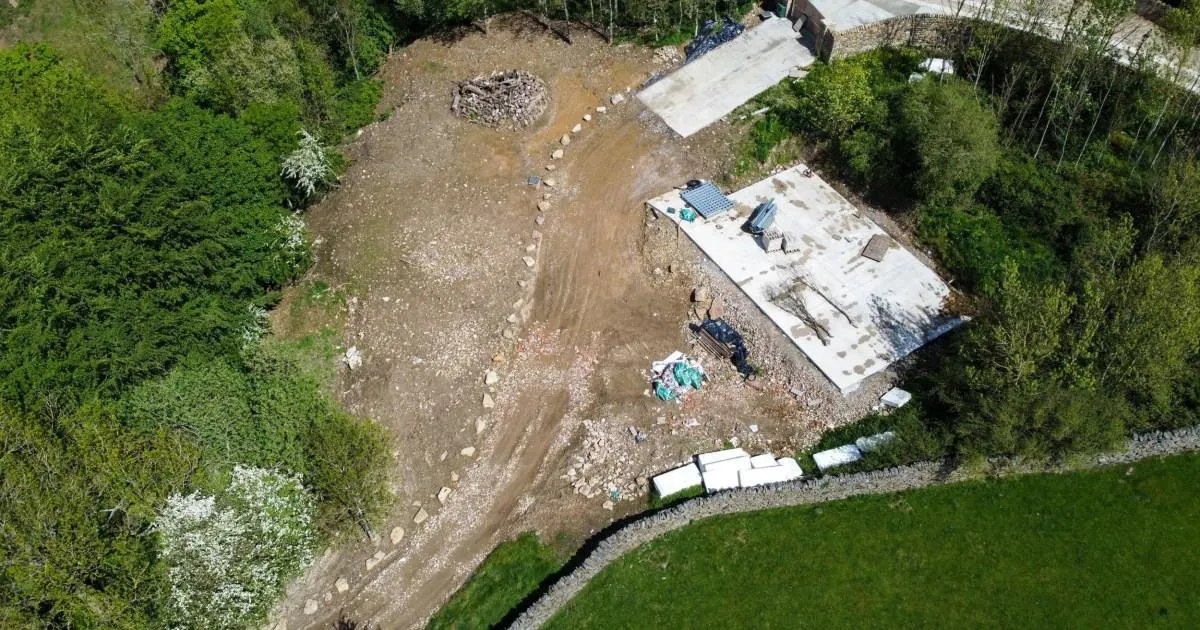
At the heart of the picturesque Silsden area in Yorkshire lies Jacobs Hill Farm, a 33-acre stretch of land that has recently become the center of a tense standoff between its new owners and the Bradford City Council. The dispute centers on the controversial construction of four holiday cabins, which the council claims were illegally erected within protected, ancient woodland. With the council issuing a stern enforcement notice, the site—once defined by its quiet, rolling upland pastures—is now a construction zone under fire. Authorities are demanding not only the immediate cessation of all groundwork but the complete removal of the cabins, concrete foundations, and associated infrastructure that they argue have scarred an irreplaceable landscape.
The environmental impact of this development is the primary motivation behind the council’s aggressive stance. Officials have expressed deep concern over the “substantial tree loss” and the degradation of the local ecosystem, noting that the clearing of the land has negatively affected the unique biodiversity of the South Pennine Moors. In an effort to reverse the damage, the enforcement directive includes a requirement for the landowners to plant 300 new trees to restore the woodland’s natural character. The council’s report is scathing, describing the urbanizing effect of the cabins as a direct violation of the green belt’s openness, effectively stripping away the quiet, rural charm that makes the Airedale Landscape so special.
However, the current owners of the site—who purchased the property in October 2024 for a sizable £1.05 million—are not accepting the council’s order without a fight. They have formally lodged an appeal, setting the stage for a public hearing scheduled for July 21. Their defense rests on a position of innocence; the owners claim that all construction work was carried out long before they took possession of the land. They view themselves as victims of the property’s history, having acquired a site that was already altered, and they contend that shifting the burden of demolition and replanting onto them is both unfair and legally questionable.
Beyond the issue of culpability, the owners argue that the cabins serve a greater purpose for the region. By providing high-quality holiday accommodations, they believe the project is a boon for local tourism, promising to create jobs and stimulate the economy by funneling guests toward local suppliers and businesses. They maintain that the cabins complement other existing holiday lets on the farm, framing the development as a natural evolution for a business rather than an act of environmental vandalism. To the owners, the council’s mandate is not just an unnecessary barrier to a successful venture, but an overreach of regulatory power that unfairly restricts private enterprise.
The battle has also moved into the realm of technical disagreement, particularly regarding the scale of the required remediation. The landowners have openly challenged the council’s demand to plant 300 trees, labeling the figure as arbitrary and excessive. They argue that the council has failed to provide the necessary calculations or ecological evidence to justify such a high number, essentially calling the requirement a punitive measure rather than a reasoned environmental solution. This friction over numbers highlights the core of the disagreement: while one side sees the need for urgent preservation of historic land, the other sees an opportunity for growth being stifled by rigid, perhaps poorly calculated, bureaucratic requirements.
Ultimately, the dispute has reached an impasse that only a public hearing can resolve. The council cites satellite evidence, specifically Google Earth imagery, to suggest that the site remained largely undeveloped as recently as May 2025, directly contradicting the narrative that the project was a pre-existing condition. As July approaches, the case serves as a poignant reminder of the often-thorny relationship between heritage conservation and rural development. Whether the land will be returned to the ancient, tree-filled landscape the council demands or whether the holiday cabins will remain as a permanent fixture of the Silsden hillside remains a question that balances legal precedent against the evolving economic realities of the countryside.