



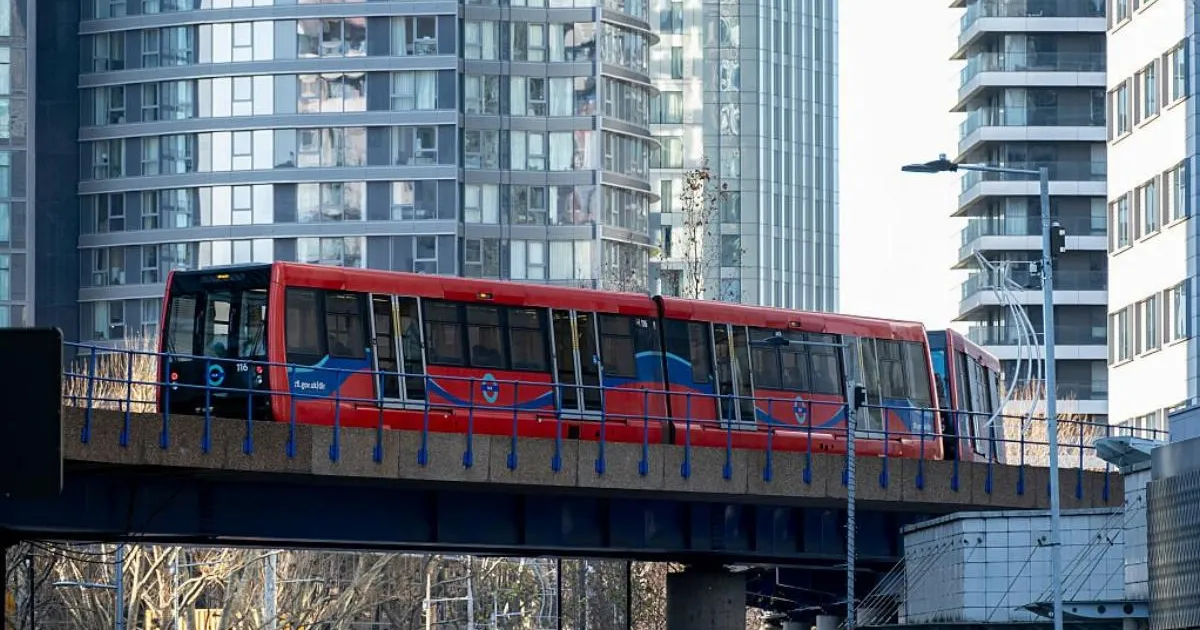
For decades, the sprawling marshlands and residential pockets of East London’s riverside have been somewhat disconnected from the pulsing heart of the city’s transport network. That is set to change dramatically, as Transport for London (TfL) moves into the final consultation phase for a massive £1.7 billion DLR extension. This ambitious project aims to bridge the gap between historic industrial sites and modern living, weaving a new connection that will stretch from Gallions Reach, across the Thames, and deep into the Thamesmead community. For residents who have long relied on bus routes and indirect commutes, this represents a significant shift toward a more integrated, accessible future for the capital’s eastern frontier.
The engineering challenge of this project is as impressive as its scale. To make the line a reality, planners are tasked with boring two new tunnels beneath the River Thames, a feat that will physically link the current Beckton line to two brand-new stations: Beckton Riverside and Thamesmead. While the maps and architectural renderings often look like abstract lines on a page, these structures will soon become a part of the local skyline. Beckton Riverside is envisioned as a seamless, ground-level hub featuring accessible footbridges and modern lifts, while the Thamesmead station will be elevated on a viaduct atop the former Cannon Retail Park, designed to serve as a high-frequency gateway for the thousands of people who call this area home.
Beyond the steel and glass of the stations, the primary goal of this expansion is to unlock the potential of the regions it touches. Thamesmead, an area historically defined by its iconic 1960s social housing and reclaimed marshland, has often felt isolated from the rest of London’s economic engine. Similarly, Beckton—a borough steeped in the industrial history of the 19th-century gas and sewage works—will see its character transformed by increased connectivity. TfL is projecting that this new infrastructure will do more than just move passengers; it is expected to act as a catalyst for the construction of up to 25,000 new, much-needed homes, helping to ease the pressure on London’s housing market.
Service reliability and efficiency are at the core of these final planning talks. Once fully operational, the revamped DLR schedule is expected to see trains arriving every eight to ten minutes. Because of the branch-off at Gallions Reach, that hub will effectively act as a high-frequency transit point, with services running every four to five minutes. While there are currently no formal plans for further expansion beyond Thamesmead, the architects have included a forward-thinking design at that terminal. By building with potential connectivity in mind, they are leaving the door open for a future link toward Belvedere in Bexley, ensuring that this investment remains relevant for decades to come, rather than becoming a dead-end for future urban growth.
The timeline for such a monumental project remains deliberate and careful. The current consultation process is the final hurdle before TfL submits its official Transport and Works Act Order (TWAO) application. If the bureaucratic wheels turn as they hope, this application will go in by early 2027. Following the necessary approvals, the rhythmic clamour of heavy construction could begin by 2029. While residents will have to wait until the early part of the 2030s to tap their Oyster cards at these new ticket gates, the promise of a shorter, more reliable commute is already being felt as a beacon of progress for the local community.
Ultimately, this project is about more than just transit; it is about knitting together the diverse fibres of London. By reaching out to areas like Thamesmead and Beckton, the city is acknowledging that the future of the capital lives on its periphery. As the plans move from the drawing board to the reality of construction, the residents of East London can look forward to a time when travel times are slashed and the barriers between their neighborhoods and the central job markets are finally removed. It is a bold, long-term investment that signals not just the growth of the transport network, but the growth of the communities that make London the city it is.