

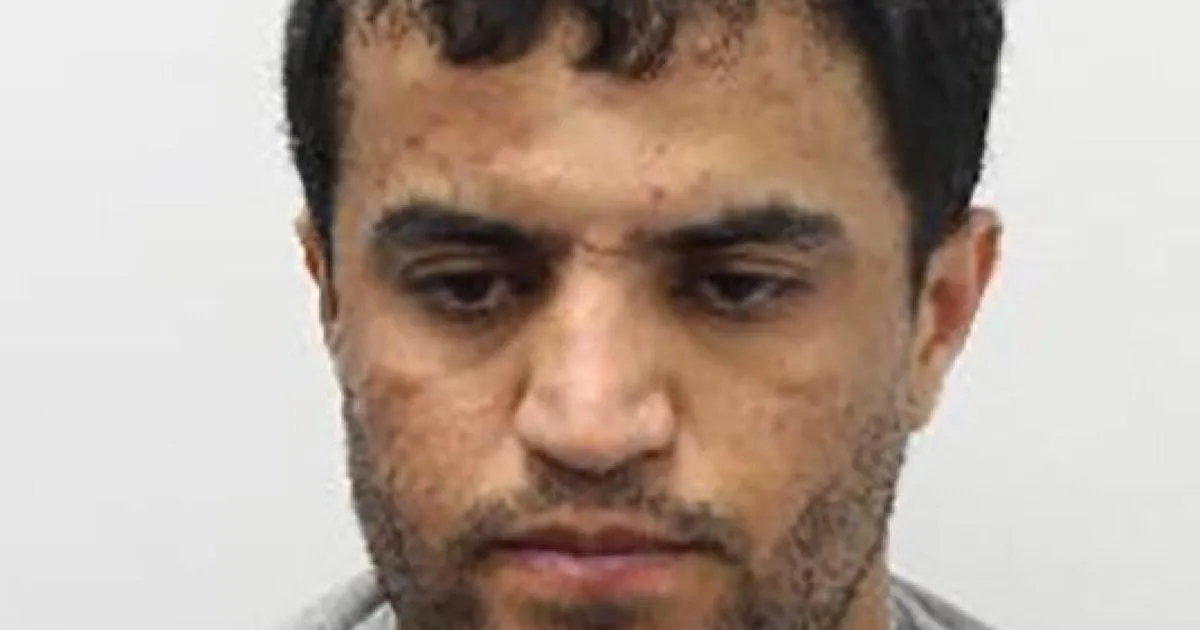
On an otherwise ordinary afternoon in Uxbridge, west London, a quiet residential street became the backdrop for a nightmare of violence, terror, and improbable bravery. Wayne Broadhurst, 49, had simply been walking his dog when he was set upon by a man with a knife, repeatedly stabbed in a frenzied attack that left him dying on the pavement. The attacker, 28-year-old Dawood Safi, an Afghan immigrant, had already stabbed his landlord, Shahzad Farrukh, and a 15-year-old boy inside a nearby home. By the time the rampage ended, one man was dead, two others were seriously wounded, and a family of ordinary people had been thrust into the middle of a horror they will never forget. Later, when the courts delivered their verdict, Keith Rogers, a 58-year-old former soldier whose family had confronted the killer, said he was “gobsmacked” that Safi had escaped a murder conviction. Instead of a life sentence, Safi was handed an indefinite hospital order under the Mental Health Act, a ruling that acknowledged the devastating reality of his crimes while recognizing his state of mind. For the Rogers family, the outcome felt surreal, a strange and unsatisfying end to a chapter that had begun with blood-curdling screams in broad daylight.
Keith Rogers vividly remembers the moment his ordinary day shattered. “We heard blood-curdling screams for help from our neighbours,” he later told Metro. “Everything happened so fast. Our neighbours came out of their house and we managed to get them inside our home.” What greeted them was a scene of carnage. One of the neighbours was badly injured and bleeding heavily, his life ebbing away in the middle of the Rogers family home. Keith, drawing on army medical training from years before, immediately went to work, compressing the wound while blood pooled on the floor. But the nightmare was not over. The man who had inflicted these injuries, Safi, followed his victims to the door, still clutching the knife, apparently intent on finishing what he had started. It was then that Keith’s daughter, a young woman whose name has not been widely reported, stepped into the breach. Grabbing a walking stick from beside the door, she stood between the armed man and the wounded people cowering in her home. As Safi slashed at her with the blade, she swung the walking stick again and again, somehow managing to hold him off. Keith later described her as “so brave,” and her actions that afternoon were nothing short of heroic. In the chaos, with a knife-wielding assailant at the threshold, she refused to retreat, and her courage gave the others precious seconds to survive.
The confrontation did not end there. Safi backed away from the house, but instead of fleeing, he moved down the road and found Wayne Broadhurst, a man who had nothing to do with any of this, walking his dog. Without hesitation or mercy, Safi set upon him, plunging the knife into his body over and over. Keith, now armed with a baseball bat, sprinted toward the scene and found himself face to face with the killer. “I had a baseball bat which I threatened the bloke with,” he said. “I came eye to eye with him.” What Keith saw chilled him to the bone. “He looked like he knew what he was doing but just didn’t care. He didn’t look possessed or crazy, just like he knew what he was doing.” There was no rage, no madness in his eyes, only a terrifying, detached clarity. Keith stood his ground, and eventually Safi retreated, perhaps deciding that the battle was no longer worth the fight. But it was too late for Wayne. Keith dropped the bat and knelt beside the dying man, beginning chest compressions. He did everything he could, his army training kicking in as he fought to keep Wayne’s heart beating. But Wayne had been stabbed so many times, his wounds were too severe. “He was slipping away,” Keith remembered. For all his strength, all his training, all his will, he could not bring him back. Wayne Broadhurst died there in the street, surrounded by strangers who had tried their best to save him.
In the aftermath, the Rogers family were left to process an experience that no family should ever have to endure. They had sheltered their neighbours, fought off a knife attacker, and watched a man die despite their desperate efforts. Keith, a man who had served his country, spoke not of his own heroism but of the trauma and the frustration of being unable to save Wayne. He had given chest compressions, applied pressure to wounds, and used every piece of medical knowledge he possessed, but the sheer number of stab wounds was overwhelming. The image of Wayne slipping away, his life fading under Keith’s hands, is one that will haunt him forever. Shahzad Farrukh, the landlord, and the 15-year-old boy survived, but they too carried physical and emotional scars. The boy, in particular, had been caught up in a nightmare no child should know, stabbed and then forced to flee his own home. The details of Safi’s background emerged slowly in the days that followed. He had immigrated from Afghanistan and was living with his landlord when something snapped. The court later heard evidence about his mental state, and ultimately, rather than a murder conviction, Safi was sentenced to an indefinite hospital order. For the families involved, that verdict was both a relief and a disappointment. It meant Safi would be locked away from society, but it also raised uncomfortable questions about how such a man had been living in the community, and whether his illness had been missed.
The legal outcome of the case, while formally just, left many people with a sense of unease. Wayne Broadhurst was a beloved father, friend, and dog owner, a man who happened to be in the wrong place at the wrong time. His family will never get him back, and no hospital order can undo the horror of his final moments. The fact that Safi was not convicted of murder, because his mental condition meant he could not be held criminally responsible, is a legal nuance that offers little comfort to those who loved Wayne. Keith Rogers, for his part, acknowledged being “gobsmacked” by the outcome, a sentiment echoed by many in the community. How could a man who had shown such calculated brutality, who had stalked his victims and stabbed a dying man repeatedly, escape a murder rap? The answer lies in the complex intersection of law, psychiatry, and justice. Safi was not faking, the courts concluded; his mind was genuinely broken in ways that removed his culpability under the law. But that understanding does not ease the pain of a community that witnessed the violent death of one of its own. It does not silence the screams that echoed through the streets of Uxbridge that afternoon. And it does not erase the image of Keith, kneeling in a pool of blood, trying to hold onto a life that was slipping through his fingers.
What endures from this tragic story is not the hatred, but the humanity. In the face of unspeakable violence, the Rogers family responded not with fear, but with courage. Keith’s daughter, armed with nothing but a walking stick, stood between a killer and his victims. Keith himself, a former soldier, used his old training to try to save lives, even as his own life was in danger. Their neighbours, bloodied and terrified, found shelter in a home that became, for a few terrifying minutes, a fortress of compassion. And Wayne Broadhurst, though he could not be saved, died surrounded by people who refused to abandon him, people who fought for him until the very end. Safi is now confined to a secure hospital, where he will remain indefinitely, possibly for the rest of his life. But the true legacy of that day in Uxbridge lies with the ordinary people who discovered extraordinary strength within themselves. They did not ask to be heroes. They did not expect to confront a knife-wielding killer on their own doorstep. But when the moment came, they answered with everything they had. That, more than any legal fine print, is the story that should be remembered. It is the story of a daughter’s bravery, a veteran’s determination, and a community’s refusal to let terror win. Wayne Broadhurst is gone, but the best of humanity was visible in the desperate efforts to save him. And that is something no hospital order, no legal verdict, and no tragedy can ever take away.