
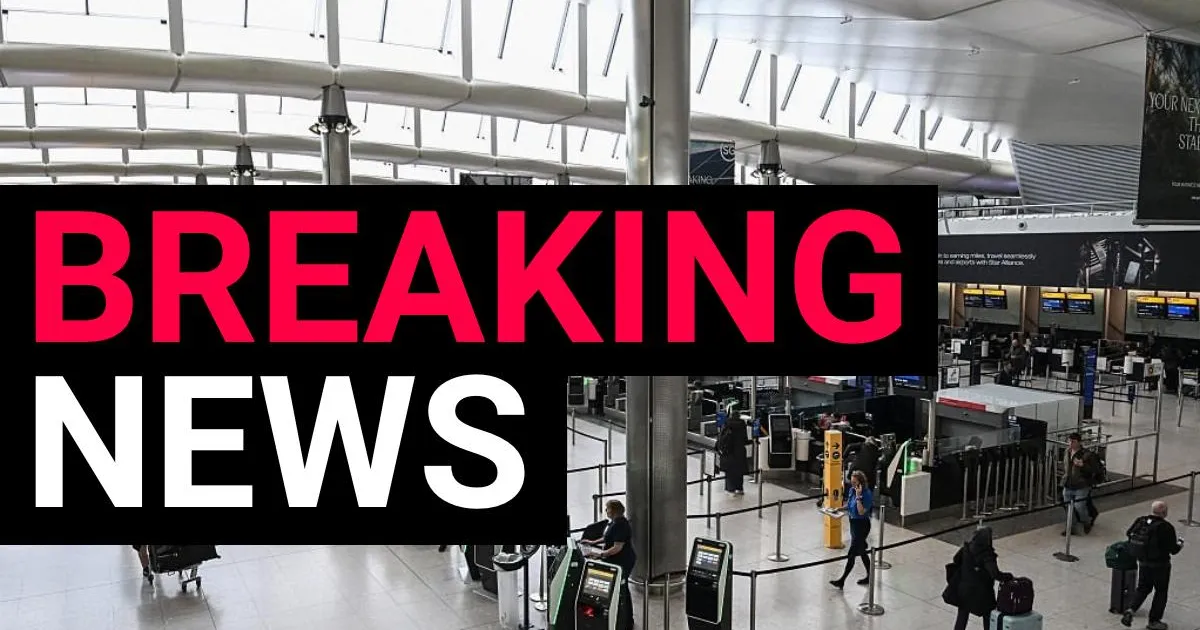
The summer sun was supposed to be the backdrop for happy departures, the clinking of overpriced airport coffees and the excited chatter of children counting down the hours until they reached the beach. Instead, a thick, unsettling sense of confusion gripped the sprawling concrete expanse of Heathrow Airport as an unexpected and dramatic natural phenomenon brought everything to a standstill: flooding. The central terminal area, the beating heart of the airport’s operations, had become a waterlogged obstacle course. For thousands of travellers pouring in for their mid-August getaways, the sudden sight of pooled water reflecting the grey skies and the ominous sea of flashing traffic cones was a gut-wrenching blow. The usual, automated flow of taxis dropping off families and shuttle buses ferrying passengers had ground to a near-halt, replaced by frantic honking and drivers looking desperately for any exit that wasn’t submerged. The dream of a relaxing holiday was instantly supplanted by the nightmare of logistical chaos, and the dreaded fear of missing a flight began to settle over the crowds like the damp, heavy air itself.
The official word came quickly, but it was delivered like a hammer blow. Heathrow Airport issued a stark and unambiguous advisory that felt more like a state of emergency than a travel update. “Do not travel by road,” the notice pleaded, a jarring contrast to the usual invitations to glide through duty-free. The flooding had completely severed access to Terminals Two and Three, the central core of the airport’s structure, forcing indefinite road closures. The logic was simple but devastating: the infrastructure meant to funnel millions of passengers through security and into the skies was now a physical barrier of water and mud. In a frantic scramble for solutions, the airport pointed passengers towards the iron arteries of the city’s underground and overground rail systems. The Heathrow Express, with its promises of quick transit, the Elizabeth Line cutting clean across the city, and the trusty Piccadilly Line were all thrust into the spotlight as the only viable lifelines. For those who absolutely had to use a car, the instructions became a convoluted game of pick-up sticks: drive to the remote Terminals Four or Five, park, and then take a free internal rail shuttle from there to attempt to reach their original gates. It was a logistical puzzle that demanded patience, flexibility, and a deep breath.
The sheer emotional toll of this sudden disruption was impossible to ignore, especially with the clock ticking relentlessly against every passenger. This was not a quiet Tuesday morning; this was the peak of the school summer holidays, the single busiest and most emotionally charged travel window of the entire year. In the car parks and on the approach roads, family minivans sat stationary, parents gripping steering wheels with white knuckles, children growing restless in the back seats, and the ever-present worry of a missed holiday threatening to turn joy into despair. The atmosphere inside the alternative rail stations was of a tense, shared anxiety. You could see it in the eyes of a businessman checking his watch every thirty seconds, the portable charger in his hand saving his dying phone for the crucial boarding pass. You could see it in the frazzled nerves of a young mother juggling a toddler and a suitcase, trying to decipher the maze of new signs. It was the human cost of infrastructure failure, the invisible panic that spreads like wildfire when a journey that was planned for months suddenly becomes a gamble. The simple act of getting to the airport, usually a routine prelude, had become the hardest part of the entire trip.
Yet, amidst the frustration and the downpour, the practical solutions emerged, powered by the resilient, problem-solving spirit of humanity. Passengers became impromptu navigators, shouting directions to each other while airport staff, donned in bright reflective vests, waded through the chaos with unwavering commitment. The park-and-ride options at Terminals Four and Five became overflow havens, with hundreds of cars clogging the designated lots, and weary travellers piling onto the free shuttle trains, their luggage forming a colourful mosaic on the floor. The rail network, which had been a secondary option just hours earlier, transformed into the primary conduit for the entire airport’s manpower. The Elizabeth Line carriages were packed to the brim, a sweaty, anxious crowd united by their shared predicament. In the midst of it all, the airport’s communications team issued a sincere apology, acknowledging the disruption with a tone of genuine regret. They promised their engineering teams were working “as quickly as possible,” but the promise felt hollow against the reality of a flooded tarmac. The chaos forced a quiet, unspoken camaraderie among strangers, a collective understanding that despite the airport’s best efforts, nature had thrown a curveball that would take time to recover.
The ripple effects of the Heathrow flood extended far beyond the airport perimeter fence, creating a cascade of delays that snaked through the entire London transport network. On the M25 and the M4, traffic ground to a crawl as frustrated drivers attempted to detour around the closed terminal exits, turning a thirty-minute drive into a three-hour ordeal. Local train stations like Hayes and Harlington, which were meant to serve as relief valves, suddenly found themselves overwhelmed by a surge of desperate passengers trying to navigate the Tube maps. The knock-on effect was felt by airlines, which were forced to hold planes, ground crew and cabin staff in a purgatory of waiting, staring at radar screens and praying the rain stops. Luggage was misdirected, with bags waiting disembarked on carousels while their owners were still stuck on the Piccadilly Line. For those arriving from international flights, the sudden inability to get a taxi or an Uber from the central arrivals halls was a shocking end to a long journey. The intricate web that keeps the world’s busiest airports humming had been temporarily severed, and the whole city felt its pulse slow down. It was a stark reminder of how much of our modern, interconnected lives rely on the seamless, and often invisible, infrastructure of transport.
Ultimately, the story of this Heathrow flood is a story of resilience and the unpredictable nature of travel. As the water recedes and the roadways are cleared, life will slowly return to normal, the airport’s feverish activity reigniting as passengers finally make it to their gates. The frustration, however, will linger in the memories of those who lived it—the feeling of panic when the train doors closed, the wave of relief when the final boarding call echoed through the terminal. In the end, every traveller who made it onto their flight has a war story to tell. The episode humanizes the massive, impersonal machinery of international air travel, reminding us that behind every boarding gate and security checkpoint are human beings crossing their fingers. It took a summer downpour to prove that no matter how advanced our technology or how meticulous our scheduling, we are still at the mercy of the weather. For the thousands impacted, the lesson was clear: pack your patience, download your favourite podcasts, and always, always check the weather forecast before embarking on your next adventure, because even the world’s busiest airport can be brought to its knees by a little bit of rain. The airport team’s promise to resolve the situation quickly is the light at the end of the tunnel, offering a glimmer of hope that the sun will shine on the tarmac again soon.