
The Unimaginable Loss of the El-Khawas Family: A Shoreham Tragedy
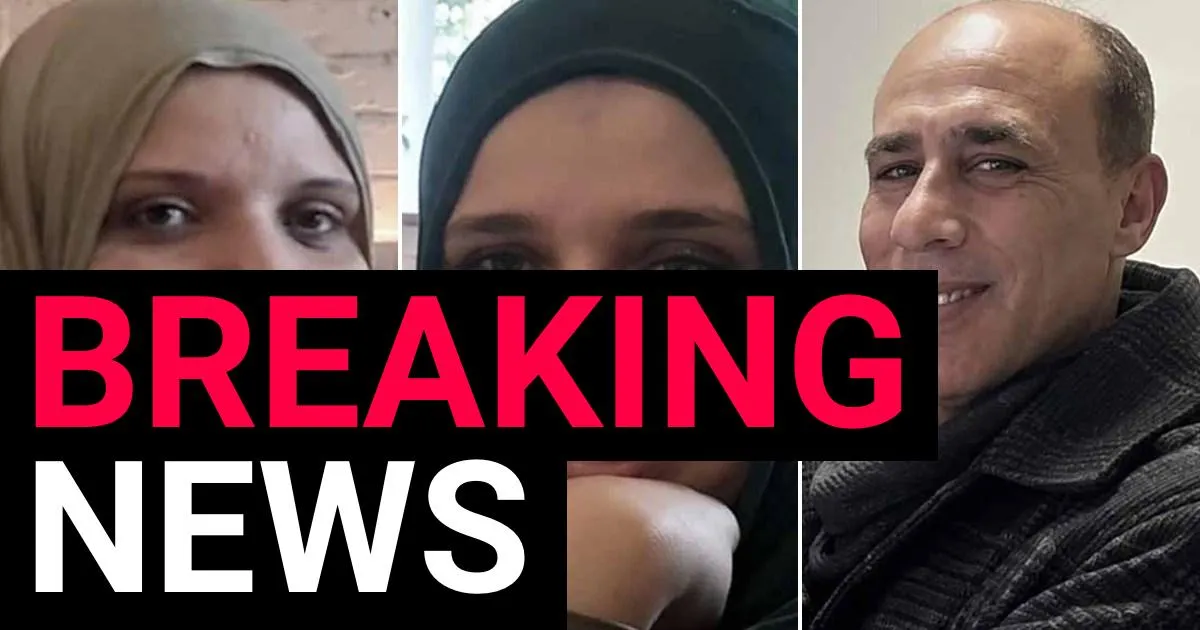
The sunshine, the laughter, the gulls crying overhead—that is usually the memory we hold from a day at the beach. At Shoreham-by-Sea, however, a visit that began under the same benign summer sky has ended in a nightmare of such profound scale that it has shaken the very foundations of the community. The devastating fate of the El-Khawas family has now reached its most heartbreaking conclusion, with the confirmation that six-year-old Saja El-Khawas has passed away in a London hospital. She was the last survivor, the youngest member of a family unit that had travelled from their home in the capital for what should have been a peaceful escape by the sea. Tragically, alongside Saja, we mourn the loss of her father, Hassan El-Khawas, 55, her mother, Zeina Alayn, 37, and her older sister, 14-year-old Sara. In the span of a single Tuesday afternoon, the entire nuclear family was erased from this world, a fact so terrible it borders on the incomprehensible. The news of Saja’s death was confirmed not just by the legal authorities acting on behalf of Guy’s and St Thomas’ NHS Foundation Trust, but also by the Palestinian Forum in Britain, a poignant reminder that the family carried the weight of a much older, more painful history. Hassan El-Khawas was a Palestinian refugee from the Rashidieh Camp in Lebanon, a man who had likely survived decades of displacement, hardship, and geopolitical turmoil only to meet his end in the gentlest of British settings. The irony is sickeningly cruel. He, his wife, and their daughters sought the banal safety of a beach trip, and within minutes, the sea that promised tranquility turned into a silent executioner.
To understand the magnitude of this loss, one must return to the moments that led up to it. The family, residents of London, made the journey south to the pebbled coastline of Shoreham-by-Sea. It is a popular spot for day-trippers, offering a sense of maritime escape without the long drive to the west country. Around 2 p.m., they made their way to the water near Shoreham Fort, a historic military structure that now serves as a silent sentinel over the shore. The water there is known to be deceptively dangerous, marked by unpredictable currents that can snag the unwary. Unbeknownst to the family, the sea was holding a deadly secret in its depths. In the initial moments of their dip, tragedy struck. Fourteen-year-old Sara, the eldest daughter, felt resistance beneath the surface. She had become entangled in a fishing net, the kind of heavy, discarded gear that sinks to the bottom and lies in wait for an innocent swimmer. Panic would have gripped her instantly. The current was too strong for her to free herself, and her frantic splashing would have caught the attention of her father. Hassan, a man devoted to his family, saw his daughter in distress and did not hesitate. He plunged into the water, his intention to untangle Sara and bring her back to shore. But the merciless rip current had other plans. As he struggled against the net and the undertow, he too began to lose his battle with the elements, gasping for breath and fighting to stay afloat.
What happened next is perhaps the most painful part of this nightmare. Zeina Alayn, the mother, watching from the shore, witnessed her husband and her eldest daughter flailing helplessly in the water. In a moment of pure maternal instinct, she did what any parent would do. She disregarded the danger to herself and ran screaming into the sea to reach them. She was followed by her youngest, little Saja. It is difficult to fully comprehend the fear that must have coursed through that six-year-old’s veins as she watched her entire world—her mother, father, and sister—being dragged under. She waded in after them, likely crying out, trying to grasp them, but the water around her was a chaotic whirlpool of desperation. The Palestinian Forum in Britain explained that the conditions proved “overwhelming.” They were not lacking in bravery; they were lacking the physical ability to fight against the sheer force of nature. One by one, the currents overwhelmed them. By the time the emergency services were alerted, the damage had been done. A colossal emergency response was triggered. Multiple ambulances screamed towards the beach, while two air ambulances thundered overhead. An HM Coastguard helicopter was scrambled, its rotor wash creating a fierce wind over the waves, while rescue teams from Littlehampton, Newhaven, and Shoreham raced against time alongside the RNLI lifeboat. The rescuers pulled the family from the water, but the sea had already claimed its victims. Sara, Hassan, and Zeina were pronounced dead, their bodies recovered from the cold water. Saja, however, was still alive, though unresponsive, her tiny form still holding a faint pulse. She was rushed to a major trauma center, clinging to life.
As the days passed, a heartbreaking vigil began. The community, not just in Shoreham but across the entire nation, held its breath for the little girl. On Wednesday morning, Sussex Police issued an initial statement. They were incredibly transparent, noting that while their investigation remained open, a review of CCTV footage and initial witness accounts strongly suggested that this was a tragic accident, with absolutely no third-party involvement. Chief Superintendent James Collis delivered the official condolences, his voice heavy with sorrow. “The events of Tuesday afternoon are a heartbreaking tragedy which has devastated a family and their friends and had a profound impact on the Shoreham community,” he said. His words were accurate, as the peace of Shoreham had been shattered. Locals, accustomed to seeing families enjoy the coast, were visibly shaken. Tributes began to accumulate on the pebbled beach near Shoreham Fort. Bouquets of flowers, wrapped in cellophane, stood propped against railings, their colorful petals a stark contrast to the grey waves that had taken the lives. Teddy bears and handwritten notes were added, scrawled with messages of love and disbelief. For the residents, the image of a mother diving in to save her husband, and a little girl following her mother into the abyss, was too visceral to ignore. It was a stark reminder that the beach, a place of innocent holiday joy, could turn into a fatal mousetrap in seconds.
While the world focused on the tragedy as a whole, the individual lives lost deserved their own remembrance. On Thursday, the Ellen Wilkinson School for Girls in Ealing paid a profound tribute to Sara. She was a Year 8 pupil, a child on the cusp of adolescence, with all the potential and promise that entails. The school described her as “a sweet girl, well-liked by staff and students, and she will be greatly missed.” They noted how deeply upsetting the news would be for her peers, for the teachers who saw her every day, and for the entire school community. The tribute painted a picture of a friendly, warm-hearted teenager whose life was cut tragically short before she could graduate, fall in love, or make her mark on the world. Beyond the school gates, the Palestinian community mourned. Adnan Hmidan, the chairman of the Palestinian Forum in Britain, expressed the collective shock, stating, “Our thoughts and prayers are with the entire family, particularly the children, who are facing an unimaginable loss.” For the Palestinian diaspora, the El-Khawas family represented a familiar narrative. Hassan El-Khawas was a refugee from the Rashidieh Camp in Lebanon. He had likely grown up amidst conflict, with the instability of the Middle East shaping his life. He brought his family to Britain seeking sanctuary and stability, a safe place to raise his daughters. The bitter irony is that the safe place he found was the very setting for his family’s demise. The sea that offers a cool respite on a hot day proved more deadly than any border crossing he had endured.
And yet, even amid the deep mourning, there was a shred of hope: Saja. The six-year-old remained in a critical condition in hospital, hooked up to machines, her tiny body fighting a monumental battle. The entire community, and the wider world, prayed for her full recovery. Anyone who read the story felt a clutching anxiety for her. But the hope was not to last. The confirmation of her death now leaves an entire family to be buried together—a father, a mother, and two daughters. They will lay side by side, their lives ending in the same watery grave. The tragedy is compounded by the fact that they died trying to save each other. The father died saving the daughter. The mother died saving the father. The sister died following her parents. There is a terrible, poignant poetry in their unity—a family that could not be separated in life, even in the final, terrifying minutes. Now, the community of Shoreham must heal, the school in Ealing must process the loss of a student, and the Palestinian community must find a way to honor the memory of a man who fled war only to find death by accident. The flowers on the beach will wilt and fade, but the scar left on the soul of all who heard this story will remain. It is a reminder of the fragility of life, the ferocity of the natural elements, and the pure, selfless love of a family who, in the face of insurmountable odds, chose to dive into danger for one another. Saja’s death marks the final chapter of this somber tale, but the memory of the El-Khawas family will live on as a symbol of love, sacrifice, and the relentless cruelty of chance.