



Here is a summarized and humanized version of the news report, presented in six paragraphs.
—
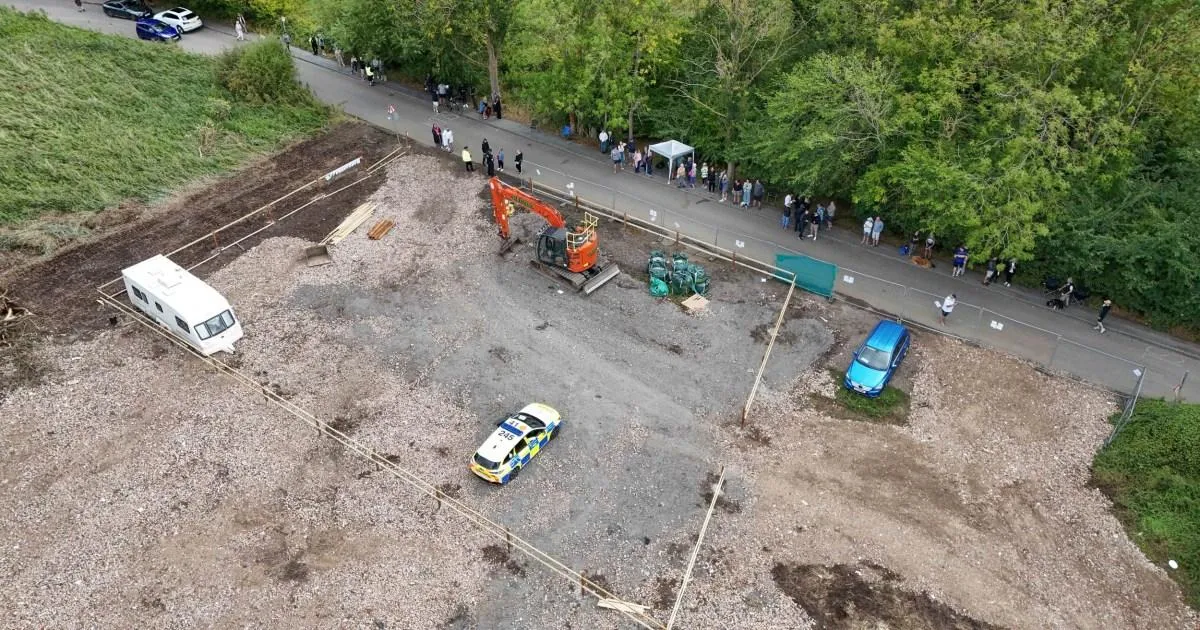
In the quiet commotion of a bank holiday weekend, the tranquillity of a protected green belt in Sawbridgeworth was shattered not by the sound of wildlife, but by the relentless roar of heavy machinery. Residents woke to find a sprawling parcel of protected land, a known haven for local wildlife, being carved up by excavators. The sight was a gut punch for the community, who watched in disbelief as tonnes of earth were displaced and fencing was erected in a matter of hours. The sheer audacity of the operation, taking place while most offices were closed, felt like a calculated move by the developers, a brazen attempt to get a foothold before anyone could stop them.
The scene transformed into a focal point for community anger, drawing a crowd of around 400 local residents who had gathered to voice their fury. The atmosphere was thick with frustration as they watched the machines at work, accusing the developers of exploiting the public holiday to push through a project they knew was unwanted and unauthorized. For them, this wasn’t just an infringement of planning laws; it was an assault on their countryside, their environment, and their peace of mind. The speed and timing of the works felt like a declaration of war, with residents vowing to fight the encroachment on the land they cherished and relied upon for its natural beauty.
At the heart of the residents’ anxiety was a very real and practical fear rooted in the land’s history. Amy Panter, a 19-year-old local, articulated the community’s deep-seated concern that the development would not just be an eyesore but a direct threat to their safety. The land, she explained, functions as a natural floodplain, a vital sponge that absorbs excess rainwater and protects the surrounding homes from flooding. She implied that the developers had “lined up loopholes” to get a start on the work, sidestepping due process. The thought that the ground’s natural ability to manage water could be destroyed for the sake of construction left residents feeling vulnerable and anxious about the future well-being of their homes.
Officials, however, gave a timeline that reframed the developers’ actions as a failure rather than a victory. East Hertfordshire District Council confirmed that a court injunction had been secured to halt the illegal operations on Saturday morning, with the site being secured by that evening. A spokesperson clarified that they had acted decisively, obtaining a court order to stop the ongoing works immediately. The council’s stance was firm, emphasizing that the brakes had been put on the development and that they were now ensuring the site remained inactive, including monitoring it beyond normal working hours to prevent any attempts to resume the unauthorized building.
The developer involved, Harlow Fencing, sought to manage the fallout by claiming they had been unwittingly caught in the middle of the affair. The company asserted that they had been misled about the true nature of the project, stating that they had supplied materials and equipment “in good faith” and had ceased all deliveries to the site as soon as concerns were raised. This defense painted a picture of a contractor as a victim of misrepresentation rather than a culprit. While the council’s focus was on enforcing the law, the legal battle was set to continue, with a hearing scheduled for September 15 at the Royal Courts of Justice to determine the long-term fate of the land.
Local political leadership threw their full weight behind the residents’ campaign. Josh Dean, the Labour MP for Hertford and Stortford, expressed his shock and anger, describing himself as “appalled” by the “flagrant disregard for the rules.” He called for stronger powers to be given to councils to stop such unauthorized works, recognizing that the current system was too slow to react to such blatant rule-breaking. Having offered his full support and cooperation with the local council, the police, and other stakeholders, the MP framed this as more than a single incident, but as a clear signal that the laws designed to protect Britain’s green spaces are too weak and that communities need better tools to defend their local environments.