
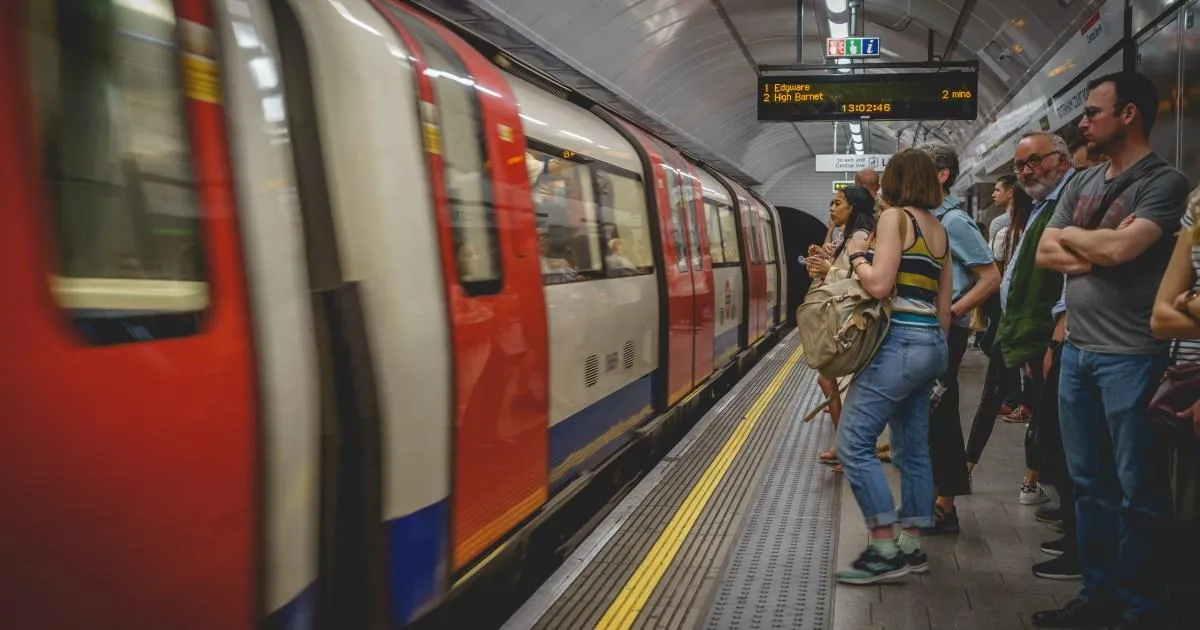
Let’s be honest: there is never a great time to face a weekend of London travel chaos, but this particular Saturday and Sunday feel especially cruel. After weeks of heat, train strikes in the shadows, a major station upgrade that has already eaten into commuters’ patience, and the kind of queues you sometimes see for a limited-edition doughnut, the last thing Londoners need is to discover their route home has vanished overnight. Yet that is exactly what is happening. Transport for London is creeping quietly into the calendar and asking everyone planning to move around the capital this weekend to check their journeys before they leave the house. Whether you are a tourist clutching a hotel map, a family loaded with luggage heading to Heathrow, or a friend who promised to meet a doctor in Ealing but has no idea how, the same advice is being repeated: let yourself breathe, leave a little extra time, and treat your travel app as a new best friend. The reason is simple. Several major Tube lines — including the Piccadilly line, Circle line, District line, Metropolitan line and Hammersmith & City line — will either be suspended or severely altered over the weekend. Add in revisions to the Elizabeth line and the London Overground, as well as two major railway stations closing their doors on Sunday, and ordinary travel becomes a puzzle that is worth solving before you’re standing in front of a barrier with a message that says “no service.”
Saturday, August 22, is perhaps the more volatile half of the story, a day split into frustrating sections for anyone relying on the Circle or District lines. The Circle line will have no trains anywhere until 10:30am, which is a small mercy if you’re not an early riser, but that is not the whole bad news. Even after the line begins to run again, there will still be no service between Edgware Road and Tower Hill via Victoria until 2pm. That means the famous loop is effectively magnetically grouped for a significant part of the afternoon, and anyone trying to get from Paddington toward Kings Cross or the City will have to pivot to other routes or wander over to the Hammersmith & City and wait. The District line, meanwhile, is triply awkward. There is no service across the entire line until 10:30 in the morning, and no service between Edgware Road or Embankment and Ealing Broadway, Kensington (Olympia), Richmond, and Wimbledon until the afternoon. As if that were not enough, from after 2pm there are more holes: no eastbound and westbound between Stamford Brook and Barons Court, no service between Earl’s Court and Kensington (Olympia), and no service between Fulham Broadway and Wimbledon. Essentially, if you live in the western, south-western part of the city, your Saturday involves a lot of walking, buses, or perhaps a deeper breathing. The Hammersmith & City line will also be out of the entire system until 10:30am, and the Metropolitan line will have no trains between Aldgate and Harrow-on-the-Hill before that same late-morning marker. For the Piccadilly line, resuming badly on Saturday: no Night Tube overnight between Friday and Saturday, which is bad for anyone after last orders; no services between Hyde Park Corner and Acton Town until at 2pm; and eastbound trains will not stop at Caledonian Road all weekend. Even the London Overground is having a little snag: two evening trains from Clapham Junction to Stratford will terminate Willesden Junction, and the 11:19pm Clapham Junction to Willesden Junction connection disappears entirely.
Sunday, August 23, is where the transport body TfL being especially testy of plans. For most of the day, on the District line, the same no-service rules continue to apply between Stamford Brook and Barons Court, between Earl’s Court and Kensington (Olympia), and between Fulham Broadway and Wimbledon. The London Overground is on a kind of weekend retreat: the Mildmay line will have no service between Willesden Junction and Clapham Junction until 9:30am; overnight, after 10:15pm, there is also no service between Camden Road and Stratford. The Windrush line is even more seriously affected, with no runs between New Cross Gate and Crystal Palace or West Croydon all day, and no service between Highbury & Islington and Dalston Junction after 10:15pm. The Elizabeth line, that shimmering cross-London artery which is supposed to connect you to the future, will have no service between West Drayton and Maidenhead until 8am. So if you were dreaming, morning to Windsor Castle, that dream becomes a distant exit. On top of all of this, Charing Cross and Waterloo East stations, themselves reopened only days before after a brutal 22-day closure for £20 million worth of upgrades, are closing again on Sunday. People might be forgiven for feeling like they’re being sacrificed at the altar of improvement: a £20 million makeover that was supposedly finished, and now the gates come down once more for engineering. The upgrades are, in fairness, the kind of work that makes the station feel safer and more pleasant, but the timing is a raw, physical reminder that rail is old, elegant, and needs constant maintenance. Everyone is urged to give themselves longer, and maybe to treat the whole thing as an unpleasant extra leg in the travel game.
It might be tempting to ask why this has all clustered together in one weekend. The answer is, of course, the less glamorous side of subway life: maintenance and renewal. The closures come just a few weeks after the entire Piccadilly line was bystand entirely shut between Cockfosters and Heathrow so that Transport for London could prepare the route for a new fleet of trains. Those newer trains are promised to be smoother, more reliable, more modern, less hot, more frequent. But in the world of travel, every promise of a better future comes with a lot, hard-hatted present. The weekend’s work on different lines is another piece of the same ambitious plan to make the Underground better equipped for the next few decades. The old Bakerloo a hundred years old, still working, knows very well that there is a modern times a real struggle. But passengers with a holiday winder, or a Friday night that goes on too late, must face all the reminders that the city has its own rhythms. For those heading to WestLondon, or further north along the Pecadilly, the closures feel a universe too close after the full closure of the line from Cockfosters to Heathrow, one of the most heavily used portions. There is something bitter about spending £20 million on two stations, then seeing them closed again the very same weekend. The whole message is less of a connection and more of a sieve. Yet TfL would say that backgrounds are being done precisely in a way that residents want, and the best thing to do is to realize that the payoff will be a railway that doesn’t explode every summer.
And, because the Underground’s friction is not enough, there is also the ongoing, messy tale of the buses. Earlier this past week, passengers on dozens of routes across north London and Essex had already seen queues mutate into canyons when Arriva bus drivers went on strike. At the heart of their action was a row over working conditions during this summer’s heat, when the temperatures have climbed to the point of making breath sticky and the metal of buses nearly unbearable. Unite the union, which represents thousands of bus nationwide drivers, accused Arriva North London, a TfL contractor, of not acting on complaints about heat and conditions at work. Whether you have experienced, or are just a compassionate human, the image of a driver stuck in a hot seat, coping with traffic and pressure, is enough to make anyone an advocate for change. The strike action is currently suspended while Unite members vote on a proposal. It means that, for now, those routes have been rendered quieter, and the roads are slightly less stressful. But if the offer is rejected after “Yes”/“No”, the union has promised new strikes from Tuesday, August 25, with more timetables, dates in September and October. The bus announcement throws another layer of vulnerability onto an already chaotic weekend: just because the gates are open today does not mean they shall be open the day after tomorrow. In London, information is not just enough, it’s survival. The best advice remains to keep your phone close, check the TfL app at the next to your last station, and perhaps look out at the world through the window rather than the web — because you know that at any minute, road shows changes.
So, if you are thinking about a weekend in the capital, what does this all amount to? It is not a catastrophe; never is. Life in London goes on underneath the scaffolding. The reduced Circle and District could cause a few busy districts, but the alternative how they work: the dark body of the city has many ways to move, from the National to the rail to the bus to the better option of walking nine street blocks with a coffee in hand. The real danger is not the steel or the overhead line; it is the lack of preparation. The people who have the most difficult weekends are those who meet the staircase of a closed station without anticipating that the giant sign and a Tier Lines would already be at the notice board. In a city the size of a certain planet, being able to absorb detours and phases is an essential. Dust yourself and get down under. The hardest part, at least now, is that the service dislocations so close together that they blur into a greater feeling of “everyTube line currently being maintained.” All part of the wider theme of London’s infrastructure slowly but faithfully being rewired, reborn, in front of the city. They will also result in a network that makes life better, once the half, e-mails to base are complete. For now, the best advice for the weekend is simple, not objection of huge self: check a journey before you lock the front door. Add ten minutes to the time you thought it was going to take. Treat the station, as something more than a turn out of IC4 if you see a bus. And if you are headed to the Piccadilly line, or any other, just remember that this too shall pass—until the next scheduled improvement. Meanwhile, the city will keep beating, confident in the arrival of a quieter week, full of chances to make the most of the hidden London; one changed route at a time.