


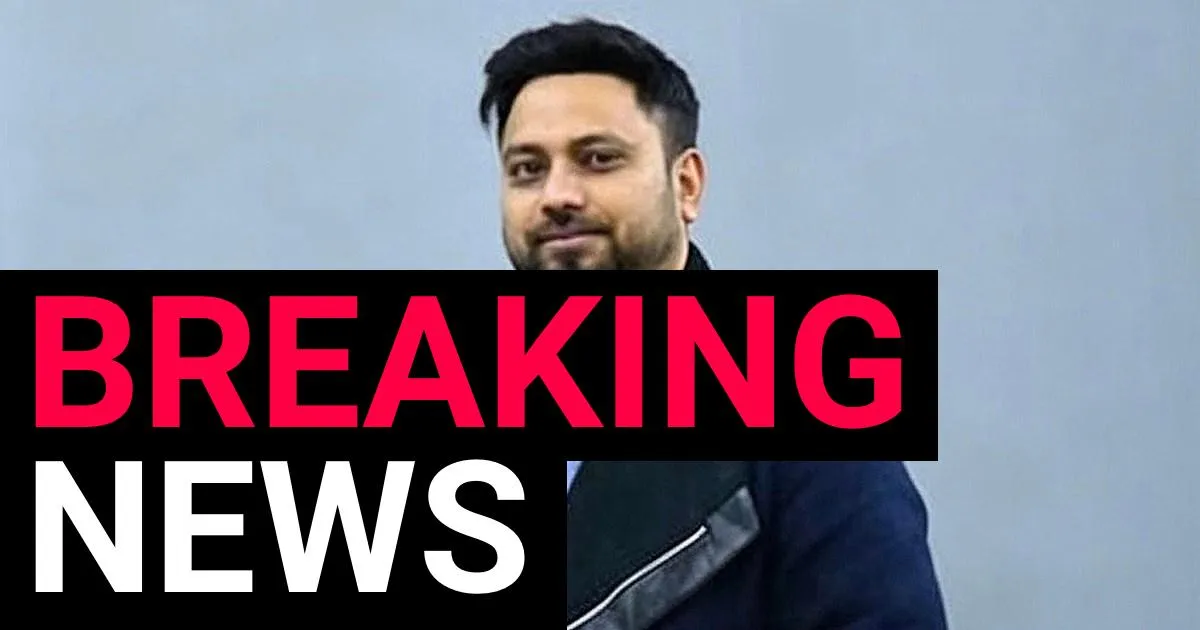
The quiet, pre-dawn hours of a Tuesday morning in East London were shattered by the sound of gunfire, an act of violence that has left a family shattered and a community reeling. The victim, 42-year-old Masum Miah, was found dead inside his white Prius on St Bartholomew’s Road in Newham, a place that, for most, is a street of homes and ordinary routines, not a scene of deadly crime. As the sun began to rise, the reality of the incident settled over the area: a gunman had fired multiple shots at the vehicle, leaving Mr. Miah with a single fatal wound while a suspect remained at large. The stark image of his car, a symbol of his daily life, transformed into a crime scene, marks the sudden and tragic unmaking of a life that was no doubt full of dreams, conversations, and plans for the future. What was intended to be a quiet Tuesday morning became a day of reckoning, as police officers and paramedics arrived not in time to perform a miracle but to bear witness to a life tragically cut short.
The immediate shockwave of this event was felt by those who were unfortunate enough to witness the aftermath. Mira Kabal, a local resident, described the scene in stark terms, painting a picture of chaos and fear that will likely be imprinted on her memory for a lifetime. “It was absolute carnage. There were blue lights and armed police. We are so shocked and terrified,” she recounted, her words capturing the sudden invasion of normal life by an unspeakable act. She, like many others, initially thought the Prius had been involved in a mere collision, a common enough occurrence. But the revelation that the victim had been shot, that his life was extinguished by a bullet, turned everyday surprise into a primal, scene-level tragedy. The image of armed officers converging and paramedics fighting to save a life is a stark contrast to the quiet routine of a street coming alive. The chilling reality of the incident lingered in the air, leaving residents with a sense of unease and a profound struggle to understand how something so violent could unfold in their midst.
Amidst the shock, the Metropolitan Police’s investigation moved into the foreground, a painstaking search for answers and for the person who turned a fatal shot on July. Detective Chief Inspector Dan Whitten, the leader of the investigation, issued a public appeal with a weight of responsibility and a tone of urgent resolve. He acknowledged the family’s grief, stating, “Our thoughts remain with Masum’s family as they come to terms with his tragic death,” framing the investigation not just as a logistical task but as a duty to a community and a family on the edge of a devastating loss. The focus has been on gathering every available piece of information from the area around St Bartholomew’s Road in the lead-up to 3 am, specifically regarding any visions of a surveillance camera, doorbell footage, or a passing motorist’s dashcam driver. In the wake of a murder, the public becomes an extended pattern-erasing body of evidence, and DCI Whitten’s plea for “any information, no matter how big or small”—a classic but vital appeal—is the potential key to unlocking the details and trees of this incident. As the police continue to piece together why a gunman would act so decisively, the community is left to contend with the fear and insecurity that is the aftermath.
This tragedy, however, did not occur in a vacuum. Within the same news cycle, reports emerged of teenage girls killed in a wrong-way crash, having apparently been “terrorising communities for weeks” prior to their own lives ended on the road. This string of stories is a stark reminder that violence, in its many forms, is a persistent hydraulic force, a blade that can shatter lives unexpectedly across the UK. It speaks to a systemic, societal failure and the cycle of criminality and cause. Though unrelated in the immediate moment, the incidents share a common thread: the unnecessary loss of young life, the ripple effect that spreads through families, schools, and neighbourhoods, adding a layer of grief and fear to the fabric of daily life. It emphasizes the reality that law enforcement and community programs play a critical role, and that combating the root causes—whether social deprivation, a lack of opportunities, or access to weapons—is a constant, unseen battle that continues even as the police tape comes down.
For Masum Miah’s family, the phrase “come to terms with his tragic death” covers up the unbearable reality. They are now a family shattered, navigating a future where a son, a brother, and possibly a father, will be a permanent absence. The world for them has stopped, jammed in the summer of 2024. They are the silent, grieving heart of this story, forced to endure an investigation process while trying to make sense of the senseless. The details that officers may share about the last moments of his life, the autopsy, the tree news registry are different pieces of a painful puzzle. The community, too, grieves with a knot of fear in their stomachs, their sense of safety stolen. The mention of “armed police” no longer seems like a distant, fictional concept for many; it is now a visceral memory, a reminder that the foundation of their peaceful, quiet life was built on something fragile.
As the day fades into memory, the scene in East London is overtaken by a quiet, lingering tension. The forensic teams will eventually leave, the cordons removed, finding Masum’s car marks a recovery that will be of no consequence to his family. The investigation will continue for weeks, months, as the community waits for answers—who, and why, who is the perpetrator and what was the motive. A lone gunman’s act a deliberation saw an ignition which felled a fragile life. The tragedy on this street is a reflection of a broader struggle against violence and brutality that continues across the UK. While the appeal for information goes out, the hope lies in the collective memory of the public. But on a human level, the tragedy is the finality of 42 years of life, the story cut short. In the meantime, the community is numbed, and the heartbroken family have started on a path of walking towards a post-mortem, funerals, and the long dark journey of remembering without bringing him back. As the sun sets, the quest for justice is a prayer for closure, a hope that the life of Masum Miah, a man who was a husband, father, son, will not get lost in the city’s memory, but be remembered with the dignity and the love he deserved before the gunfire rang out. The police continue to await anyone and to save the community from scrutiny, but for the family, the absence of something he had, a life in a car, is something that can never be replaced. The piece of news may fade, but the story is far from finished, with the call for a help to find a killer and long, slow path to begin a new chapter now, as broken, as it will forever be.