


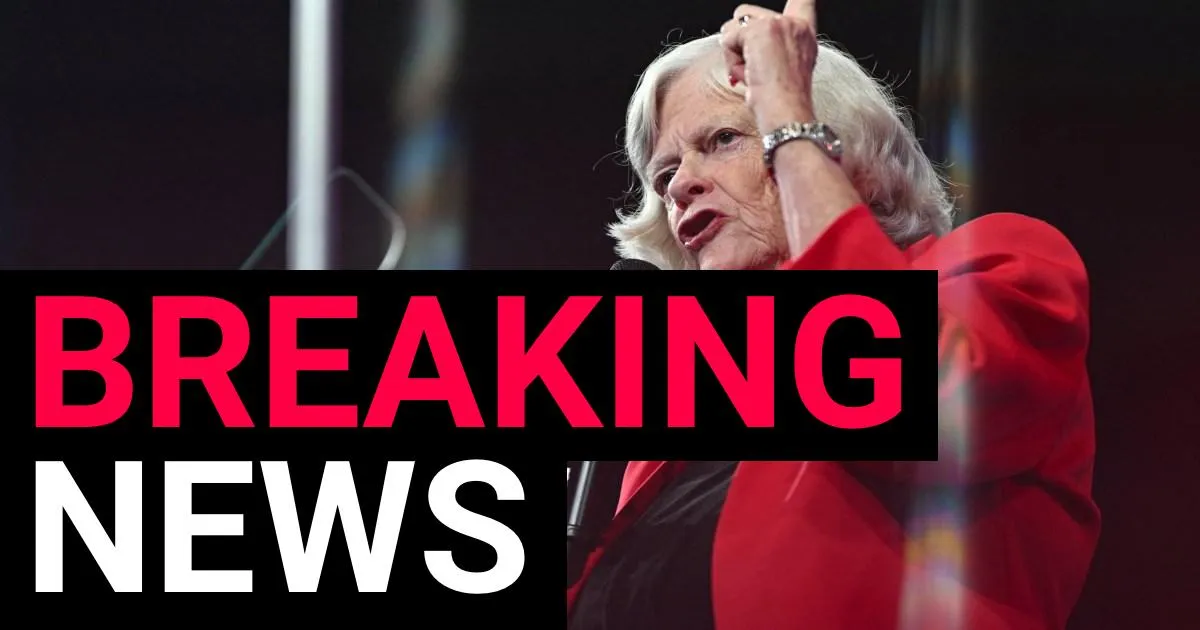
The tragic discovery of 78-year-old Ann Widdecombe, the former MP and prominent political figure, in her Dartmoor home last Thursday has sent shockwaves across the United Kingdom. As the investigation into her death continues, the focus has shifted sharply to the arrest of a 28-year-old man in South Yorkshire. Held on suspicion of both murder and terrorism-related offenses—specifically the preparation or instigation of such acts—the suspect remains in custody as authorities scramble to piece together a motive for what they have officially classified as a “targeted attack.” This development has transformed a personal tragedy into a national security concern, leaving the public grasping for answers about how such a high-profile figure could be killed in such a secluded location.
The human side of this investigation has surfaced through the bewildered reaction of the suspect’s own family. His uncle, speaking anonymously to the press, expressed a profound sense of disbelief, describing his nephew as a recluse who, until recently, had shown no signs of harboring the dangerous impulses now attributed to him. According to neighbors in Rotherham, the young man lived a quiet, solitary life following the death of his father, occasionally performing small, neighborly acts like accepting parcels. The surreal contrast between his mundane, isolated existence and the gravity of the allegations against him has added a haunting layer of mystery to the case, leaving those who knew him struggling to reconcile the man they saw at his doorstep with the suspect now detained by counter-terrorism units.
Adding to the complexity of the case is the victim’s stature in British politics. Ann Widdecombe was widely recognized for her forthright nature, her unwavering principles, and her outspoken, often polarizing, commentary. Even the suspect’s uncle admitted to being a fan of hers, citing her “straight-talking” demeanor as the exact reason she earned both loyal supporters and fierce detractors. As detectives delve into the background of this killing, the possibility that her public persona directly influenced her death has become a primary pillar of the investigation. Police are currently working to determine whether her high-profile media appearances or her specific political affiliations played a role in the attacker’s decision to target her, placing the integrity of public service and free speech under the national microscope.
The narrative surrounding the investigation has evolved significantly since the initial discovery of the crime scene. While Devon and Cornwall Police initially suggested there was no immediate evidence of a political motive or a terrorist link, the case quickly escalated once counter-terrorism specialists took the lead. Reports now indicate that authorities are exploring various radical ideologies, with some sources pointing toward left-wing extremism or single-issue grievances as potential drivers for the act. This pivot has fueled public anxiety, as the police work to understand whether the suspect was acting as a lone wolf or if this was part of a broader, more sinister plan that could pose a threat to other public figures, particularly those associated with the Reform UK party.
Assistant Commissioner Laurence Taylor has attempted to reassure a concerned public while balancing the sensitivities of an ongoing, complex investigation. In recent briefings, he emphasized that the police are taking a proactive approach to threat assessment, particularly regarding other political figures. By treating the investigation as a “targeted attack,” the authorities are shifting their resources to ensure that any potential future risks are mitigated before they can manifest. However, the exact motivation remains elusive; the police are currently painting a portrait of a suspect whose life was defined by extreme isolation, making it incredibly challenging for investigators to pinpoint the exact moment or spark that turned a quiet man in Rotherham into an alleged killer.
As the days turn into weeks, this case stands as a grim reminder of the volatility inherent in modern political discourse. We are witnessing the intersection of a deeply personal tragedy—the death of a well-known public servant—with the broader, darker currents of ideological extremism. For now, the public waits with bated breath as the forensic and digital trail left by the suspect is scrutinized. Whether the motive is found to be rooted in extreme political fervor or a more localized, private volatility, the death of Ann Widdecombe has undeniably altered the landscape of political safety in the UK, forcing a necessary, albeit painful, conversation about how we protect those who stand on the front lines of our national debate.