


Paragraph 1
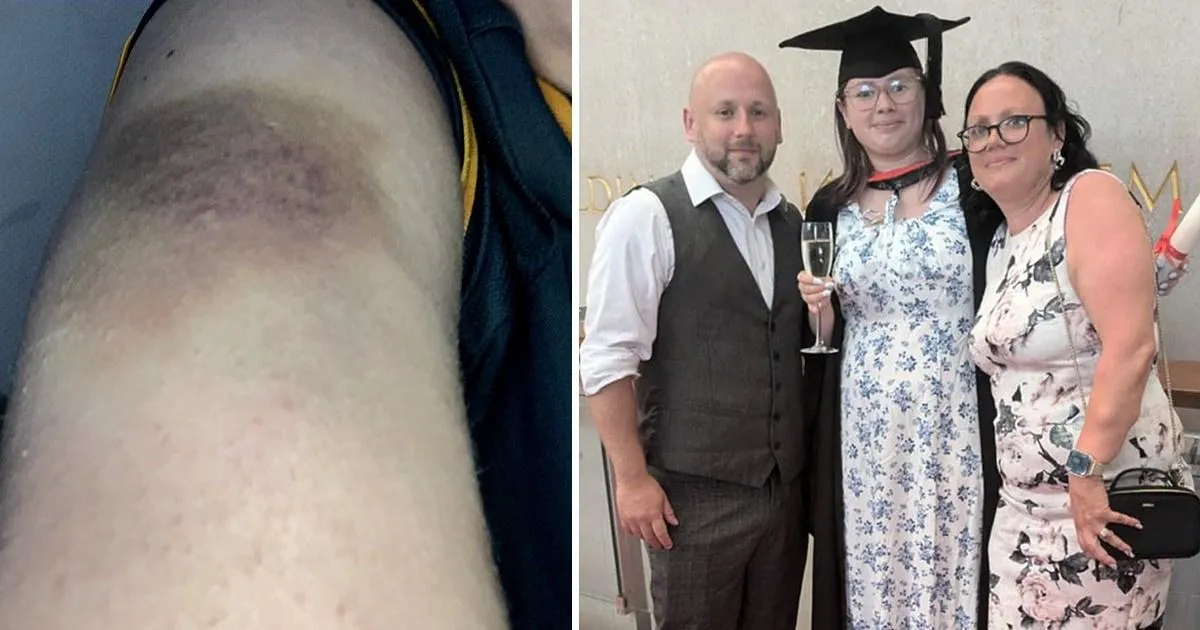
Leah Morton was twenty-one years old when her relationship became a prison. She met Joseph Hartley in Bridlington, and what began as a romance slowly curdled into something unrecognizable. From October 2025 until his arrest in March, she endured a campaign of violence that left her concussed, bruised, and terrified. He would beat her until she collapsed on the floor, unable to get up, and then continue until his own strength gave out. When she became pregnant, the abuse did not stop. It escalated. He kicked her stomach. He covered her mouth. He tried to strangle her. Her body became a canvas of purple and black marks, some hidden at first, then impossible to conceal. She learned to anticipate the sound of his footsteps, to read the shift in his eyes, to brace herself for the moment when tenderness turned to rage. The baby growing inside her should have been a reason for hope, but instead it became another target for his cruelty. Leah was not just a victim of physical violence; she was trapped in a web of control and fear, isolated from the life she had known. Every day was a survival test. She lost her sense of safety, her confidence, her ability to trust. The woman who had once had plans and dreams was reduced to a shell, waiting for the next blow. This was not a bad relationship. It was a systematic dismantling of a human being. And when she finally spoke about it, her voice carried the weight of months of terror, of nights spent wondering if she would wake up, of mornings when she had to hide her injuries from the world. Leah’s story is not just a statistic about domestic abuse. It is a reminder that violence against women often happens behind closed doors, in the spaces where love is supposed to live, and that the scars left behind are not always visible.
Paragraph 2
When police finally arrested Hartley, Leah felt something she had not experienced in months: relief. For the first time, she could sleep without listening for his key in the door. She could breathe without fear of triggering his anger. In April, he appeared before Grimsby Crown Court and pleaded guilty to a string of offences: controlling and coercive behaviour, intentional strangulation, assault occasioning actual bodily harm, and assault by beating. The court heard how he had subjected Leah to repeated violence, even after she became pregnant, and how his actions had left her physically and emotionally broken. He was sentenced to eighteen months in prison. For Leah and her family, that sentence felt like a small measure of justice, a recognition of the pain he had caused. But that sense of justice did not last long. Just five months later, Hartley was released as part of the government’s early release scheme, a policy designed to ease overcrowding in prisons. Leah’s family were left feeling disgusted. Her father, Adam, called the release “disgusting,” and it is easy to understand why. A man who had strangled a pregnant woman, who had kicked her stomach, who had controlled and coerced her until she was barely functioning, was walking free after serving less than a third of his sentence. The message it sent was devastating: that the system meant to protect victims had failed Leah again. She had done everything right. She had reported the abuse. She had supported the prosecution. She had watched him be convicted. And still, he was out, while she remained trapped in the aftermath of his violence. The relief she had felt in April turned to dread, and the family’s anger was not just about the early release itself, but about what it said about how little their suffering mattered.
Paragraph 3
The abuse did not end when Hartley was arrested. It simply changed shape. Leah had to quit her job. She had to drop out of university. The life she had been building before she met him was gone, destroyed by months of violence and control. She was left homeless, forced to live out of hotels, with no stable place to call her own. Her father, Adam, spent months fighting to get her council accommodation, navigating a system that seemed indifferent to her plight. He watched his daughter, once bright and full of potential, struggle to rebuild herself from nothing. The financial cost was enormous. Adam estimated that they were £3,500 down just getting Leah a new flat, money spent on deposits, furniture, and the basics that most people take for granted. And then there were the belongings that Hartley had destroyed. Photographs, clothes, personal items, the small things that make a home feel like yours, all gone. Leah had to start over, not just emotionally but practically, while the man who had caused all of this sat in prison, waiting for his release. The injustice of that was hard to swallow. Her family had to fight for every scrap of support, while the system seemed to have no problem finding resources for offenders. Leah’s father spoke with frustration about how they had to rebuild her life from scratch, with no help from the authorities, no compensation, no recognition of the trauma she had endured. Every day was a struggle to find a sense of normalcy, to feel safe in her own skin, to believe that the worst was behind her. But the worst was not behind her. It was about to walk out of prison.
Paragraph 4
Leah spent the rest of Hartley’s sentence preparing for the moment he would be released. It was not a peaceful time. It was a countdown to fear. She knew that the early release scheme meant he would not serve his full sentence, and so she braced herself for his return to the streets. “I am worried he will come back and get me,” she said. “Mentally, it is very, very draining.” Those words capture the reality of life for survivors of domestic abuse. The legal system may call it a sentence, but for the victim, the fear never ends. Leah was not able to move on. She was not able to close that chapter of her life. Instead, she was forced to look over her shoulder, to wonder if he knew where she lived, to imagine what he might do now that he was free. Her father shared that fear, and he also shared a deep frustration with the way the system seemed to favour the perpetrator. While Leah and her family had to fight for council accommodation, while they had to spend thousands of pounds of their own money to give her a safe place to live, Hartley would be offered support by probation services. “But he’ll have support when he gets out of prison,” Adam said, “which is something we haven’t had.” The contrast was stark. The victim was left to fend for herself, while the abuser was given help to reintegrate into society. It felt like a betrayal of everything the justice system was supposed to stand for. Leah had been the one who was harmed, and yet she was the one who had to pay the price, emotionally, financially, and physically. The system that was supposed to protect her seemed to be protecting him.
Paragraph 5
Hartley was not alone in his early release. Around seven hundred prisoners were let out on the same day as part of the government’s scheme, and the scenes outside prisons were jarring. Some prisoners appeared jubilant as they walked out onto the streets, with one heard shouting “I’m free, freebie!” Another told reporters, “Justice system, what justice system? Thank you Andy Burnham.” For victims like Leah, those images were a gut punch. The Conservative Party warned that the government was putting the public at risk and called the release an “insult to victims.” The Ministry of Justice responded by saying that within the first weeks of coming into office, they had taken action to keep the most dangerous criminals locked up, meaning that anyone in prison for rape, child sex abuse offences, and manslaughter would now stay behind bars. They argued that because of the prison crisis they inherited, going further would risk the prison system collapsing, leaving police unable to arrest domestic abusers and putting victims in danger. They also pointed to the toughest-ever controls on released prisoners, including world-first restriction zones and the largest expansion of electronic tagging, with victims having a say in their perpetrators’ licence conditions. But for Leah, those assurances rang hollow. What good were electronic tags and restriction zones when the man who had strangled her while she was pregnant was already back on the streets? What comfort was there in knowing he would be monitored, when she would be the one monitoring every shadow, every unfamiliar car, every knock at the door? The political debate about prison overcrowding and early release schemes is abstract, but for Leah it was deeply personal. She was not a talking point. She was a young woman whose life had been shattered, and the system had just told her that her abuser’s convenience mattered more than her safety.
Paragraph 6
Leah’s story is a painful reminder that justice is not always served by a sentence. It is served when victims feel safe, when they are supported, when they are not forced to rebuild their lives alone. Hartley’s early release did not just let him out of prison. It sent a message to Leah that her suffering was less important than the need to free up space in overcrowded jails. It told her that the man who had kicked her pregnant stomach, who had covered her mouth and tried to strangle her, was not considered dangerous enough to keep behind bars. And it left her family feeling disgusted, not just with him, but with a system that seemed to have failed them at every turn. Leah had to quit her job, drop out of university, and live out of hotels. Her father had to spend thousands of pounds to help her start over. She had to spend months preparing for the day her abuser would walk free. And through it all, she received none of the support that Hartley was promised upon his release. There is something profoundly wrong with that picture. Domestic abuse is not a private matter. It is a crime that destroys lives, and the aftermath can be as brutal as the violence itself. Leah is trying to rebuild, but true justice would mean not having to look over her shoulder. It would mean knowing that the system is on her side, that her safety matters, that her abuser’s release is not a threat she has to face alone. No sentence can undo the damage that Hartley caused. But releasing him early, without ensuring that Leah was protected and supported, only added to the trauma. Her family’s anger is not just about one man. It is about a society that too often fails victims of domestic abuse, and a justice system that seems to forget that the person who survived the crime is the one who has to live with it forever.