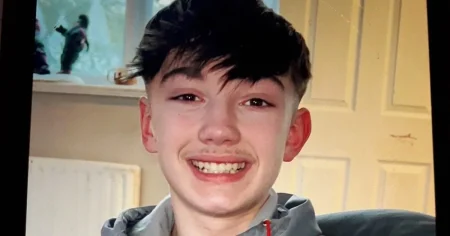


The abrupt postponement of the long-awaited trial of Abu Agila Masud has sent seismic waves of shock, anxiety, and profound disappointment through the tight-knit global community of families who lost loved ones in the Lockerbie bombing. After years of legal maneuvering, extraditions, and hopeful preparation, the moment of reckoning was supposed to arrive this week with jury selection in a Washington DC courtroom. Instead, a federal judge, citing newly surfaced evidence that the defense requires time to examine, has thrown a wrench into the carefully laid plans of hundreds of grieving relatives who had booked flights, reserved hotel rooms, and steeled themselves for the emotional gauntlet of a public trial. For Kara Weipz, the president of the victims’ group and the sister of Rick Monetti, who perished on that fateful December evening in 1988, the news felt like a brutal gut punch after so many years of hoping. Speaking with a raw, palpable tremor in her voice, she articulated a feeling that resonated across the Atlantic: a desperate need for closure that, once again, has been pushed tantalizingly out of reach, forcing survivors and families to inhabit a suspended state of limbo where the past remains an open, bleeding wound.
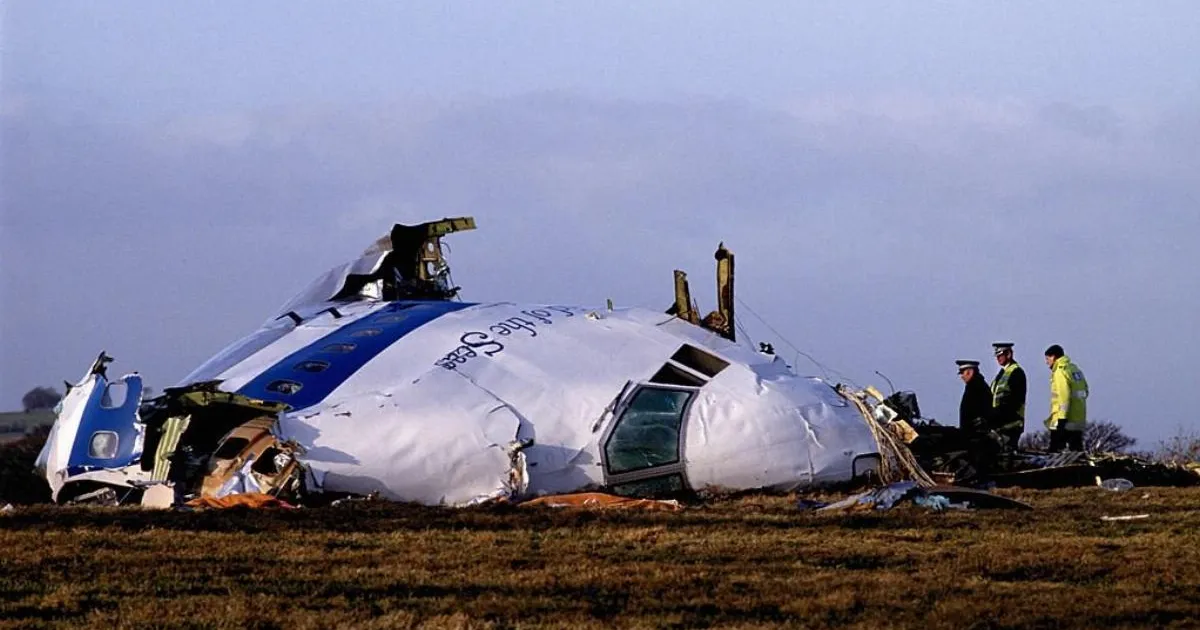
The sheer magnitude of the original tragedy cannot be overstated, as it remains the deadliest terrorist attack in British history and a defining scar on the collective psyche of both Scotland and the United States. On December 21, 1988, Pan Am Flight 103, a Boeing 747-121, departed from London Heathrow bound for John F. Kennedy International Airport in New York, its cabin filled with a diverse tapestry of humanity—students returning home for Christmas, diplomats, military personnel, and everyday travelers seeking holiday reunions. Just 38 minutes into the transatlantic journey, at an altitude of roughly 31,000 feet, a small explosion ripped through the forward cargo hold, triggering a catastrophic chain reaction that tore the aircraft apart mid-air. The wreckage, engulfed in flames, rained down over the quiet, snow-dusted town of Lockerbie in Dumfries and Galloway, Scotland. The main fuselage crashed into a residential street, creating a massive impact crater and igniting a large section of the town, while debris and severed aircraft sections scattered across a 845-square-mile area. On the ground, eleven innocent residents of Lockerbie were killed instantly, their homes and their lives obliterated without warning from the sky above, bringing the total death toll to 270 people, a number that represents not statistics, but 270 individual stories, dreams, and futures violently extinguished.
The legal odyssey that followed has been a torturous saga of geopolitical intrigue, partial justice, and agonizing ambiguity for the families. The first major breakthrough came in 2001, when a panel of three Scottish judges sitting in a special court in the neutral territory of Camp Zeist in the Netherlands found Abdelbaset al-Megrahi, a former Libyan intelligence officer, guilty of the 270 counts of murder. He was sentenced to life imprisonment in Scotland, marking a historic conviction against a state-sponsored terrorist. Yet, the case was marred by controversy, from questions regarding the reliability of key witnesses to allegations of a cover-up implicating other nations. The situation reached its most controversial point in 2009 when Megrahi, diagnosed with terminal prostate cancer, was granted compassionate release by the Scottish Government and returned to a hero’s welcome in Tripoli. He died in 2012, still protesting his innocence, leaving behind a legal vacuum and a lingering suspicion that the whole truth had never been told. Now, over three decades later, attention has shifted to Abu Agila Masud, another former Libyan intelligence operative, who was captured by US forces in 2022 and has been charged with actually building the bomb that was placed on the aircraft. His upcoming trial was seen as the definitive chance to close the loop, but the recent postponement has exposed just how fragile that hope remains.
For Kara Weipz and the thousands of relatives she represents, the postponement is not merely a scheduling inconvenience; it is a devastating disruption of their psychological coping mechanisms. In a deeply humanizing revelation, she described the constant state of high alert that gripped the community in the weeks leading up to the trial. “There’s so much anxiety leading into this week,” she said, explaining how the anticipation of opening statements had created an almost unbearable pressure valve. The practical logistics of grieving families traveling across the ocean, many of them of advanced age or battling their own health issues, represent an enormous logistical undertaking. For many, this trial represented a final chance to witness accountability in their lifetime. The news of the delay forces them to confront the terrifying reality that time is a finite resource. “Everyone needs to stay healthy. Everything needs to fall into place,” she stated, underlining the grim reality that for many elderly parents and siblings, each delay might be the one that pushes a trial beyond their natural lifespan. This is not just a matter of procedural law; it is a visceral, human fear of dying without knowing the full story of what happened to their child, spouse, or sibling on that cold December night.
However, amidst the profound shock and disappointment, there exists a thread of cautious, almost desperate optimism that the delay might inadvertently serve a higher purpose. The legal team for Masud has flagged new evidence, and while the details remain sealed under court order, the families are clinging to the hope that this previously unseen information could unlock the secrets that have remained hidden for nearly four decades. The pursuit of justice for these families has always transcended mere punishment; it is fundamentally a search for the truth. They want to know not just how the bomb exploded, but who orchestrated it, why the victims were targeted, and whether other state actors were complicit. Weipz articulated this yearning with heartbreaking clarity, stating that her goal has always been “for as many family members to be able to witness this trial as possible, and to gain more of the truth.” She recognized that if this newly surfaced evidence can illuminate darker corners of the conspiracy, then the additional agonizing wait will have been worth it. “We want the truth. We want to know what happened,” she asserted, turning a moment of despair into a rallying call for the relentless persistence that has defined the victims’ movement for over 36 years.
The official legal frameworks are also acknowledging the seismic emotional impact of this development, even as they remain bound by procedural constraints. Laura Buchan, the head of the Lockerbie investigation team at the Crown Office and Procurator Fiscal Service in Scotland, issued a careful but empathetic statement, recognizing that the adjournment will be profoundly disappointing for the families who have shown immense fortitude over the decades. She reiterated that while the proceedings are being led by US authorities, Scottish prosecutors and police remain fully committed to supporting the pursuit of justice, signaling that the transatlantic partnership remains unbroken. As the calendar turns towards a new status hearing scheduled for next month in Washington, the families are left to navigate their own personal paths through this latest hurdle. They will continue to hold memorials, share photographs, and keep the memory of the 270 dead alive. For them, the trial is not just a legal event; it is a moral reckoning. The postponement, while painful, has not shattered their spirit. It has merely added another chapter to their long, arduous journey—a journey defined not by the cold letters of the law, but by the warm, enduring memory of the breathtakingly ordinary lives lost, and the extraordinary resilience of those who carry their legacy forward into an uncertain but persistent pursuit of closure.