
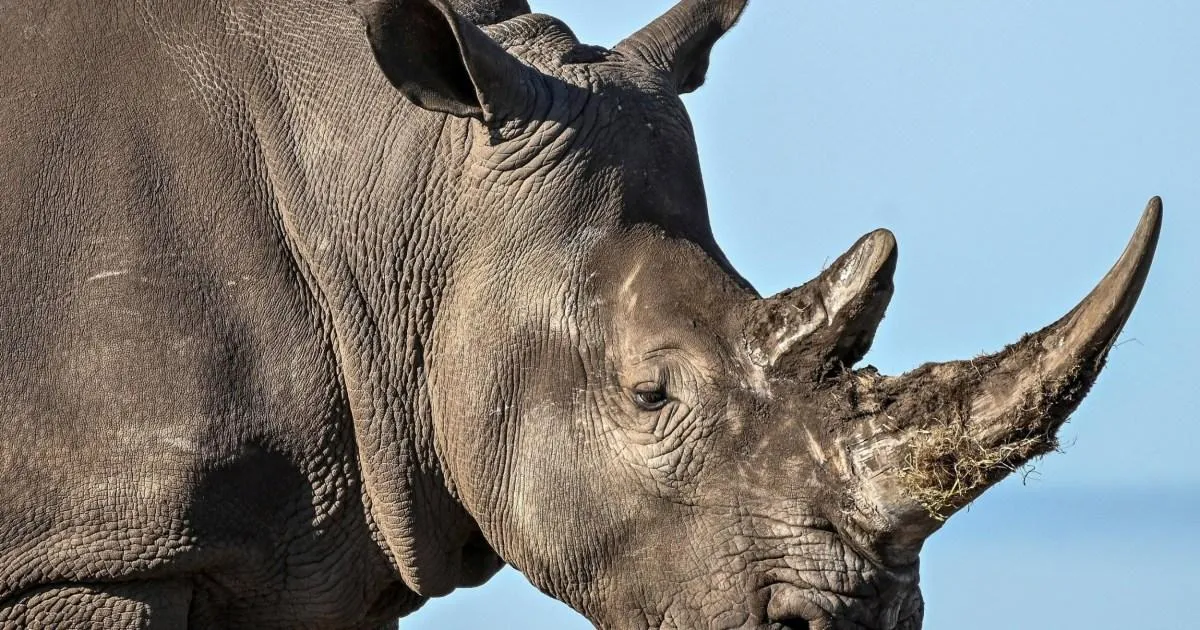
On a bright Sunday morning in early August, West Midlands Safari Park in Bewdley, Worcestershire, seemed like the perfect place for two young families to spend quality time together. Zoe Farmer, a 53-year-old school nurse assistant from Accrington, Lancashire, had brought her husband and her beloved grandson for a day of animal magic. Charlotte Baker, 24, from Tipton, in the West Midlands, was there with her 24-year-old husband and their 18-month-old toddler. They expected wonder, not warfare. White rhinos are among the most powerful land animals on Earth, capable of weighing over two tonnes and charging at alarming speed, yet they are a huge draw for safari-goers who want to see them up close. But on this day, the rhinos were not calm giants. As cars queued in the drive-through enclosure, two of the animals became locked in a violent confrontation. The fight spilled into the line of traffic, and the rhinos slammed into the family cars with astonishing force. The total damage to Zoe’s and Charlotte’s vehicles was estimated at around £12,000. Zoe’s Dacia Sandero Stepway was struck hard on its front and side; Charlotte’s BMW 3 Series needed £6,000 of repairs. Inside, children screamed and adults shouted in terror. Zoe held her grandson, who was out of his car seat and on her lap so he could see the animals. Charlotte’s husband felt a jolt of pain in his back that would later send him to hospital. In those frantic moments, both mothers believed they were going to die. The rhinos continued their fight around the cars, using them as unintended shields and battering rams. The metal rocked, the windows trembled, and the idyllic family outing became a survival nightmare. Worst of all, no ranger appeared to help. The families had to keep driving through the park in their mangled cars, with no one telling them what to do or whether the danger was over.
The memory is still raw for Zoe, who says she can still hear the sickening crunch of metal on metal and the sound of her own screaming. “We were sitting in a line of traffic through the rhino part when we heard what sounded like a massive car crash,” she recalled. “We didn’t know what to do, whether to drive or stay put, so we just stayed where we were.” Then came the charge. “The next thing, the more aggressive rhino just charged at the front of the car,” she said. The two animals continued to fight around the side of the car, with one shoving the other into the vehicle. Zoe described how the car swayed violently, and she thought it would tip over. “I thought we were going to die,” she said. “I thought it was going to tip over and my grandson was out of his car seat as I had him on my lap to see the animals.” A grandmother herself, Zoe says she was screaming in terror but forced herself to try to calm down for the sake of the little boy in her arms. She did not want his last memory to be fear. Yet no help came. “Nobody came to help, there wasn’t a park warden in sight, so we just had to carry on with our damaged car while really shaken up,” she said. They drove around the rest of the park for around fifteen minutes before a ranger finally approached them. But the encounter only deepened her distress. “They escorted us to the car park and didn’t offer anything in the way of an apology—they just said ‘we’re not liable’ and that we could drive around again for free if we wanted,” she said. Later, after she complained, the park offered her free tickets. Zoe described the gesture as a bit of an insult. She says she is not focused on compensation—she simply wants to make sure no other family has to go through such a horrifying experience. “These are powerful animals, the horns could easily pierce through a car and a child or a person,” she warned. “Another visitor staying in the rhino lodge said one was acting aggressively that morning, so why was it not removed for the safety of visitors? This has happened before there. But I don’t think they will do anything until there is a fatality.”
For Charlotte, the terror was just as intense, and the aftermath has left her family physically and emotionally wounded. She was sitting beside her husband with their 18-month-old child when the rhinos smashed into their vehicle. “It felt like we had been hit by a car,” she said. “I thought a car had lost control and hit us. We could have died.” The impact left her husband with back pain so severe that he had to go to hospital and take a day off work. Meanwhile, Charlotte had to process not only the damage to her BMW but also the sense of helplessness that came from watching park staff do—in her eyes—nothing to stop the incident. “The rangers did nothing to stop it and continued to let customers into it, so it could have carried on,” she said. She described the attitude of the staff as one that “stunk,” adding: “I show more empathy to our customers who have scratches on their cars. My husband was in hospital yesterday, and they haven’t even given us a courtesy call.” For Charlotte, the lack of follow-up made everything worse. A simple phone call would have shown that the park cared about the human beings involved, not just the vehicles and the animals. Instead, she felt like a nuisance, a problem to be brushed aside with a vague promise and a free pass. Her blood boils when she thinks about the fact that safari parks are supposed to be family-friendly places, where children learn to love animals in safety. Instead, her child witnessed a scene of violent chaos and parents in hysterics. Charlotte has joined Zoe in questioning why the rhinos were allowed to continue to roam freely, especially if aggressive behavior had been noted earlier that morning. The mental scars, she says, will take far longer to heal than the bodywork on her BMW. She wants the park to understand that its responsibility does not end with disclaimers and waivers; it extends to every person who drives through those gates expecting to be safe.
The West Midlands Safari Park has defended its actions, insisting that animal and visitor safety is always its top priority. A spokesman said: “We are aware of an incident involving three guest vehicles and the white rhinos in the Safari Drive on the morning of Sunday, 9 August. An altercation between two rhinos resulted in collisions with the vehicles.” The spokesman stressed that keepers in patrol vehicles are always nearby to monitor animal and vehicle movements, and that they “responded immediately to the altercation, checked all guests, and offered assistance to those involved throughout the morning.” According to the park, the rhinos quickly settled and remained under close observation. The spokesman also claimed that other guests who witnessed the incident have since emailed the park to praise the rangers’ “swift actions.” The park reminded visitors that animals are free-roaming and that visitors enter the drive-through at their own risk, but said all guests would be contacted by the guest relations team and that insurance companies would need to be in touch so that “appropriate compensation will be discussed.” For Zoe and Charlotte, however, this official response has only added insult to injury. They say the park’s initial reaction was to disclaim liability, not to show concern. They strongly dispute the claim that rangers were in close attendance; if they had been, the families argue, the rhinos would not have been allowed to keep attacking cars for so long. The free tickets felt like a token gesture, an attempt to buy silence rather than to repair a relationship. The reminder about “free-roaming animals” and “own risk” may have legal merit, but to the two mothers it sounded like a corporation trying to shift responsibility onto the very people who trusted it with their lives. They note that the park still hasn’t explained why no warden was visible at the time of the incident, nor why the rhinos were not removed if their aggression was known. The gap between the park’s polished statement and the families’ lived experience is glaring. It is the difference between a legal document and a human story.
This incident raises uncomfortable questions not only about West Midlands Safari Park but about the entire industry of drive-through wildlife attractions. White rhinos are not small, placid creatures; they are massive, powerful animals that can weigh more than two and a half tonnes and charge at remarkable speed. Their horns are not decorations—they are formidable weapons capable of puncturing metal, as Zoe was quick to point out. When two such animals fight, anything in their path is at risk, including cars filled with children. Yet the parks often rely on signage and waivers to protect themselves from liability, asking visitors to acknowledge that animals are free-roaming and unpredictable. But a waiver on a ticket or a sign at the gate does little to ease a mother’s panic when her grandson’s life feels like it is hanging in the balance. Zoe and Charlotte both note that rhino aggression had apparently been observed earlier that morning, and that a similar incident had already occurred at the park in the past. If true, the question becomes obvious: why were the animals not separated or kept away from the public until they had calmed down? Why were new cars still being allowed into the enclosure while a fight was taking place? The families say that no visible ranger intervened during the attack, and that they were left to drive on in damaged vehicles for fifteen minutes before anyone approached them. That is not the image of a “swift” response; it is the image of a system that is dangerously underprepared. The park’s defense—that animals are wild and visitors enter at their own risk—may hold up legally, but morally it feels hollow. Tourists do not expect safari parks to turn wild animals into pets, but they do expect to be protected from foreseeable dangers. If a rhino is behaving aggressively, that is a foreseeable danger. And ignoring it until a fatality occurs, as Zoe fears, would be an unforgivable failure. This is especially concerning because the incident happened on a busy August weekend, when the park was filled with families on school holidays. A moment’s distraction by the rangers, a momentary lapse in vigilance, could have turned a bad day into a tragedy that no free ticket could ever mend.
Ultimately, this is not just a story about dented cars and insurance claims. It is a story about ordinary families who went to a safari park looking for joy and instead found terror. Zoe and Charlotte may never look at a rhino the same way again, and their children—especially the little ones who watched their mothers scream and their fathers wince in pain—will carry the emotional residue of that Sunday for a long time. The mothers are not demanding millions or revenge; they want what any human being deserves after a traumatic event: recognition, empathy, and an honest commitment to prevent it from happening again. When they say the offer of free tickets is an insult, they are not being ungrateful. They are saying that their fear cannot be bought for the price of admission. What they want is for West Midlands Safari Park to look itself in the mirror and ask whether its procedures truly protect visitors. They want an independent review of how rhinos are monitored, how aggressive animals are handled, and how emergencies in the drive-through are managed. They want park rangers to be present, visible, and ready to act before, not after, a car is turned into a crumpled wreck. They want the park to stop hiding behind legal disclaimers and start leading with compassion. And above all, they want other families to be spared the same nightmare. “I don’t think they will do anything until there is a fatality,” Zoe said, and her words should haunt everyone who reads this story. No one should leave a family day out thinking they were going to die. No parent should have to comfort a trembling child while staring at a bleeding car in the middle of a safari park. The animals, of course, are not to blame; they were doing what animals do. But the humans who manage them are responsible for creating safe boundaries. Until the park proves it has learned from this incident, every visitor who drives through that gate deserves a little more caution—and a lot more accountability. The families have told their story not to cancel the park, but to change it. And if those in charge are truly listening, they will see that a free ticket is not an apology; it is an abdication of responsibility. The only way forward is a safer, more humane approach to wildlife tourism, where wonder never comes at the cost of fear.