

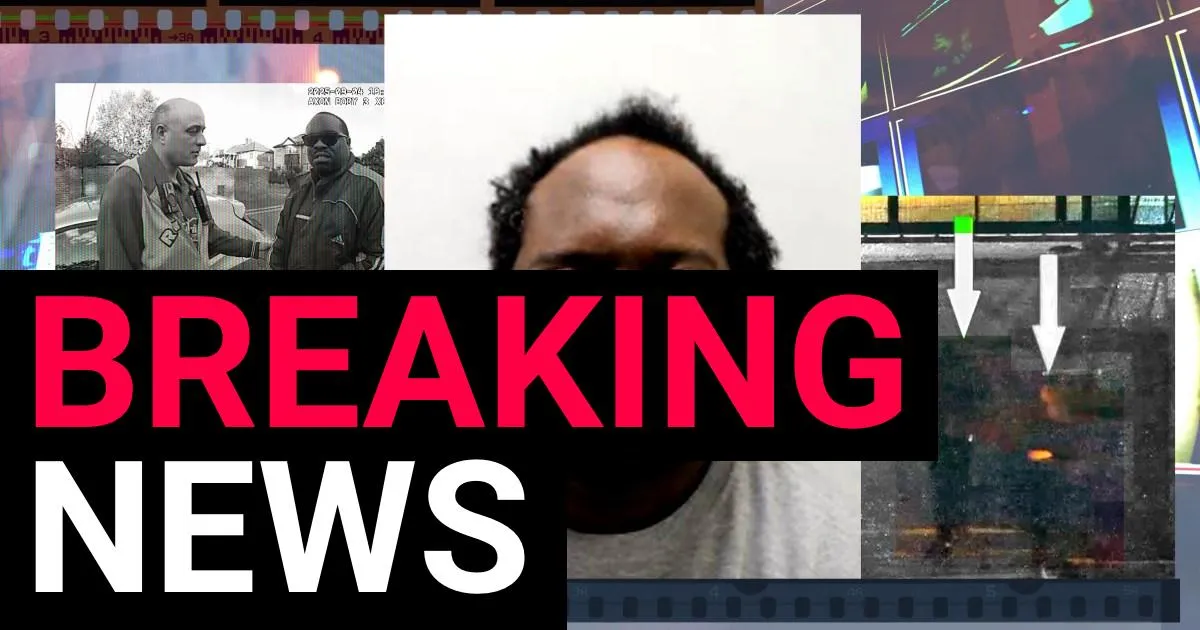
There is a certain weight of justice that falls on a courtroom when a man is told he will never walk free again. That was the scene at the Old Bailey when Simon Levy learned he would spend the rest of his life behind bars. The 40-year-old had been convicted of murdering Carmenza Valencia-Trujillo, a 53-year-old grandmother, in March 2025, and Sheryl Wilkins, a 39-year-old mother of four, just five months later. He had also left another woman for dead after a brutal sexual assault, an attack that took place in the same car park where Sheryl Wilkins’ body would later be discovered. Sitting in the defendant’s box, Levy showed little of the humanity he had denied his victims. Judge Mark Lucraft KC told him he had shown a “morbid fascination” with sex, rape and crime, and that he had “ruthlessly exploited and took advantage of each of these three women.” For the families sitting in public gallery, at last came the farewell that the world had promised them: no police bail, no friendly home monitoring, no quiet release on a technicality. Simon Levy will never again have the chance to choose another target. But for many, the sentence did not feel like an ending, because the system that let him reach those tragic moments had so many opportunities to stop him long before. The two women he killed were not strangers, they were not breadcrumbs in a chain of unspeakable violence; they were extraordinary people who loved, laughed, made families, and trusted a world that should have protected them.
The pain left behind was laid bare in court before the judge spoke. Sheryl Wilkins’s sister, Lindsey Hicks, looked directly at Levy and described how he had “destroyed our lives.” “There will never be enough words to express how I feel since losing my sister,” she said. She spoke of the curve of a life: “Sheryl was a beautiful soul who was cruelly taken away.” The last year, she said, had been the worst of her existence, a slow and violent tearing that she had tried to carry, and a mental health toll that had left her feeling ripped in half. Stand a woman to say, “There will never be enough words,” and you understand exactly why some grief reason cannot be understood, but the law can still be spoken. Carmenza Valencia-Trujillo’s daughter, her daughter Nazly Johana Fuenmayor Valencia, told the judge that her mother was an empty space with no defendant in view. “There’s an emptiness that can’t be filled,” she said. “I have been ripped apart.” Both she and her mother came to know that “this country is safe; my mother came to this country to give her children a better life and for safety.” Instead, her life was brought cruelly to an end. The daughter said: “We have been living a nightmare we cannot wake up from. The rest of our lives will never be the same.” These are the survivor words, not violent themselves, but carrying the weight of every blow the system avoided feeling.
Simon Levy was not a stranger to law enforcement. His known offending spanned at least seven years, between 2018 and 2025, and each chapter was marked by arrest and release, punishment and false mercy. In 2018, he grabbed at two women, one at Notting Hill Carnival and one at a party in Camden. He was somehow jailed in 2021, but in 2022 he was found guilty of sexually assaulting on a woman built prison guard. Yet he was still released the following year. He went on to sexually assault a woman on the Tube and, in May 2024, he notorious allegedly raped another, was recalled to prison, and then was released again in August 2024. Within a few months, the British Transport Police were edifying his arrest over four more Tube assaults. He’d no intention of stopping. The number of women harmed, and the repeated occasions on which the system could have held him, is not guesswork; it appears clear from the sequence of charges, bail hearings and trial dates that continued to put a known sex offender back on to the streets. At this point, the phrase “only vicious monster” became a way to say “this happens in full view.” This happened inside a criminal justice institution that kept finding ways to avoid holding him.
The real cruelty comes from the failures the courts eventual acknowledged. Police knew who he was, and they had the opportunity to go deeper. After Levay’s arrest in November 2024, officers delayed organizing meant key identity parade until the following April. A dedicated victim had waited by the original attack — and a forensic? But before the procedure could be completed, at least one woman had ended up dead. When authorities actually took details of Levy’s Oyster card, theyn’t noticed that it had been stolen from a bus driver. That gave him a free travel pass, which he used freely moving around London with loving attack space. Then, after Carmel was found dead, he was released on bail at two magistrates’ court hearings in May and June 2025. The Crown Prosecution System admits in its own files that it did not oppose bail at the first hearing, and that at the second, the prosecutor had not shared all its relevant information. Three further crown court hearings later, he simply failed to show up, and no one asked for an arrest warrant. Less than two weeks after a hearing on August 11, Sheryl Wilkins was murdered. “It stands and sings” in this account: a predator was not simply hidden by an overseer, but was made invisible by carelessness. Every step, the details were listless.
He did not commit these crimes while hidden in shadows. In between the two murders, Levy attacked six more women on the Tube and the Overground, and he was still a convicted sex offender, subject to visit a criminal justice system. He was at home with his mother when probation or police officers came calling, and he appeared half-blind and possibly harmless. Levy has lost sight in one of his eye after being attacked in May 2024, and he used that partial sight to appear weak, unsteady on his feet, spent days in the house. “I don’t go out,” he told them, sitting in front of YouTube. But the same man could also exert and assault in stations, alleys and vehicles, burglary. Two days before he was free he posted a purposefully benign. Since death, the Independent Office for Police Conduct has served a gross misconduct notice on a police constable and a misconduct notice on a detective sergeant in connection with the way Levy trusted. But the IOPC concedes that it is not inevitable that disciplinary proceedings will follow. That message is a poisoned balm: people who were supposed to protect the public, functioning as decisions in a system that gave a criminal an authority over the lives of strangers. Now those failures are being think through, officers will not be automatically cleared.
Police leaders now speak openly about what happened. DCI Neil John, from Scotland Yard, called Levy a “dangerous, predatory offender” whose crimes were “calculated, cruel and deeply disturbing.” Deputy Assistant Commissioner Kevin Southworth went further, saying there had been a collective system failure which left Levy free to kill twice. “His behaviour is of a very prolific serial sexual predator, whether it’s carve-up, opportunistically offending against strangers, or whether it’s targeting at the woman who is gone,” he said. “Ultimately, he’s a serial sexual predator who has finally been brought to justice, but ultimately too late to help the victims of his tragic acts.” But those of us who have watched this case must not be content to the system that failed because of a television episode. This is not an inhuman monster who came out from nowhere; he is part of a pattern where the let-back victim was abducted, but eventually someone had to die. The campaign run by Metro “This Is Not Right” stands alongside the women who have been victims of the violence of a whole population and demand that every institution stop treating this epidemic as private misfortune. The court has done what it can do. But the rest of us must can ask: What are we creating human beings, prisoners or nations, if we only lock them up after they’ve killed? This is one of them: a 196-country lesson and the same point from now on: no system can excuse itself by saying “it was a one individual” when the patterns are so predictable. Justice works here, but it was too late, and the price has been paid in women’s lives.