


Here is a summary and humanized narrative of the provided article, structured into six paragraphs.
—
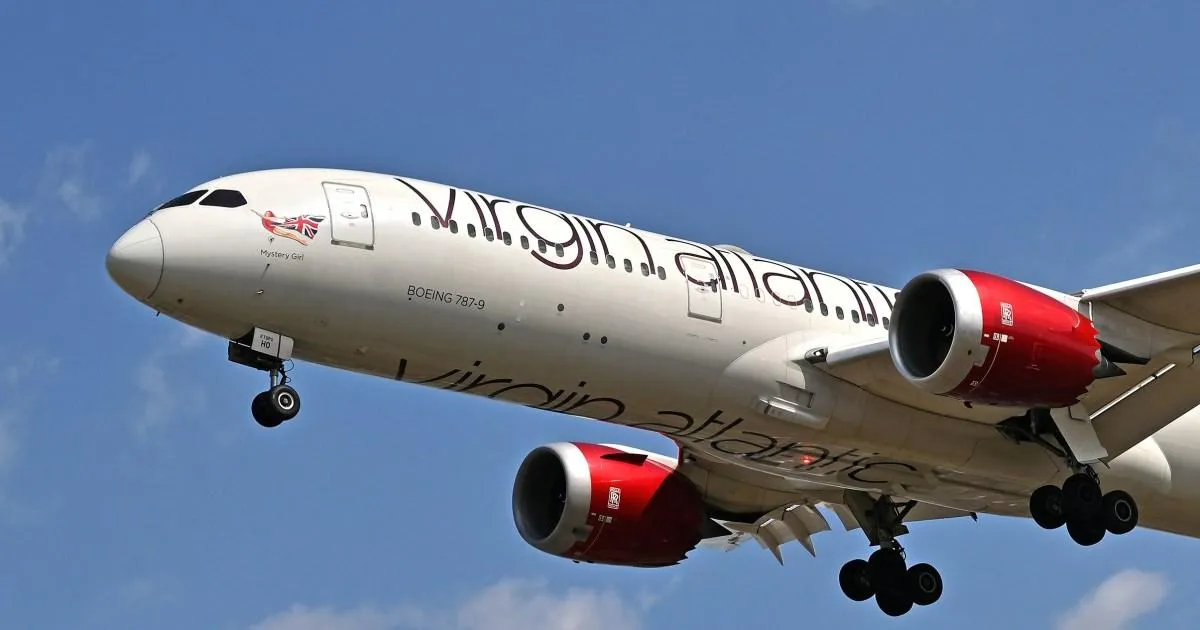
Imagine being at the helm of a commercial jet, thousands of feet in the air, responsible for hundreds of lives, and suddenly a small, dark object whizzes past your cockpit window. That was the stark reality for pilots on a Virgin Atlantic flight heading from London’s Heathrow Airport to Johannesburg on a clear June morning. The crew of the Boeing 787 Dreamliner, carrying approximately 260 passengers, were just beginning their long-haul journey when they were confronted with a serious and immediate threat. A drone was flying perilously close to their aircraft, and the encounter was so swift and so near that there was no time to react, no time to maneuver the massive plane out of harm’s way. It was a chilling moment that highlighted the very real dangers posed by drones operating illegally near busy airports.
The incident occurred over Woking, Surrey, as the flight was climbing to its cruising altitude. At that point, the aircraft was roughly 5,500 feet above the ground. The drone was hovering at the same height, which is an astronomical distance for a recreational or commercial drone, whose legal flying limit is just 400 feet. This meant the drone operator was not just breaking rules; they were engaging in behavior that was flagrantly reckless and potentially catastrophic. The gap between the large passenger jet and the relatively small drone was a mere 16 feet—a distance that is, in aviation terms, practically nothing. The pilots described the sighting as coming “too late and too fast” to take any kind of evasive action, leaving them as helpless observers to a near-catastrophic event that could have easily resulted in a major disaster.
The drone itself was described by the flight crew as being white or cream in color and measuring approximately three feet in diameter. This size is significant, as a collision with a jet engine or the cockpit windshield could have had devastating consequences. After the close call, the pilots immediately reported the danger to air traffic controllers on the ground. They also raised the alarm with the UK Airprox Board, the independent body that investigates near-misses in British airspace. The incident was classified as having a “high” risk of collision, a severe rating that indicates the situation was a mere stroke of luck away from a tragedy. The information was quickly relayed to local police, and a warning was issued to other aircraft operating in the busy London area to be on the lookout for the rogue drone.
This incident casts a sharp spotlight on the regulations governing drone use in the United Kingdom, particularly around major airports. Heathrow, along with all other UK airports, designates a strict “no-fly zone” for drones that extends for several miles around the perimeter. Within this zone, which can reach up to three miles from the airport boundary, drone flight is completely forbidden without specific permission from air traffic control. The intention of this rule is to create a protective bubble for aircraft during their most vulnerable phases of flight—takeoff and landing. When a drone breaches this zone and flies at an altitude as high as 5,500 feet, it demonstrates a blatant and dangerous disregard for the law and for the safety of everyone on board the aircraft and on the ground below.
In the aftermath of the incident, both Virgin Atlantic and NATS, the company that provides air traffic control services in the UK, issued statements addressing the event. A Virgin Atlantic spokesperson confirmed that their pilots reported the drone sighting to authorities and emphasized that their primary concern is always the safety and security of their customers and crew. They underscored that the pilots followed standard procedures to the letter by immediately informing air traffic control. NATS echoed this sentiment, framing the incident as a stark and powerful reminder of the responsibilities that come with operating a drone. A spokesperson for NATS was firm in their language, stating that flying a drone near an airport without explicit permission is “dangerous and unacceptable,” a clear message meant to deter others from attempting similar stunts. They also pointed out that drone pilots are subject to the same legal obligations as commercial airline pilots, and that safety is a shared responsibility for everyone using the skies.
Ultimately, this near-miss serves as a powerful wake-up call for both regulators and the public. It highlights the ever-present tension between the growing popularity of consumer drones and the critical need for aviation safety. While drones offer incredible potential for photography, recreation, and commercial applications, they also present a genuine and evolving threat when used irresponsibly. The fact that the pilots on this flight had no time to react underscores that these incidents are not just about breaking rules, but about courting absolute disaster. The report of the incident serves as a sobering reminder of the fragility of air travel and the continuous vigilance required to ensure that the skies remain safe for everyone. With the number of drones only expected to increase, the need for robust enforcement, better technology to track them, and greater public education about the rules has never been more critical. One can only hope that this terrifyingly close call will serve as a lesson that prevents a future tragedy.