

The Catastrophic Intersection of Human Error and Motorway Speed
The pristine white lines of a motorway represent a covenant of order—a pact of predictable motion where speed is governed by rules, and direction is absolute. Yet, this unspoken agreement is being shattered with alarming frequency by a reckless minority who choose to defy the fundamental logic of the road. Recent research has unveiled a shocking reality: a motorist is prosecuted on average every single week for committing the utterly perilous act of driving the wrong way on a high-speed carriageway. These aren’t merely accidents; they are deliberate, dangerous decisions that transform a controlled highway into a theatre of potential catastrophe. Court records paint a disturbing picture of drivers reversing along hard shoulders, executing illegal U-turns directly into the path of oncoming traffic, and even driving backwards for miles in a desperate, misguided attempt to rectify a missed exit or beat the congestion. Over the past 30 weeks, at least 31 drivers across the motorways of England and Wales have been charged with criminal offences directly related to this terrifying behaviour, a statistic that represents not just paperwork, but a series of near-death experiences waiting to happen.
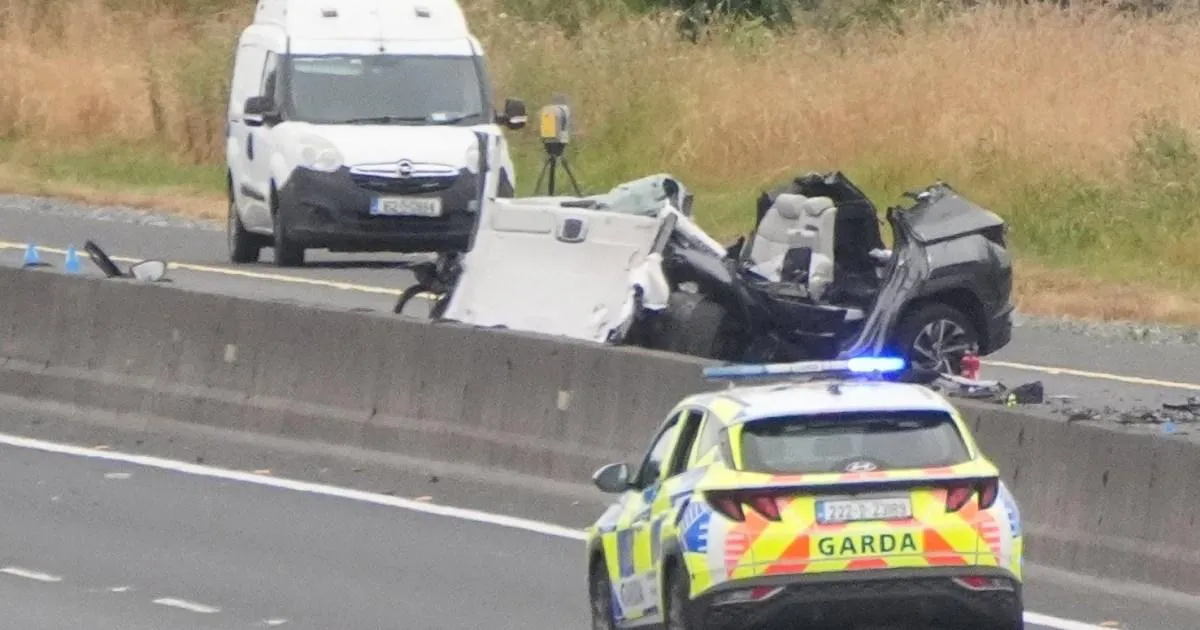
This unsettling report arrives in the wake of a tragedy so profound it shakes the soul. Just days prior, the quiet of a Sunday morning on the M9 in Co Kildare, Ireland, was shattered by a catastrophic head-on collision. Two cars, one carrying five teenagers and another with a family that included three sisters and a young boy, collided with devastating force. The teenagers, fleeing police in a BMW and driving the wrong way, lost their lives in an instant. The remaining victims—three sisters and a seven-year-old boy—were left clinging to life, critically injured in hospital, their futures hanging in the balance as families kept a heartbroken vigil. The irony is not lost that this very same week, data from National Highways revealed the sheer scale of the problem: in the 12 months leading up to May 11, a staggering 947 incidents involving “oncoming vehicles” had been formally logged on England’s motorways. Each incident is a bullet dodged, a moment where the grim reaper was stared down by mere inches and feet.
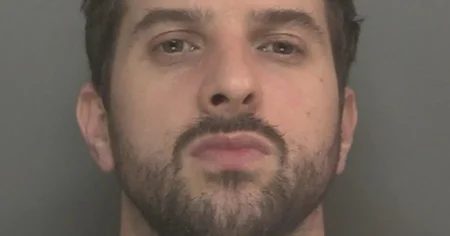
The statistics become human when we examine the individuals who stand accused, their stories unfolding in courtrooms across the country as judges struggle to convey the gravity of their misjudgement. Consider Ervis Hatellari, a 38-year-old from Woodford Green in north-east London, who was recently convicted after police caught him reversing a Nissan Qashqai along the hard shoulder of the M11 in Essex. The incident, which occurred at 10pm on New Year’s Eve, was witnessed first-hand by Sergeant Philip Roberts. The officer described seeing the vehicle, “in the hard shoulder and half in lane one of the M11, with reverse lights on, backing up to junction five,” a manoeuvre amidst the high-velocity thrum of celebratory traffic that defies all comprehension. When pulled over, Hatellari’s situation deteriorated; his driving licence had already been revoked, and the vehicle was being operated with no insurance. At Chelmsford Magistrates Court, he was fined £660, handed a one-year driving ban, and ordered to pay additional costs and victim surcharges. The punitive measures, however, only scratch the surface of the potential consequences he had invited.
Daniel Udrescu, a 57-year-old van driver, offered a “moment of poor judgment” as his defence when caught reversing up the slip road for the M6 toll motorway in Cannock, Staffordshire. Stopped at 10.30pm on April 29, he told police he was “attempting to get to Glasgow and went the wrong way,” a justification that rings hollow when considering the alternative—a direct head-on collision at 70 miles per hour. Adding to the infamy of his stop was the officer’s observation that the driver’s seat belt was clipped in place, a deceptive trick that meant he wasn’t wearing it while driving. He pleaded guilty to both offences at Birmingham Magistrates’ Court, receiving three penalty points, a £445 fine, and costs. These “moments of poor judgement” are not abstract concepts; they are concrete actions that can orphan children, widows, and devastate entire families in a single second.
Perhaps the most baffling case is that of Innocent Ayodele, a 32-year-old NHS worker from Manchester, who apologised in court in May after being caught attempting to escape a mere traffic jam on the M61. His solution to congestion was to mount an entry slip road and drive the wrong way, straight into the path of vehicles seeking to join the motorway at speed. PC Peter Weatherstone, from Greater Manchester Police, recounted the moment he confronted Ayodele. The officer’s statement reveals a staggering level of arrogance or perhaps ignorance: “I could see another driver at the side of another vehicle whom he could have struck. I pointed out the dangers of such behaviour, but the driver seemed totally blatant in his necessary to do this simply because he had finished worked and wanted to get home.” Ayodele claimed he was rushing to his pregnant wife, but his existing nine penalty points for previous transgressions indicate a pattern of behaviour prioritising convenience over communal safety. He now faces a potential ban, a small price compared to the one the family in Kildare is paying.
These individual cases point to a deeper, more dangerous psychological profile of drivers who rationalise the irrational. The motorway is a brutally efficient environment; it is designed for forward momentum, with clear signage and painted markers guiding traffic in a unidirectional flow. When that flow is broken, the consequences are immediate and often irreversible. The reactions of the police officers involved highlight an underlying frustration—a bewilderment at drivers who, when stopped, often appear more annoyed at being caught than at the apocalyptic risk they flagged. The excuses given—a missed junction, a desire to get home, a momentary lapse—are fatally disproportionate to the stakes. National Highways, in response to the alarming data, attempted to contextualise the numbers, stating that “confirmed incidents of wrong‑way driving on motorways remain rare” and that every report is “treated seriously and acted on quickly.” This reassurance offers cold comfort to the families in Ireland who are now planning funerals and praying by hospital beds.
We must look beyond the statistics and the fines to understand the human tragedy at the heart of this issue. A motorway is not just asphalt; it is a shared space of trust. Every driver who enters the slip road trusts that the oncoming lane will be clear. Every family in a car trusts that the headlights approaching them are on the correct side of the barrier. When that trust is betrayed, the result is a horrific collision that is not an accident but a consequence of impatience and folly. The five teenagers in the BMW did not set out to kill themselves or the three sisters and young boy they struck; they were fleeing a perceived threat, making a rash decision in a high-stress moment that ended in a cacophony of twisted metal and sirens. This is the true cost of driving the wrong way; it turns ordinary journeys into potential death traps, and it forces innocent people to pay the ultimate price for another’s arrogance. As the victims in Kildare fight for their lives, and as courts across Britain process these cases, we are forced to confront a difficult truth: the rules of the road are written in the blood of those who have come before, and every red light, every one-way sign, and every painted arrow is a silent plea for sanity from a motorist who chose to ignore the warnings.