


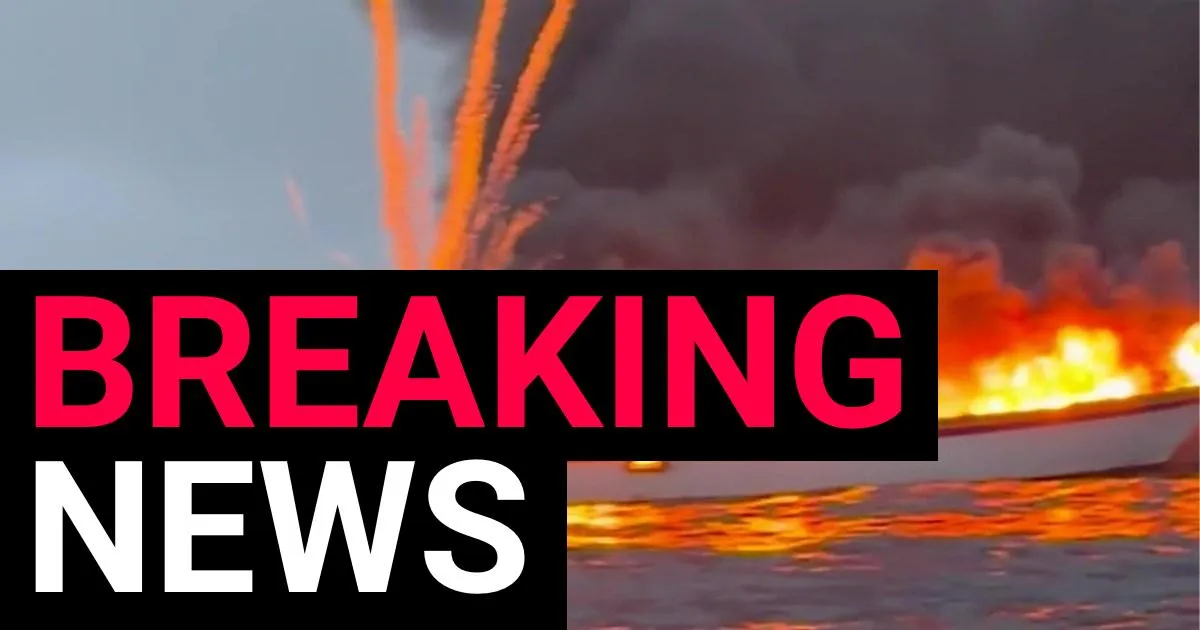
The terrifying reality of being stranded at sea took hold last Saturday evening when a 60-foot motorboat transformed into a floating inferno 20 miles off the Isles of Scilly. At approximately 5:30 p.m., the vessel’s tranquility was shattered by a violent engine explosion, instantly turning the craft into a fire-ravaged trap. With the open ocean surrounding them and flames rapidly consuming their sanctuary, four individuals found themselves in a desperate fight for survival. The situation was dire, but thankfully, the distress call was picked up immediately, triggering a rapid response from the RNLI search and rescue team.
When the RNLI lifeboat arrived on the scene about an hour later, they found the situation teetering on the edge of disaster. The four-person crew had acted with commendable foresight, having already readied their dinghy and prepared “grab bags” containing essential emergency supplies. At that moment of arrival, the captain of the stricken vessel reported that the flames had been contained. Despite the obvious damage, he was hesitant to abandon ship entirely, instead requesting a tow back to the safety of St Mary’s. However, the RNLI experts, eyes sharp from years of maritime experience, recognized the invisible dangers lurking within the hull and advised against such a risky maneuver.
In a decision that highlights the unpredictable nature of marine emergencies, the captain attempted to restart the vessel’s second engine, mistakenly assuming the fire had been isolated to the damaged turbo of the first. The professional rescuers on the lifeboat had warned him to be exceptionally cautious, urging the crew to stay clear of the engine bays. The captain remained confident, believing he could manage the vessel from the safety of the wheelhouse. Unfortunately, the sea does not always offer second chances, and the attempt to restart the engine served only to reignite the volatility trapped deep within the boat’s internal systems.
Almost immediately, the consequences were devastating. Thick, choking plumes of black smoke began pouring from the saloon doors, signaling a massive, secondary flare-up. The air, which had briefly seemed clearing, turned dark and toxic, rendering the boat uninhabitable within seconds. Recognizing that the vessel was now a death trap, the lifeboat crew cut through any lingering hesitation, issuing a firm order for the four passengers to abandon the boat immediately. It was a heart-stopping moment where every second mattered, as the fire threatened to claim the very deck the crew stood upon.
The RNLI coxswain executed a masterful rescue, skillfully bringing the lifeboat alongside the burning motorboat despite the chaotic conditions. One by one, the four passengers were pulled to safety, their faces surely etched with the adrenaline and relief of their narrow escape. The lifeboat moved quickly away from the scene, distancing itself from the growing inferno and the risk of further explosions. With the crew now safely aboard the rescue vessel, the immediate danger had passed, leaving behind nothing but the skeletal remains of a boat lost to the unforgiving sea.
Once the survivors were safely on board, the rescuers conducted a thorough assessment, confirming that miraculously, no one had suffered injuries or the debilitating effects of smoke inhalation. The team navigated the return journey to St Mary’s harbor, where the four individuals were greeted by friends and the local community. While the motorboat was ultimately lost, the success of the mission underscored the vital importance of the RNLI and the immense courage of those who volunteer to face the dangers of the open sea so that others might return home. It was a stark reminder of how quickly a calm voyage can turn into a desperate rescue, and how vital it is to have experienced hands at the wheel when disaster strikes.