
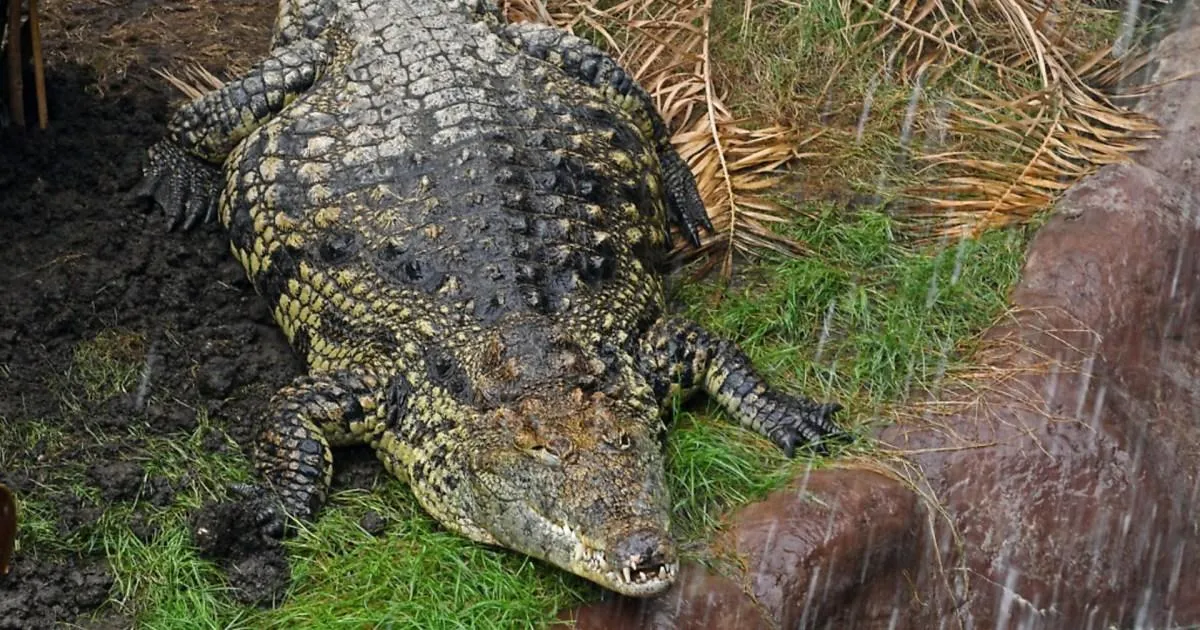
The recent, harrowing incident at the Johnsons of Old Hurst zoo in Huntingdon has left a community in shock and prompted a serious, multi-layered safeguarding investigation. On June 18, a peaceful family afternoon took a terrifying turn when a three-year-old boy was thrown fifteen feet into an enclosure housing fifteen crocodiles. While the young victim survived the attack, he sustained severe injuries, including a broken arm and pelvis, necessitating multiple surgeries. This event has since spiraled into a wider inquiry, not just into the immediate safety protocols of the zoo, but into the care system responsible for the man accused of this unthinkable act.
The man, a 30-year-old individual living with a mental disability, was reportedly visiting the zoo under the supervision of two carers when he allegedly broke away. Disturbing reports from insiders suggest that those tasked with his oversight were distracted by their mobile phones at the time of the incident, failing to provide the level of vigilance required. Following the attack, staff at the zoo reportedly had to intervene to stop these same carers from attempting to bundle the man into a car and flee the scene. This detail has formed the cornerstone of a growing controversy regarding his standard of care and the accountability of those responsible for him.
In the wake of the incident, Norfolk County Council has launched a formal safeguarding inquiry under Section 42 of the Care Act 2014. Authorities are now tasked with the somber job of determining whether the man himself has been a victim of systemic neglect or abuse while under the care of his providers. The council has taken the significant step of pausing further referrals to this specific care agency. They are currently working alongside health partners to conduct a top-to-bottom review of all individuals under this provider’s care, ensuring that the quality and consistency of their support are safe, reliable, and fundamentally human.
The bravery displayed on the day of the attack has been a rare glimmer of hope in an otherwise tragic story. Zoo owners Tracey and Andrew Johnson, along with their son Edward, displayed immense courage by immediately jumping into the pit to intercept the reptiles and pull the toddler to safety. In a public statement, the family described the ordeal as one of the most distressing moments in their business’s history. Thanks to their rapid response and the subsequent efforts of emergency services, the boy was saved. While he is no longer in critical condition, his family faces a long and uncertain road to recovery as he continues to undergo repeated surgeries.
The boy’s parents have been transparent about the grueling reality of their son’s healing process, noting that he has already endured five surgeries with two more likely on the horizon. The full extent of his long-term recovery—specifically regarding the function and mobility of his arms and hands—remains unknown until his bandages can be removed and rehabilitation begins. The emotional and physical toll on this young family is immense, and in response, a GoFundMe page has been established to help mitigate the mounting costs of his medical care and future therapy, a small reflection of the public’s desire to support them through this trauma.
Meanwhile, questions regarding public safety and institutional responsibility continue to loom. While local council officials deemed the attack an “isolated incident” after an inspection of the premises, they have mandated periodic checks on the zoo moving forward. The facility has since reopened its Tropical House exhibit, now bolstered by explicit signage serving as a grim reminder that these are wild, dangerous animals. As legal and safeguarding investigations proceed, the central focus remains on the victim’s recovery and the search for answers as to how supervision failed so catastrophically, leaving a child to suffer the consequences of a system’s negligence.