


A Mother’s Love in the Darkest of Places
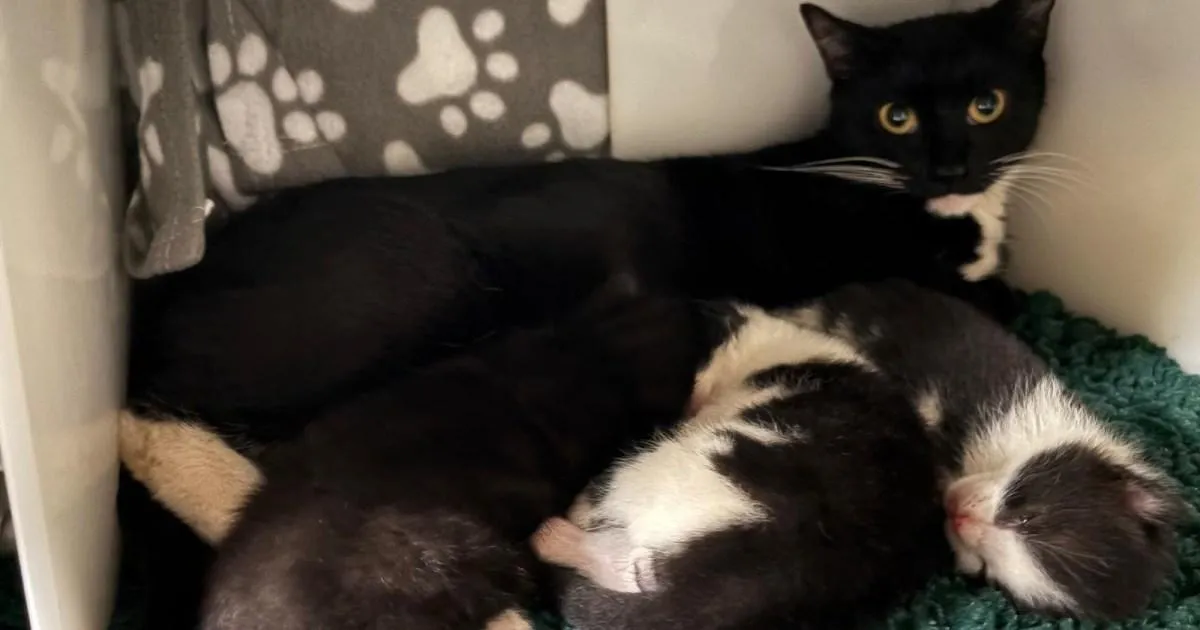
Deep within the bowels of a residential building in Pimlico, central London, a quiet drama had been unfolding for weeks—one that would ultimately become a testament to the extraordinary power of a mother’s love. Inside a sweltering boiler room, where temperatures had soared to a brutal 45 degrees Celsius, a one-year-old tabby cat named Barbie was fighting the most important battle of her life. She had given birth to a litter of kittens in this unlikely and dangerous refuge, and for three long weeks, she had managed to keep her tiny family alive against staggering odds. The boiler room offered neither comfort nor safety; it was cramped, dusty, and overwhelmingly hot, with machinery humming and clanking around them. Yet Barbie, driven by instinct and devotion, had transformed this hostile space into a nursery, shielding her babies from the worst of the heat, grooming them with her tongue, and nursing them with whatever strength her increasingly underweight body could muster. She was, by all accounts, running on pure love.
What finally brought salvation was the sound of desperation. Residents of the block of flats began to hear persistent, plaintive meowing echoing from behind closed doors—cries that grew harder to ignore with each passing day. Worried that an animal was trapped or in distress, they contacted the authorities, and it wasn’t long before animal wardens from Westminster City Council arrived on the scene. The date was June 16, and the team entered the boiler room with a mixture of apprehension and determination, knowing full well that whatever they found inside could be a matter of life or death. Behind the imposing metal boilers, tucked into the narrow, dust-filled crevices, they discovered the feline family: Barbie, exhausted but vigilant, and her kittens, frail but alive. The rescue was swift and delicate, as the wardens carefully extracted each cat from the oppressive heat and cramped conditions. Transported quickly to the Blue Cross Animal Hospital in Victoria, Barbie and her babies were finally in safe hands, but the road ahead would bring both heartbreak and hope.
Amanda Rumball, a London welfare officer at Blue Cross who worked closely with the family, described Barbie as “an incredibly devoted mum” who had done everything conceivable to protect her kittens under the most unimaginable circumstances. Despite the oppressive heat, the lack of food, and the constant dust that coated her fur, Barbie had maintained her vigil, ensuring her kittens were fed, clean, and safe from harm until help finally arrived. When she first came into the care of the Blue Cross team, she was understandably terrified—her eyes wide with fear, her body tense, her instincts screaming that danger was still near. But it didn’t take long for her to realize that she and her babies were finally out of harm’s way. The veterinary team conducted thorough examinations, and what they found was nothing short of remarkable: while Barbie was slightly underweight and covered in a layer of grime from her ordeal, she was otherwise in good health. Her resilience was astonishing, a living testament to the strength of maternal love and the will to survive. She had endured conditions that would have broken many other animals, yet she emerged from the ordeal with her spirit intact.
The kittens, believed to be around three weeks old when they were discovered, initially appeared to be in excellent condition—a tribute to Barbie’s tireless efforts. But as the days passed and the veterinary team conducted more detailed checks, some heartbreaking truths came to light. One of the kittens, it was discovered, had a severe and complex congenital condition, a structural problem that would cause significant suffering and could not be cured. After careful assessment and consultation, the team at Blue Cross made the agonizing decision to put the kitten to sleep, choosing mercy over prolonging a life of pain. It was a decision that weighed heavily on everyone involved, a stark reminder that rescue stories do not always have unambiguously happy endings. The grief, however, was tempered by the urgent need to focus on the survivors. Another kitten, a small and gentle soul named Malibu, was subsequently diagnosed with a Grade 4 heart murmur—a serious condition that would require specialist attention. However, Malibu was still too small to undergo the scan she needed, meaning she would have to remain in Blue Cross’s foster care for the time being, watched over by devoted carers as she grew stronger. “Once she’s big enough and we know she’s ready,” Rumball explained, “we’ll be able to find Malibu the loving home she deserves too.”
Malibu’s story, while still unfolding, is emblematic of a much larger crisis that Blue Cross and animal welfare organizations across the country are grappling with every day. Rumball spoke candidly about what she called a “hidden pet welfare crisis”—a growing wave of vulnerable cats and kittens arriving at shelters and hospitals, each with their own story of hardship, neglect, or abandonment. Rising living costs, housing insecurity, and a shortage of affordable veterinary care have all contributed to a situation where more pets than ever are falling through the cracks. “We’re seeing more vulnerable cats and kittens needing our help,” Rumball said, “and every story highlights just how important it is that pets receive the care and support they need to thrive.” The story of Barbie and her kittens, then, is not just an isolated feel-good anecdote; it is a window into a systemic problem that requires public awareness, compassion, and action. Every rescue, every rehabilitation, every successful adoption is a small victory in a larger battle, and organizations like Blue Cross depend on donations, foster carers, and the goodwill of the public to keep fighting.
The rescue itself was orchestrated by an animal welfare officer from Westminster City Council, whose dedication and quick thinking literally saved the lives of Barbie and her litter. Councillor Caroline Sargent, deputy leader and cabinet member for enforcement at the council, spoke warmly of the operation, calling it “an extraordinary rescue and a testament to the hard work and dedication of our animal welfare team.” She also took the opportunity to remind the public of the importance of looking after pets during periods of hot weather—when animals are particularly vulnerable to heatstroke and dehydration—and knowing what to do if you have concerns about animals in distress. Her message was clear: vigilance and community responsibility can make all the difference between life and death for an animal in danger. This story, she hoped, would inspire others to act when they see something amiss, to speak up for creatures who cannot speak for themselves, and to recognize that a moment of compassion can transform a tragedy into a triumph.
And so, the story of Barbie and her kittens concludes on a note of quiet joy, seasoned with a bittersweet awareness of the journey it took to get there. Barbie herself has found her forever home, along with one of her kittens, a little one named Guinness. They are now settling into new lives filled with safety, warmth, and the unconditional love of humans who opened their hearts to them. Malibu remains in the caring hands of Blue Cross, growing stronger every day, waiting patiently for the moment she will be big enough for her scan—and eventually, for a home of her own. For Amanda Rumball and her colleagues, seeing these cats move from a dark, suffocating boiler room to the comfort of loving homes is the ultimate reward. “It’s fantastic to see Barbie and her kittens receiving expert care from Blue Cross,” Councillor Sargent said, “and it’s even better news to know that all three of them have found their forever homes.” This story reminds us that even in the most desperate circumstances, there is always hope, always the possibility of rescue, and always the quiet, unyielding power of a mother’s love to guide the way.