



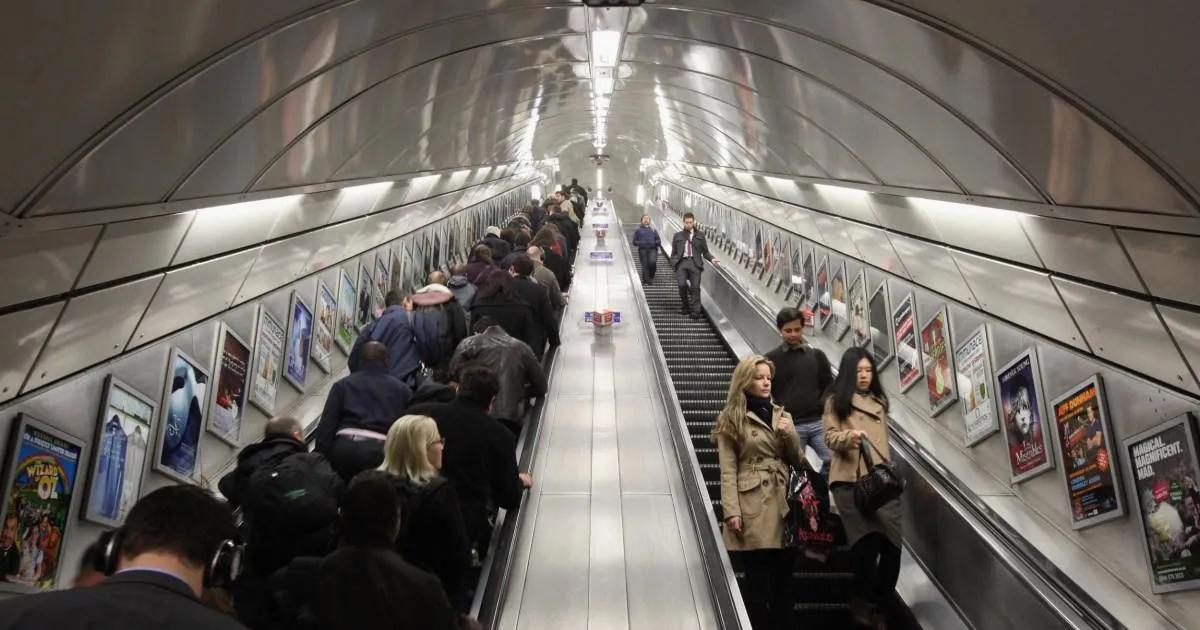
Angel station in Islington is one of those rare places where the ordinary rhythm of a London commute brushes against something almost monumental. Every weekday, thousands of people pour through its gates, ride the brutal Northern Line, and then face one of the iconic experiences of the Underground: the long, seemingly endless ascent on one of the longest escalators in the entire network. The station sees nearly 12 million visitors a year, and for many of them, the journey is not just about getting from platform to street — it is about surviving that strange, weightless, slightly disorienting ride up into the daylight. But now that daily ritual is under threat. Transport for London has announced that Angel station may have to close for up to a year, or perhaps even longer, to repair the ageing escalators that have carried Londoners for more than three decades. It is the kind of news that turns a mundane commute into a looming headache, and for local residents, shopkeepers, and late-night workers, it feels less like an infrastructure announcement and more like a quiet warning that their neighbourhood’s main artery is about to be temporarily cut off.
The problem is not abstract, and it is not new. The station’s three escalators are 200 feet long, and they have been in service for almost 35 years. In April this year, one of them failed outright, leaving the station down a vital piece of machinery. TfL is now worried that the second escalator could soon fail in exactly the same way, and the third is also in desperate need of an upgrade. These are not small, cosmetic repairs. The escalators are so long that TfL says it would be unsafe to operate them as a fixed staircase — meaning that if they do fail, there is no easy workaround. Replacing a single escalator is expected to take about a year, and that fact alone forces TfL to make some very difficult choices. One option is to shut the entire station for a year and replace all three escalators at once, which would mean a long, brutal closure for everyone who relies on the station. The other option is to keep the station partially open for a much longer period, replacing each escalator one by one, extending the disruption across many months or even years. Neither option is comfortable, and both will test the patience of the community around Angel like never before.
The human impact of this would be hard to overstate. Since next month, TfL is considering making the station exit-only during off-peak times, which sounds like a modest administrative change but would actually carry enormous consequences. It would mean that, in the evenings and on weekends, passengers would no longer be able to board trains at Angel. They could only leave the station there. For commuters, that means an extra journey somewhere else, a longer walk, a bus ride, a tangled new route through London’s labyrinthine streets. For shift workers, particularly those in healthcare, hospitality, and retail, it could make already difficult schedules even harder. For older people, disabled passengers, and parents with prams, the thought of finding alternative routes through a busy station is more than an inconvenience — it is a barrier. The local business community is likely to feel it as well. Angel is not just a transport hub; it is a High Street, a meeting place, a collection of pubs, cafés, shops, and restaurants whose customers arrive in a steady flow from the escalators. If that flow stops, or becomes smaller and less predictable, the economic ripple effects could be serious. The station has been part of the fabric of Islington for decades, and the idea of it being closed or restricted for months on end is a strange and unwelcome thought for everyone who passes through it.
TfL has tried to be open about the situation, but the tone from officials is cautious, almost apologetic. Richard Jones, Director of Asset Performance Delivery for London Underground, has made it clear that this is a problem a long time in the making. He explained that the escalators at Angel have been in service for almost 35 years and are becoming less reliable and increasingly difficult to maintain. Their enormous size means renewal is a challenging, expensive project, and TfL is currently exploring every possible option to extend their working life. Crucially, he pointed to years of constrained Government funding for essential asset renewals, which has meant that necessary investment in new escalators simply never happened. That is a familiar refrain for Londoners, who have watched the city’s transport infrastructure creak under the weight of decades of underfunding. The immediate plan is to make the station exit-only during specific periods, which will give TfL more time to plan the next steps. Design work on replacing the escalators is expected to begin this autumn, but that is just the beginning. Jones acknowledged that any disruption to the station will have an impact on customers, businesses, and the local community, and promised to work closely with local stakeholders to mitigate the disruption as much as possible. It is a diplomatic response, but it also reveals a deeper truth: this is not a problem that can be fixed overnight, and there is no clever engineering trick that will make it disappear.
Angel is not the only place in London where the infrastructure is showing its age, and that is part of what makes this news so unsettling. The capital’s transport network is vast and endlessly busy, and for years it has been held together by maintenance teams, safety inspections, and constant patchwork repairs. Escalators wear out, signals become unreliable, tunnels need reinforcement, and stations need modernisation. The difference at Angel is that the failure is not just a small mechanical issue — it is a structural problem that threatens the very function of the station. When an escalator is too long to be safely walked down, and too old to be repaired indefinitely, there is no choice but to face a long replacement project. In the meantime, passengers will have to adapt. Some will choose to use nearby stations, but that will put pressure on other parts of the network. Some will switch to buses, filling already crowded routes. Others will simply walk more, or leave home earlier, or change their working habits. It is a reminder that even the most modern city in the world depends on machinery that is ageing quietly beneath the surface, and that the smoothness of a daily commute is actually a fragile thing, built on decades of decisions about where money should go and what can be postponed.
Looking forward, the situation at Angel is a test of how London handles the long-overdue maintenance of its transport system. There is no good time to close a major Tube station, and no easy way to tell thousands of people that their commute is about to become harder. But the alternative is worse: leaving broken escalators to fail one by one, until a station that should be a gateway becomes a danger, or a burden, or a place people actively avoid. If all goes well, the replacement project will eventually deliver new, reliable escalators that can serve Angel for the next generation. If not, the station could face years of difficult, piecemeal work, with no clear end in sight. For now, TfL is still weighing the options, and the final decision has not been made. But the message is clear: Angel station is approaching a moment of reckoning. The old escalators, with their worn steps and clattering chains, have done their job for almost 35 years, carrying millions of people up and down that steep, strange shaft beneath Islington. Soon, they will have to be retired. And before that can happen, the city will have to endure the pain of saying goodbye to them — a painful, awkward, necessary process that will shape the daily lives of the people who depend on Angel station, and remind everyone that even the most familiar parts of London are not permanent.