

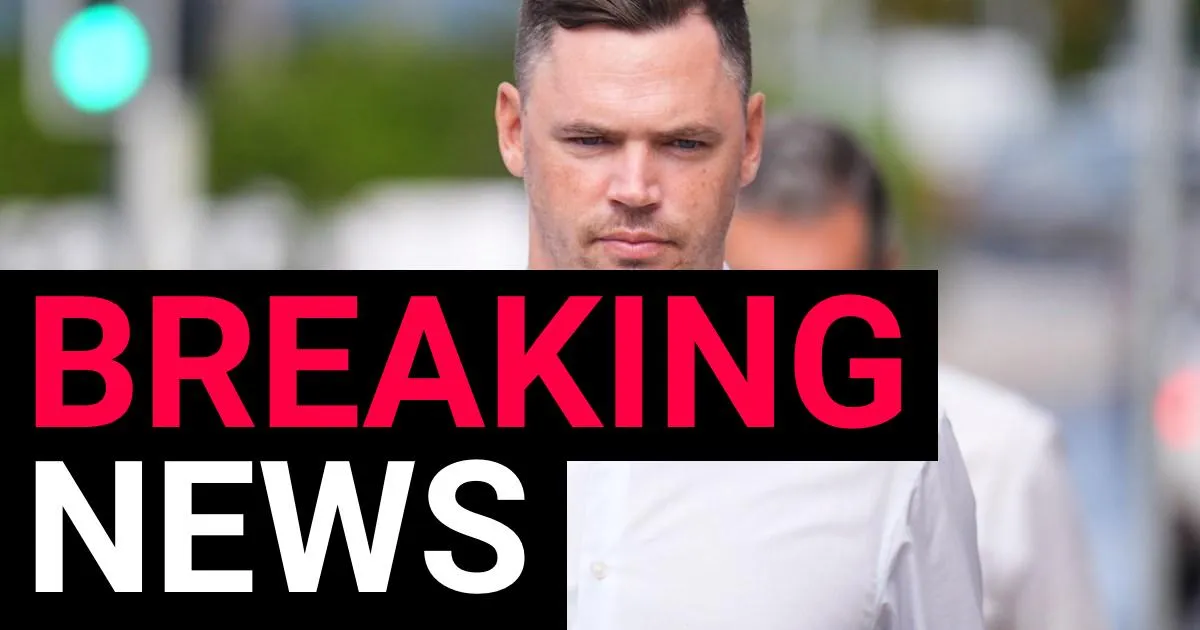
Some tragedies are so sudden, so senseless, that the mind struggles to find a shape for them. The story of Joshua Foster and his two-year-old son is one of those. Foster, a 37-year-old accountant from Essex and a director at accountancy giant KPMG, had flown to Cyprus with his wife, their two children and his in-laws for what should have been a week of sunshine, swimming and family photographs. Instead, within hours of arriving at the King Evelthon Beach Hotel and Resort in Chlorakas, the family’s life was torn apart. Foster placed his little boy on a windowsill to show him a waterpark below, unaware that the window was open. The child fell nearly 40 feet from the fourth floor and later died in hospital. On Friday, Foster stood in Paphos District Court and pleaded guilty to causing death through a reckless, rash or dangerous act. He had faced up to four years in prison. The court fined him £2,500. After the 25-minute hearing, he hugged his lawyer, then his parents, and told reporters: “Thank you for the support. I’m looking forward to going home and being with my wife and daughter.” The words were simple, but they revealed a man desperate to step out of the nightmare and back into the arms of the family he still has. Yet going home will not be simple. Home is now a place where a child’s absence fills every room. The holiday that began with hope ended with a funeral and a criminal case. For a father who made a split-second decision—a decision that any parent might make—the price is not measured in pounds or prison sentences. It is measured in a lifetime of what-ifs. The court’s decision to spare him jail may reflect an understanding that the loss of his son is punishment enough. But the legal label—reckless, rash, dangerous—will stay with him. The world may call it an accident; the law called it a crime. Both things can be true at once, and that is part of the tragedy.
To understand how this happened, you have to follow the terrible timeline. The family arrived in Cyprus in the early hours of July 12, after a long journey, and spent the day settling into holiday life. They visited the pool, played, tried to shake off the exhaustion of travel. In the late afternoon, everyone returned to their rooms to change for dinner. At around 6pm, Foster, his father-in-law and his son walked towards the lift. The little boy was in high spirits; his father was playing with him, and the mood was light. As they reached the lift, the child spotted a waterpark outside the hotel. Perhaps he pointed, perhaps he laughed. Foster pressed the lift button, then lifted his son onto the windowsill so the boy could get a better look. What happened next was so fast that Foster could not react. The window, which he believed to be fitted with protective glass, was open. The child fell through the gap. His lawyer later told the court that the “inconceivable” unfolded in front of Foster before he had a chance to grab his son. In a voluntary statement to police, Foster himself said the boy “fell before he had a chance to grab him.” Those words are almost unbearable to read. A father’s instinct to protect his child, to show him something beautiful, became the very thing that ended his life. At around 6.40pm, police received reports that a child had fallen from the fourth floor of the beachfront hotel under unknown circumstances. The little boy was rushed to Paphos General Hospital. Doctors tried everything to revive him, but he was pronounced dead. There is no way to measure the shock, the screaming, the silence that must have followed. The holiday was over. The family had to make calls home, to make arrangements, to somehow continue breathing. And Foster, the father at the centre of it all, was taken into custody. He would spend the next eight days in a Cypriot jail, not only grieving his child but isolated from everyone who might have comforted him. His lawyer later told the court that Foster had to telephone his young daughter from custody to try to explain what had happened. Imagine making that call. Imagine searching for words that do not exist. There is no script for telling a child that her brother is never coming home, especially when you are the parent who placed him on that windowsill.
The legal case added another layer of pain. Foster was charged with causing death through a reckless, rash or dangerous act, an offence that in Cyprus can carry a maximum sentence of four years in prison. He pleaded guilty, taking responsibility for what had happened. In court, prosecutor Chryso Pergandi set out the facts: the family’s arrival, the afternoon at the pool, the dash to the lift, the fall. She noted that police were called at 6.40pm and that the child died despite resuscitation efforts. But the prosecution also accepted that the alcohol found in Foster’s blood was not a significant part of the case. A sample taken after the incident put his alcohol concentration at an estimated 124mg, but there was no testimony that he was drunk. His lawyer, Alexandros Alexandrou, stressed that Foster had no previous convictions and that his remorse was clear. He described a man whose life “changed forever” in that split second. He told the court about the eight days Foster spent in custody, about the phone call to his daughter, about the unbearable weight of grief and guilt. The court also heard a detail that makes the accident easier to understand, if no less devastating: the window was 2.85 metres wide and 1.2 metres high. It was a large window, and Foster had assumed the glass was protective. That assumption cost him everything. After a 25-minute hearing, the court imposed a fine of £2,500. Foster walked out of the courtroom a free man, at least in the eyes of the law. He hugged his lawyer, then his parents. The image of a grown man in a suit, wrapped in his mother’s arms outside a Cypriot court, is one that stays with you. He said he was looking forward to going home to his wife and daughter. He did not mention his son, perhaps because he could not, or perhaps because the boy was already with him in every thought.
The hardest thing about this story is that it does not fit neatly into ideas of guilt and innocence. Foster did not wake up that morning planning to hurt his son. He was a father on holiday, a KPMG director, a man with a career and a family and a future. In a moment of playfulness, he lifted his child to a windowsill to share a view. It is the kind of gesture parents perform all the time—showing a child an aeroplane, a rainbow, a dog in the street. Most of the time, nothing goes wrong. The child laughs, the parent smiles, and the moment passes. For Foster, the moment did not pass. It became a black hole. The court’s use of the word “reckless” suggests that he should have checked the window, should have known it was open, should have kept his son at arm’s length. All of that may be true. But the same could be said of any parent who has ever made a split-second decision and then thanked their luck. Foster’s luck ran out. His lawyer said his remorse was “clear,” but the word seems too small. A man who has lost a child in this way does not simply feel remorse. He lives inside it. Every time he closes his eyes, he sees the windowsill, the waterpark, the open window. Every time he hears his daughter laugh, he may wonder why his son cannot laugh too. No fine, no prison sentence, no public apology can touch that kind of pain. The surviving family now faces a different kind of sentence: going home. The house in Essex will be full of reminders—a bedroom, a favourite toy, a photograph from a trip to the beach. The daughter will ask questions her parents cannot answer. The grandparents will carry their own grief, perhaps complicated by the knowledge that they were nearby when it happened. The marriage will be tested by sorrow and perhaps by blame. Grief does not follow a script. Sometimes it pulls people together; sometimes it pushes them apart. Foster will have to find a way to be a father to his daughter while carrying the memory of the son he lost. He will have to learn to forgive himself, or at least to live with himself. That may be the hardest work of his life.
Beyond one family’s grief, this case raises uncomfortable questions about safety in holiday hotels and the nature of criminal responsibility. The King Evelthon Beach Hotel and Resort is described as a five-star destination, a place where families go to relax and feel safe. Yet a two-year-old was able to fall from a fourth-floor window because a section was open and, according to his father, looked as though it had protective glass. Were there locks? Were there restrictors? Should a child be able to reach a windowsill? The court did not answer these questions. The focus was on Foster’s actions, not on the hotel’s design. But any parent reading this story will wonder: could this happen to my child? The answer is uncomfortable. It could. Hotels, like homes, have hazards that adults take for granted. A window that opens, a balcony with a gap, a stairwell with a tempting view. We trust our instincts and our luck. Sometimes luck is not enough. The law had to decide whether Foster’s mistake was a crime. It decided that it was, but it also decided that prison would not serve justice. The fine is a token, a legal acknowledgement that something unlawful occurred. The real punishment, as everyone in that courtroom seemed to understand, is the life sentence of guilt. Public reaction to such cases is often divided. Some people see a grieving father who has suffered enough. Others see a careless adult who should have known better. Both responses are human. Both are valid. But from the outside, we cannot truly know what happened in that hallway, in that second, in that father’s mind. Perhaps the most useful outcome of this tragedy is not punishment but prevention. If this case makes one hotel install window restrictors, if it makes one parent double-check a window before lifting a child, if it makes one grandparent say, “Be careful,” then some small good may come from the horror. Foster has been given the chance to go home and rebuild his life. He cannot change what happened. But he can, in time, use his voice to warn others. Whether he will is another question. For now, all he wants is to hold his wife and daughter and try to breathe.
In the end, this is not a story about a court case or a fine. It is a story about a little boy who died on the first day of a family holiday, a boy whose father wanted to give him a better view of a waterpark. That moment of generosity, of love, turned into the worst moment of a father’s life. Joshua Foster will go home to Essex, but he will not go home to the same life. The wife waiting for him is not the same woman who arrived in Cyprus with her family. The daughter who runs into his arms is not the same child who shared those first hours of holiday excitement. Grief changes people. It changes the shape of a house, the weight of a silence, the meaning of a photograph. The court has finished with Foster. The media will move on. The comments will fade. But for the family, the story is never over. They will carry the boy with them every day, in every way. They will mark birthdays that do not come, holidays that do not happen, milestones that will never be reached. And yet, somehow, they will have to keep living. They will have to find reasons to smile, to laugh, to love again. That is what the dead ask of us, perhaps. That is what a two-year-old, who only ever wanted to see the waterpark, would have wanted too. A father is going home. Home will never be the same. But he is going home, and that is all he can do.