


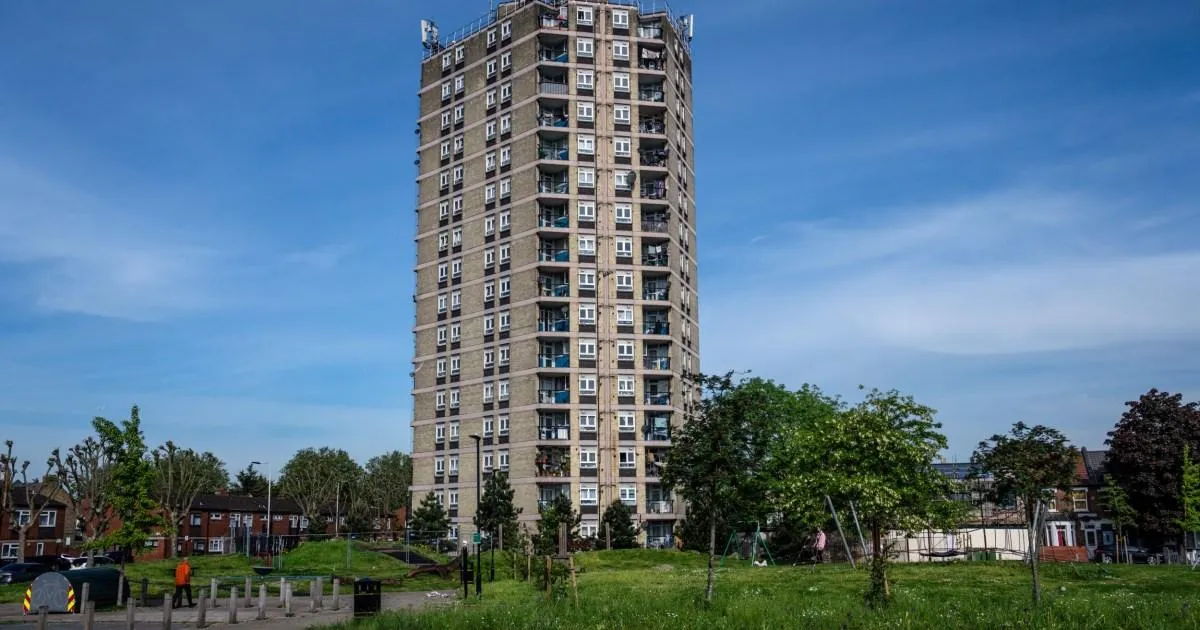
The early morning silence of a residential block in Plaisth, East London, was broken by a sound that no parent should ever have to hear: a small voice counting down in the darkness, “Three, two, one,” followed moments later by a sickening clang from the concrete below. That was the tragic sequence of events pieced together by investigators from CCTV audio, which marked the final moments of five-year-old Aalim Ahmed, a vibrant and active little boy who, in a moment of tragic innocence, fell fifteen stories from his family’s flat, believing he could fly. The tragedy unfolded just before six o’clock on the morning of May 16, 2024, when Aalim’s father, Makail Ahmed, made the heart-wrenching discovery of his son’s body on the ground below the apartment block. The child had been found in the early hours, having apparently climbed from his bed, wandered into the kitchen, and scaled a chair to reach the window sill, from which he then opened the window and jumped, an action rooted in the tragic naivety of a child who did not understand the concepts of consequences, mortality, or personal safety.
Aalim, who had a diagnosis of autism which rendered him particularly vulnerable due to a lack of understanding about danger, had been living with his father, his mother Sahra Osman, a toddler, and a newborn sister. The family’s life was turned upside down, leaving behind a scene that investigators described as a “loving environment.” From the very beginning, Ms. Osman expressed deep heartbreak and anger, stating that her son was the recipient of a death sentence he never should have faced, calling the “preventable.” The tragedy occurred at a social housing estate operated by Newham, and the grieving mother immediately pointed her finger at the council, arguing that she had repeatedly voiced dire safety concerns about the state of the property, specifically regarding the windows in the kitchen. According to Ms. Osman, her world was already one of heightened worry because Aalim had a diagnosis of autism and literally had no sense of danger. For months leading up to the accident, she provided a detailed list of complaints regarding the flat that she had formally reported to the council. These complaints included her fears that the windows opened too wide for safety, and her concerns over a lack of keys to secure them, creating a hazardous situation she desperately tried to have rectified. She described her fear of the initial move into the property, where she claimed the flat needed repairs and she was “scared” and “horrified,” but her pleas for fundamental safety interventions seemed to fall on deaf ears, leading to a series of workmen attending the property, but none of whom ever actually fixed the underlying issues.
The central crux of the resident inquest was the contentious condition of the windows in question. The proceedings, held at East London Coroner’s Court, heard contrasting accounts regarding the functionality of the windows and their safety devices. Window engineer Charlie Mann, sent by Newham Council in December 2023, provided a contrasting testimony, insisting that when he examined the fixtures, the windows were functioning adequately. He admitted that after discussing Aalim’s autism with his mother, he recognized the need for more secure lockable restrictors instead of the button-clinch mechanisms, and ordering safety replacements do not installing fixture adjustments scheduled for January. However, when his father, James Mann, the managing director of the firm, viewed videos of police testing the exact window from which Aalim had fallen, he noted a journal of noticeable issues. He stated that the window appeared to be entering a “dual mode,” a concerning that could be caused by misalignment, misuse, or force. This defect allowed the window to tilt and turn open simultaneously, potentially expanding its opening and overpowering the chorus of the safety restrictor. The courtroom was shown footage where the restrictor failed to engage every time it was tested, and he concluded that there was “needs to be an adjustment, something is not quite right.” This technical evidence complicated the sole legal narrative as it countered the council’s initial assertions that the windows were in working order, suggesting a profound claim on the part of the family’s testimony.
As the inquest progressed, it became clear that the family’s narrative was framed by a tragic absence of appropriate safety measures within a child-facing environment. The coroner, Assistant Coroner Ian Wade, acknowledged the conflicting evidence, asserting in his final findings that while the windows were functional, they were “not used appropriately.” Though he could not definitively establish that the windows were mandatorily faulty or that the council should have realized that a child would attempt such an act, he posted a narrative conclusion confirming Aalim had been an active, autistic boy with an inability to make reliable judgments about their physical safety. In his evidence, Detect Inspector Jamie Humm of the Metropolitan Police, who led the investigation, described flat scene and the circumstances of the fall, noting there was “no evidence or suspicion he had been forced.” Coroner also acknowledged they were faced with multiple points of conflict, indicating that while they could see what happened, they were limited in proving the root cause of the opening failure.
The psychological weight of the story rests heavily on the shoulders of the family, who are left with the shattering grief of losing a child in such a sudden and agonizing manner. The unrelenting pain of the parents was a constant voice throughout the inquest, as it heard the details of their son’s medical condition, his playful spirit, and their deep remorse over the circumstances. Ms. Osman ‘s testimony , which described the family going to bed with all windows closed, stands in stark contrast to the stance of the window inspector, who felt everything was functional. That the coroner did not issue a “prevention of future deaths” report—which is typically mandated when he has a practical concern upon which he could act —may add a layer of raw betrayal to the family’s grief, as they argued the council had to be held accountable for a predictable accident. Newham paper’s deputy leader for housing expressed polite condolences but essentially, in the court of law, the judge concluded there was no definitive council responsibility that could stand out as future negligence, leaving the family to deal with a tragic void and a feeling of larger missed duty of care that did not stop in time.
The story of Aalim Ahmed is a profound and devastating reminder of the ordinary, often invisible dangers that can lurk in the corners of a house; hazards that are far more difficult to account for when one is caring for a child with special needs who perceives the world through a different, dangerously trusting lens. While the inquest has delivered it’s final legal and legal narrative, the family continues to grapple with the lingering “what ifs” that always follow such a catastrophic premature death. The initial mother’s use of the word “preventable” serves as a chilling indictment of the institutions and systems meant to protect the most vulnerable. The case highlighted the immense pressure on social housing and the frequent breakdowns in communication between council Engineers and tenants. The images of the “faulty” fixture are stark reminders that for every child with autism, a simple move to a high-floor flat can present a life-or-death risk, and that the lack of strict, legally mandated child-safe windows often shifts from a logistical concern to a primary source of child, trauma and a heartbreaking, irrevocable loss. The little boy who counted down to zero is now gone, but his story leaves behind a heavy need for scrutiny, responsibility, and protection of families who should be safe at home.