
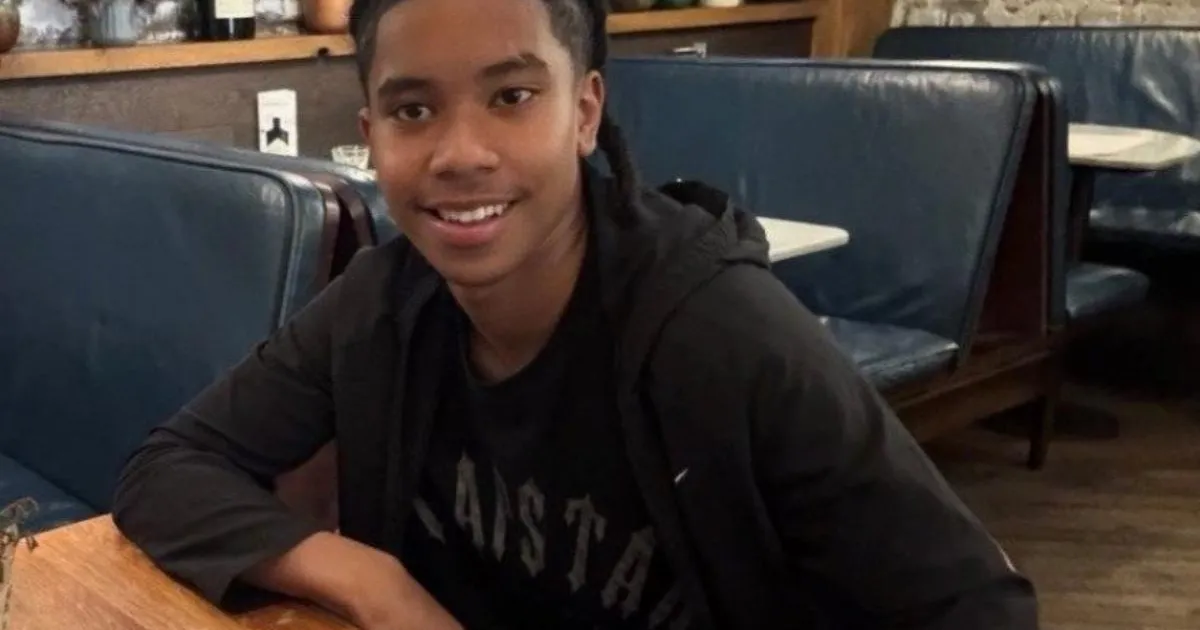
In the stark, fluorescent-lit corridors of Brent Civic Centre—a sprawling municipal hub that typically resonates with the administrative hum of daily life, from passport queries to council tax payments—the brutal reality of a young life extinguished has cast a profound and suffocating shadow. The victim, David Wynter, was just seventeen years old, a teenager at the precipice of adulthood, whose future was violently erased on a Tuesday afternoon in a space designed for bureaucracy, not bloodshed. Police have charged a fifteen-year-old boy with his murder, a staggering detail that highlights the tragic, cyclical nature of youth violence plaguing London. The attack unfolded in the foyer area near the public library, a place usually associated with quiet study and the pursuit of knowledge, now indelibly stained by a senseless act of aggression. As emergency services descended, the terrifying proximity of the incident to Wembley Stadium—a global icon of triumphant sport and collective joy—amplified the horror. The juxtaposition is jarring: mere yards from where legends are celebrated and cups are lifted, a boy lay dying, his life draining away on the cold tiles of a government building. The immediate evacuation of council workers and library patrons turned an ordinary commute into a scramble for safety, but more importantly, it transformed passive observers into helpless witnesses to a tragedy that no one could have anticipated. The tragedy is compounded by the sheer ordinariness of the setting; there is no expectation of such violence in a place where one goes to register a birth or dispute a parking fine. Yet, in a heartbeat, the ordinary became the horrific, leaving a community in shock. The image of David, a vibrant young individual, is now inextricably linked to a crime scene, and his family faces an unimaginable grief amplified by the public nature of his death. As the suspect, a child himself, prepares to face the rigors of the Old Bailey, the solemn weight of this event presses heavily upon all those who encountered it, serving as a grim reminder that life is fragile and safety is often an illusion.
Amidst the chaos and despair, a beacon of selfless courage emerged from the unlikeliest of sources: the building’s security team. The head of security, speaking with a mix of pride and profound sorrow, detailed how his staff abandoned all instinct for self-preservation, “diving into help” without a moment’s hesitation. Their response, which he summarized as “all hands to the pump,” speaks volumes about their character; they were not trained paramedics, nor were they equipped to handle knife wounds, but they rushed to the teenager’s side driven purely by an innate, humane desire to save a life. In that frantic, terrifying moment, their primary fear was not for their own safety but for the boy lying bleeding before them. They applied pressure, they called for help, they did everything in their power to keep the light in his eyes just a little longer, despite the overwhelming odds. The security chief’s proud declaration, “I’m very proud of them,” resonates deeply as a testament to the everyday heroism that often goes unnoticed. These individuals are typically the silent sentinels of civic buildings, checking IDs and directing visitors, but in a crisis, they transformed into the first line of defense against death. The psychological toll on these heroes is an often overlooked casualty of such violence; the management has wisely offered counselling to support them as they process the traumatic images they witnessed. They might be wrestling with survivor’s guilt, wondering if they could have done more, or reliving the desperate sounds of the struggle. Another staff member echoed the sentiment, labeling them “heroes” who refused to run from danger, a powerful rebuke to the culture of indifference. Their actions serve as a crucial reminder that compassion can thrive even in the face of profound hatred, and that ordinary people possess an extraordinary capacity for bravery when their community needs them most. They will forever carry the memory of that afternoon, yet their decisive actions prevented an even greater tragedy and offered David a dignified, human presence in his final moments, proving that while the world can be cruel, it is also populated by individuals who will run towards the fire when everyone else is running away.
The ripples of the tragedy extend far beyond the immediate crime scene, embedding themselves in the psyche of those who merely happened to be in the vicinity. One mother, who had been taking her son to a routine appointment at the council offices, recounted the harrowing scene in a voice still trembling with shock. She described walking through the building and witnessing the aftermath, the boy lying “literally downstairs in between the library and the foyer.” The specific geography of the location underscores the randomness of the attack—a liminal space, a thoroughfare, not a destination. Her vivid recollection of the trauma neutralizes any sense of detachment; she notes the presence of numerous young children in the area, her mind racing with concern for their psychological well-being. The image of children witnessing such raw, adult-inflicted violence is a haunting one, a violation of their innocence that will likely require extensive support to heal. But the most heartbreaking detail she shared was the sight of a female ambulance crew member in tears as they exited the building. That single, powerful image conveys more than words ever could about the severity of the situation. Medical professionals, who are trained to maintain clinical composure, were so overwhelmed by the tragedy that they wept openly, likely at the moment David was pronounced dead. This breakdown humanizes the entire medical response, revealing that behind the uniforms and the sirens are human beings who feel the immense weight of failing to save a life. The mother’s sense of numbness is a natural, protective response to such a jolt to the system. Her son, too, will carry this memory, the image of a weeping first responder becoming a permanent fixture in his recollection of that day. These witnesses are not just background noise; they are the threads that weave the fabric of this tragedy together. Their stories highlight that the impact of violence is not singular but collective, leaving an invisible trail of secondary trauma that will unfold in homes across Brent in the coming weeks and months, as both adults and children grapple to make sense of a senseless event that disrupted their daily routine with deadly force.
In the aftermath, the Brent Civic Centre has been rendered a silent monument to the tragedy, its doors barred to the public as investigators methodically collect evidence. The closure, while necessary for the forensic process, leaves an eerie void, denying the community access to essential services and transforming a place of civic function into a mausoleum of sorts. Police are meticulously trawling through the extensive CCTV network, not just from the centre itself but also from the state-of-the-art cameras of the adjacent Wembley Stadium. This will be a painstaking process, piecing together the seconds leading up to the fatal attack, hoping to trace the movements of the accused and the victim. The utilization of the stadium’s sophisticated surveillance infrastructure adds a layer of surreal technology to a deeply human tragedy. For the ordinary residents of Brent, the closure is a stark inconvenience, but it is also a constant, unavoidable reminder of what occurred. The building’s silent halls, empty of the chatter of council employees, the laughter of library visitors, and the prams of parents dealing with community affairs, are now filled with the ghost of a teenage boy. The evacuation earlier that day would have been swift but chaotic, people pouring out onto the streets, their routines shattered by the sirens and the police tape. The symbolism of the location cannot be overstated; Wembley Stadium stands as a testament to human achievement, ambition, and the euphoria of victory. To have this occur in its immediate shadow creates a cognitive dissonance, a mixing of the celebratory and the tragic. The community is now left in a state of suspension, waiting for the building to reopen and for a semblance of normalcy to return. However, the physical reopening will do little to erase the psychological barrier that has been erected. The mundane acts of paying a bill or picking up a document will forever be tinged with the memory of that Tuesday. The police investigation is a necessary bureaucratic hurdle, but it is also an attempt to bring a modicum of justice to a grieving family, a hope that the perpetrator, though young, will be held accountable for the irreversible damage he has caused.
Perhaps the most haunting aspect of this case is the youth of everyone involved. The victim, David, was seventeen—sitting on the precipice of exams, careers, relationships, and the fullness of life. The accused is merely fifteen, an age where a person is still wrestling with their own identity, still navigating the turbulent waters of adolescence. The tragedy of youth violence is that it robs two families of their children, albeit in different ways. David’s family faces the unendurable grief of a funeral, while the accused’s family faces the shame, confusion, and horror of having a child charged with murder. This dynamic forces a chilling conversation about the state of London’s streets and the prevalence of knife crime. How does a child acquire the intent to kill? What societal breakdowns, what systemic failures, allow such a confrontation to escalate so horrifically? The setting—a public building—suggests a stark lack of fear of consequences, a brazenness that is profoundly disturbing. The accused will be tried as a minor, a legal nuance that recognizes his age, yet the wounds inflicted are those of an adult. The loss of potential is staggering. David was not just a statistic; he was a son, a friend, perhaps a student, a young man with dreams that have been brutally dashed. Meanwhile, the fifteen-year-old now faces a future defined by incarceration, his own potential curtailed by a single, devastating act. The entire incident casts a spotlight on the urgent need for intervention, for youth programs, for conflict resolution, and for wide-scale societal change. Communities are left asking why such violence persists, why children are carrying weapons with such ease, and why the anger is so readily unleashed. The answers are complex, involving social deprivation, toxic masculinity, online influences, and broken homes, but the human cost is simple and absolute. As Brent mourns, the trial will unfold, bringing further painful details to light. But the core tragedy remains: two teenagers, entwined in a fatal encounter, serve as a grim emblem of a wider crisis that is stealing the future youth of England one life at a time.
As the days turn into weeks, the memory of that Tuesday afternoon at Brent Civic Centre will slowly integrate into the fabric of the community, but it will never fade completely. The initial shock will subside, replaced by a deeper, lingering sorrow. The security staff will return to their posts, perhaps with a heightened vigilance, but also with the heavy knowledge of what they saw and what they tried to do. Their pride in their actions is a silver lining, a proof that humanity’s instinct to protect is stronger than its instinct to flee. The mother and her son will go about their lives, but the image of that weeping paramedic will occasionally flash before their eyes, a stark reminder of life’s fragility. For David’s family, there is no closure, only the slow, painful process of learning to live with an unbearable void. Their fight for justice has just begun, their grief a public spectacle played out in courts and press releases. The Civic Centre will reopen its doors, residents will queue to renew their driving licenses, and the library will once again fill with the scent of books and the quiet rustle of pages. But the floor where David died will always carry an invisible weight, a memory of the tragedy that no amount of cleaning can erase. The nearby Wembley Stadium will host matches, and the roar of the crowd will echo across the sky, a celebration of life and sport continuing in the face of death. This juxtaposition of mourning and celebration defines the human experience—we endure, we persist, but we never forget. In his final moments, David Wynter was surrounded by brave strangers who fought for his life, and by the cold, indifferent architecture of a civic building. His story is a cautionary tale, a call to arms against the epidemic of violence that claims the lives of our children. It is a story about the heroic staff, the traumatized witnesses, and the grieving families. As the young defendant faces the Old Bailey, the hope is that justice will take its course, but the deeper hope is for a societal awakening—a realization that the lives of our youth are too precious to be lost on the floors of our public buildings. David’s name will not be forgotten, his severed future a testament to what we stand to lose when we fail to protect our most vulnerable. The heartbreak of Brent Civic Centre is a stark lesson in the consequence of violence, and a tribute to the resilience of those who remain.