


The Dawn Raid That Took Deadly Weapons Off London’s Streets
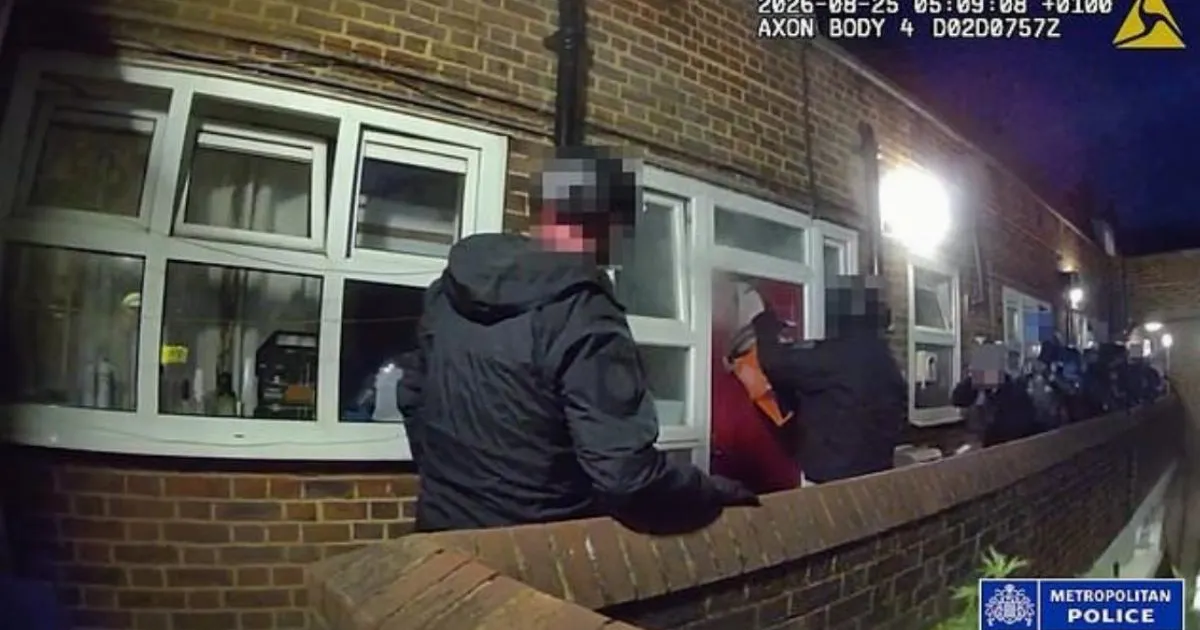
The pre-dawn silence of a South London residential street was shattered by the unmistakable sound of power tools and determined voices. It was just past five in the morning on a Tuesday when Metropolitan Police officers launched a carefully planned operation that would result in the seizure of multiple dangerous weapons from a flat in Lambeth. The body-worn camera footage released by the Met captures every tense moment of this high-stakes operation, beginning with an officer methodically using a circular saw to cut through the reinforced doorframe of a flat in Wandsworth Road. The whine of the saw cutting through metal and wood pierces the early morning stillness, a sound that would soon be followed by the heavy thud of a battering ram as officers forced their way into the premises. The footage is raw and unfiltered, showing the intensity and professionalism required for such operations, as officers move with practiced precision to secure the location and apprehend their suspect.
As the door finally gives way and officers pour into the flat, the scene that unfolds represents the culmination of weeks, perhaps months, of investigative work. The target of this operation was a man in his twenties who was suspected of being involved in the illegal importation of weapons into the United Kingdom, specifically knives that had been shipped from China. What followed was a systematic search of the premises that would uncover a cache of weapons hidden within the flat. In total, officers discovered ten knives within the residence, including lock knives and flick knives – weapons that are designed for concealment and sudden deployment, making them particularly dangerous in close-quarters situations. Among the seized items were also zombie knives, a particularly menacing category of weapon that had been banned in the UK in 2024 due to their aggressive design and the serious harm they can inflict. The discovery of these weapons represented not just a successful police operation, but potentially the prevention of countless future crimes that these knives could have been used for.
The arrested man now faces serious charges relating to the importation of prohibited weapons into the UK, a crime that carries significant penalties under British law. This operation was not an isolated incident but rather part of a broader, sustained effort by law enforcement to combat the scourge of knife crime that has plagued London and other major cities across the United Kingdom. Detective Chief Inspector Kara Moulds, who oversees such operations, spoke passionately about the importance of this work, emphasizing that these knives have no legitimate place on London’s streets. She highlighted how these weapons are specifically designed to cause serious harm, which is precisely why officers remain relentless in their pursuit of those who attempt to bring them into communities. Her words carry the weight of someone who has seen the devastating consequences of knife violence firsthand and is determined to prevent further tragedies. The seizure of every knife represents one less weapon that could potentially be used to threaten, injure, or kill innocent members of the public.
The broader context of this arrest reveals a troubling but slowly improving picture of knife crime in the United Kingdom. The year 2024 saw the introduction of bans on zombie knives and machetes, a significant legislative step in the fight against knife violence. Between July 2025 and August of the following year alone, more than 14,500 weapons were voluntarily surrendered through government-backed amnesty bins, demonstrating both the scale of the problem and the public’s willingness to participate in solutions. Perhaps most encouragingly, statistics show that the number of homicides involving knives or sharp instruments recorded by police in England and Wales fell to its lowest level in 35 years in the period ending March 2026. The figures reveal that 176 knife killings were recorded by police during this time, representing a fourteen percent decrease from the 204 incidents recorded in the previous twelve months. While every single death remains a tragedy, these numbers suggest that the combined efforts of law enforcement, legislation, and community engagement are beginning to yield positive results.
The impact of seizing weapons like those found in this Lambeth raid extends far beyond the immediate arrest. Each knife recovered represents a potential life saved, a family spared the anguish of losing a loved one, and a community made safer. The work of officers like those seen in the body-worn footage often goes unheralded, conducted in the early hours of the morning while most people sleep, targeting those who would flood the streets with dangerous weapons. The Metropolitan Police’s willingness to release this footage serves multiple purposes: it demonstrates transparency in their operations, warns those involved in similar criminal activity that they are being watched, and reassures the public that decisive action is being taken to address their concerns about knife crime. The footage humanizes the officers involved, showing them not as faceless enforcers but as dedicated professionals carrying out difficult and dangerous work on behalf of the communities they serve.
The man now in custody faces the full weight of the justice system, but his arrest represents just one small battle in a larger war against violent crime. The fight continues daily, with officers across the country working tirelessly to identify, intercept, and arrest those involved in the distribution and sale of illegal weapons. The falling statistics provide hope that these efforts are working, but they also serve as a reminder that much work remains to be done. For every successful operation like this one, countless others are ongoing, and new threats constantly emerge. The community in Lambeth and across London can take some comfort in knowing that their police force remains vigilant and committed to making their streets safer. Yet the true measure of success will be sustained reductions in knife crime, fewer families mourning lost loved ones, and ultimately a society where such dawn raids become an increasingly rare necessity rather than a regular occurrence.