

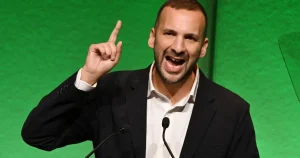


The political landscape in Westminster has shifted dramatically, reaching a boiling point as the newly appointed Prime Minister, Andy Burnham, unveiled his inaugural cabinet. This transition marks a clean break from the administration of his predecessor, Sir Keir Starmer, who opted for a quiet exit with a trip to the pub following his resignation. Mr. Burnham, often referred to as the “King of the North,” swept away many key figures from the previous government, signaling a desire to rebuild public trust. Standing outside No. 10, he promised a “new political and economic model” for Britain, acknowledging that the nation has grown weary of the frequent leadership changes that have plagued the country since 2016.
The composition of this new cabinet is a blend of trusted veterans and strategic allies who helped orchestrate Mr. Burnham’s return to the national stage. Notably, John Healey has been appointed to the Treasury, a move that carries significant irony given that his own resignation as defence secretary was the catalyst for Sir Keir’s downfall. Alongside him, Ed Miliband has been shuffled into the role of Foreign Secretary. Miliband, who survived the “Red Ed” media storms of years past, is expected to leverage his extensive experience in international climate negotiations to manage Britain’s global standing—a task that will surely test his diplomatic grit against potential challenges from leaders like Donald Trump.
The internal power structure also sees the return of several high-profile figures who were previously sidelined. Angela Rayner, once a powerhouse of the Labour party before her departure over tax-related complexities, returns to the frontlines as Housing Secretary. Having been cleared of any wrongdoing, her reinstatement is a clear signal that Mr. Burnham values her background as a champion of workers’ rights. Meanwhile, Louise Haigh, one of the central architects of Burnham’s campaign and a vocal critic of the “boys’ club” culture in the previous Downing Street operation, takes on the mantle of Chancellor of the Duchy of Lancaster, positioning her at the heart of the government’s efforts to reform the civil service and prioritize regional devolution.
Stability and continuity are clearly on the agenda for certain departments, despite the broader upheaval. Shabana Mahmood retains her post as Home Secretary, continuing her focus on migration controls and dismantling smuggler gangs. This remains a potential flashpoint for the party, as she navigates pressure from backbench MPs calling for a softer approach. Similarly, Pat McFadden remains at Work and Pensions, maintaining his role as a serious, steady hand in managing the state pension and welfare. His presence provides a sense of continuity that may reassure voters who are anxious about the economic volatility of the last few years.
Other appointments hint at a shift in governmental focus. Yvette Cooper has been moved to the Department of Health and Social Care—a significant move given the critical state of the sector—while Jonathan Reynolds returns as Business Secretary, now with an expanded remit that includes science and technology. Meanwhile, Lucy Powell continues as Education Secretary, and Lisa Nandy maintains her position as Culture Secretary. These roles are critical for Mr. Burnham’s promise of a “circuit breaker” for Britain. By folding digital responsibilities into Nandy’s portfolio, the government suggests a streamlining of departments meant to signal efficiency and a pivot toward long-term economic growth rather than short-term administrative bloat.
In his address to the nation, Mr. Burnham offered a rare moment of political humility, admitting that the public is understandably “fed up” with the relentless cycle of Westminster drama. As the seventh Prime Minister since 2016, he recognizes that his mandate depends on proving that Britain can regain its stability. By framing his government as a departure from the “not good enough” culture of the past, he is banking on a fresh, decisive start. Whether this “new model” can actually deliver the relief households need—or if it is merely another chapter in a turbulent era—remains to be seen as the nation watches this new team step into the spotlight.