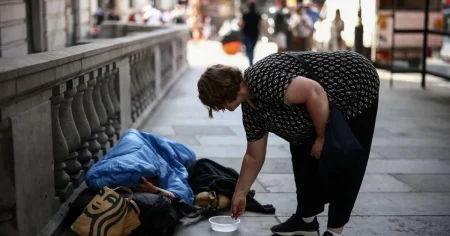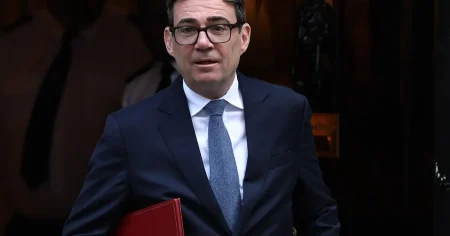

This evening, the Moon will finally get in the Sun’s way. It will not be a full eclipse, and it will not last long, but over most of the UK, more than 90% of the Sun will be blocked by the Moon for a few strange, almost sacred minutes. For many of us, those penumbral moments may well feel like a blessed relief. After weeks of endless heat, of sunlight beating down with an almost aggressive determination, of skies that seem to promise nothing but another scorching day, the idea of a shadow sliding across the daylight is hard not to read as a kind of mercy. It is one of the few times in weeks that anything in the sky has made a proper effort to get in the Sun’s way during daytime. And we need it. We really need it. This is a summer that has stopped feeling like a season and started feeling like a siege. The Met Office is predicting that exhausted Londoners and Brummies will once again have to endure temperatures that could reach 37°C tomorrow. Drought conditions are worsening across large parts of the country, with rivers running low, reservoirs shrinking, and gardens turning brown. This afternoon, Prime Minister Andy Burnham chaired an emergency Cobra meeting with ministers and officials to discuss the heatwave. Not a briefing, not a photo opportunity, but a full crisis meeting. The kind of meeting that no prime minister wants to sit in, surrounded by charts and maps, listening to experts describe a future that is already here. It is strange to think that, not long ago, a proper British heatwave meant a few sunny days and a sudden rush on ice cream. Now it means emergency committees, hosepipe bans, wildfire warnings, and a national conversation about survival.
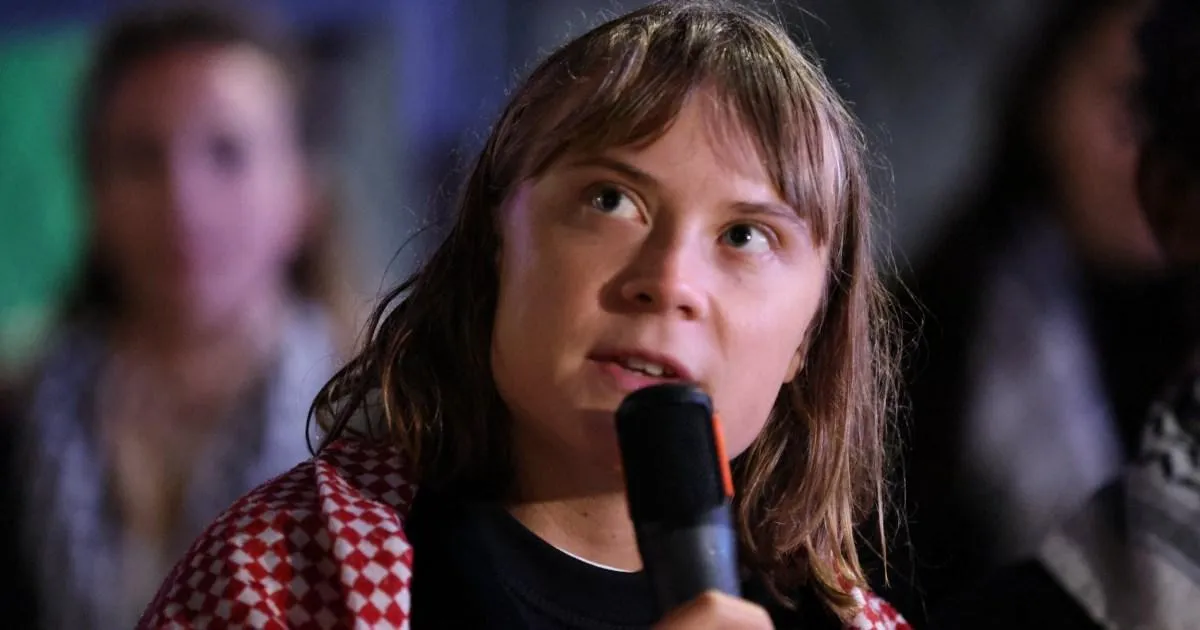
And with all this going on, you could be forgiven for wondering: where have all the climate activists gone? There was a time, not so long ago, when they seemed to be everywhere. The first half of this decade was their heyday, or at least it felt that way. Every couple of weeks, there was another headline, another confrontation, another flashpoint. A bridge obstructed. An office building sprayed with paint. A motorway slowed to a crawl by slow-marching bodies in orange hi-vis. Just Stop Oil, Extinction Rebellion, Insulate Britain, the names blurred together but the image was always clear: people who were willing to make themselves obnoxious, disruptive, and impossible to ignore, all because they believed that the planet was burning and nobody was acting fast enough. It was messy, noisy, infuriating, and, for many drivers and commuters, profoundly annoying. But it worked in the sense that it kept climate change in the headlines. Now the summers are hotter, the droughts are worse, and the protests have, by and large, fizzled out. So what happened? A cynic might point to the arch-eco warrior Greta Thunberg and argue that left-wing campaigners have shifted their attention away from the environment and toward Palestine, amid the destruction of Gaza by Israel. Thunberg has been vocal, and many other climate activists have joined her in linking the two causes. But those campaigners would argue, as Thunberg has done, that support for Palestinians is not a distraction from their environmental work; it is a natural extension of it. It is about human rights, about standing with marginalised people, about refusing to let the powerful destroy the vulnerable. There is also the catastrophic environmental impact of the bombing itself, the poisoned land and water, the carbon emissions, the rubble and the ruin. Similarly, Zack Polanski became leader of the Green Party last year by leaning hard into anti-billionaire politics and, conspicuously, talking rather less about the environment. His wildfire press conference last week will have been the first time many people saw him put the issue front and centre since taking the top job. It was a reminder that even when the climate movement steps back, the climate never does.
But there is another explanation for why we are seeing less overt climate activism these days, and it is a deeply uncomfortable one: it sort of worked. That is not the same as saying it won, but it matters. When Just Stop Oil announced in March 2025 that it was “hanging up the hi-vis”, the campaign group partially attributed that decision to the fact that “demand to end new oil and gas is now government policy” after Labour won the previous year’s general election. Let that sink in. A small, deeply unpopular protest group, dismissed by much of the public as eco-zealots and by the tabloids as a menace, made itself so unavoidable that its core demand ended up embedded in the platform of a party that went on to win a landslide. That is not failure. That is the strange, slow chemistry of political change. Labour’s victory put a supremely passionate and energetic energy secretary in charge of the climate brief: Ed Miliband, a man who seemed to actually enjoy the fight and who made no secret of his belief that the transition away from fossil fuels was not a burden but an opportunity. His replacement at Defra, Miatta Fahnbulleh, is said to share his environmental zeal. And Miliband has since indicated that, in his new role as foreign secretary, he will place the climate crisis at the heart of his approach to international relations. Global warming is global, after all, and the UK can only do so much on its own. For the activists who spent years being dismissed as crankish troublemakers, watching their ideas become state policy must be a profoundly strange experience. It is a bit like shouting into the void for a decade and then discovering that the void has been taking careful notes. The goalposts have moved. The protest signs have been folded away, not because the fight is over, but because the fight has entered a different phase. It is harder to protest a policy that already exists. It is harder to be the outsider when you have become the establishment’s conscience.
We should also be careful not to romanticise the activist life. Campaigning is exhausting, thankless work. It means standing in the rain, being shouted at by angry drivers, facing court dates and fines and the slow burn of wondering whether any of it is making a difference. It means spending hours on social media, dealing with abuse, and trying to explain, over and over again, why ordinary people are willing to disrupt their own lives for a cause that often seems too big and too slow. The pandemic scattered protest movements across the world. The cost-of-living crisis made everyone focus on bills, jobs, and the price of food. Wars, recessions, and endless political chaos have crowded the headlines, leaving less room for the old, steady drumbeat of environmental direct action. Activists are not machines. They are human beings with limited energy, and the past few years have pushed many of them to the edge of burnout and beyond. Some have moved on to other causes. Some have simply gone home to tend their own gardens, metaphorically and literally. And some have discovered that the climate crisis has become so baked into ordinary life that it no longer needs a movement to feel present. It is there in the fruit and vegetables that look a little different this year, in the hosepipe bans, in the wildfires, in the cracked lawns and the low rivers and the sweltering nights. It is there in the fact that a prime minister has to convene emergency Cobra meetings simply to discuss the weather. You do not need to glue yourself to a road to notice that the world is changing; you just need to water your garden, or try to, and watch the water run out before the plants are satisfied. This is the strange human reality of the situation. We wanted the issue to be taken seriously, and now it is. But taking something seriously means living with it, and living with it is heavy. The activists who used to fill the streets have not disappeared, exactly. They are doing what everyone else is doing: trying to get through the summer, trying to stay hydrated, trying not to lose hope in a world that keeps getting hotter.
Yet anyone expecting a settled, quiet climate consensus is probably going to be disappointed. There are still fights to be had, and one is looming. In the coming weeks, a decision is due on whether to start production at the Rosebank oil field and the Jackdaw gas field. These are exactly the kind of projects that Just Stop Oil and other campaigners have spent years trying to stop. If the government approves them, the anger will be immediate and intense. Activists will say, with some justification, that all the promises were worth nothing, that the system is still hooked on fossil fuels, that the planet is being sold off to the highest bidder. If the government blocks them, there will be fury from the other side, from workers and industry, from people who worry about energy security and jobs, from those who believe that Britain is moving too fast and leaving ordinary families behind. Anger will be ignited either way. This is the nature of climate policy now: not a simple choice between good and bad, but a tangle of trade-offs, interests, and fears. And even as the domestic movement grows quieter, the international dimension is expanding. Miliband’s move to the Foreign Office is not a demotion or a sidelining. It is a sign that climate is no longer a niche issue to be handled by the energy department, but a central pillar of how Britain sees itself and its place in the world. The UK cannot solve global warming alone. No country can. But the activists who made everyone uncomfortable a few years ago helped create a political landscape where no serious government can pretend the problem away. The protests have not so much ended as they have been absorbed. That is less dramatic, less photogenic, less likely to produce viral videos. But it is not nothing. It is, perhaps, the way that most revolutions eventually work: not with a single glorious victory, but with a slow, grinding change in what is considered normal.
Until then, we have an eclipse. It will not cool the ground or fill the reservoirs, but it will offer us a few minutes of something we have not had much of this summer: shade. A reminder that the sky is not only a source of threat, but also a source of strange, ancient wonder. Let us hope that this 30°C-plus heatwave is the last for this summer. Get some sun cream on. Stay hydrated. Check on your neighbours, especially the elderly and the vulnerable. And try to enjoy the brief shadow, even if it is only the Moon doing what the Moon has always done. The climate movement may be quieter, but the urgency has not disappeared. It has settled into the mundane details of daily life. It is in the length of your shower, the cost of your shopping, the state of your local park, the news reports from places where the water has run out. We are all part of the response now, whether we like it or not. The activists who once blocked bridges and stopped traffic helped push the conversation to where it is, but the conversation now belongs to everyone. And if the Moon, a lump of cold rock following the same orbital path it has followed for billions of years, can step up and give us a moment of relief, then perhaps we can find a way to step up too. The sky is watching. The summer is watching. The choices we make in the next few years will be written in heatwaves and harvests, in sunburn and snow, in all the ordinary days that follow this extraordinary one. So enjoy the eclipse. Then get back to work. There is a lot to do.