

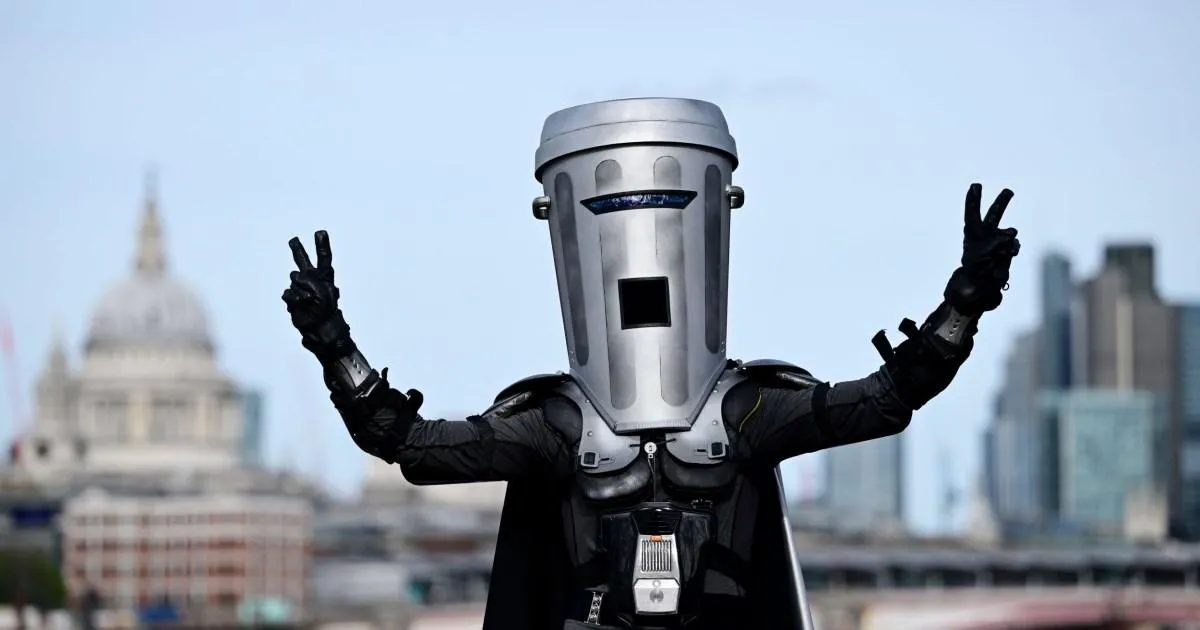
The upcoming by-election in Clacton-on-Sea has become an unexpectedly surreal spectacle. While mainstream political discourse typically focuses on the clash between established parties, this race has been hijacked by the presence of Count Binface, a satirical “intergalactic space warrior” whose literal bucket-on-the-head persona has captured the public imagination. Most political pundits initially dismissed the candidate as a mere curiosity, but as the election date approaches, the narrative has shifted. With many major parties appearing to step back from the fray, the contest has inadvertently evolved into a high-stakes duel between Nigel Farage and a figure whose primary platform includes capping the price of ice cream. It is a bizarre reality, yet polling suggests that a surprising number of voters are genuinely considering backing the bin-faced outsider as a protest against the status quo.
The legitimacy of this challenge is not merely rooted in online memes but in tangible data. Recent polling from Survation has revealed that one in five residents in the Clacton constituency would prefer to cast their ballot for Count Binface over Farage. Even bookmakers have acknowledged the strange momentum of the race, placing odds on a Binface victory that—while still long—would have been unthinkable a few short weeks ago. If enough voters decide to use their ballot to humble a political heavyweight, the shockwaves would be felt far beyond the borders of Essex. For the electorate, this represents a unique opportunity to register their frustration, turning the ballot box into a stage for a grand, democratic prank that could result in one of the most humiliating upsets in British history.
If the improbable were to happen and Count Binface actually secured the seat, the constitutional and practical consequences would be uncharted territory. We have seen novelty candidates succeed before, most notably when Stuart Drummond was elected Mayor of Hartlepool while dressed as “H’Angus the Monkey.” However, the House of Commons is an entirely different beast compared to a local council. Reports indicate that the man behind the mask, comedian Jon Harvey, would likely be forced to discard his signature costume, as parliamentary decorum strictly prohibits attire that fails to show “respect for the House.” Instead, voters might find the person they elected sitting in the backbenches as an unmasked, plain-clothed MP, suddenly tasked with the sobering reality of governing and fulfilling his whimsical pledges, such as entering the United Kingdom into the Eurovision Song Contest.
For Nigel Farage, a loss to an intergalactic entity would be more than just a political defeat; it would be a professional catastrophe. A loss in Clacton would mark his eighth defeat in nine attempts at a parliamentary seat, a record that would likely render his position as the leader of Reform UK untenable. Should he suffer such a public embarrassment, the party would almost certainly face an internal reckoning, with figures like Richard Tice or Robert Jenrick waiting in the wings to seize control. Such an outcome would not only disrupt the trajectory of Reform but would also shift the balance of power, potentially clearing a path for rising political stars like Andy Burnham to consolidate influence as the Westminster landscape undergoes a frantic and chaotic transformation.
Beyond the immediate political fallout, there is a certain irony in Farage’s potential exit from the limelight. Should he fail to secure the seat, he would effectively be liberated from the intense parliamentary scrutiny regarding his financial dealings, including investigations into significant gifts and his ties to controversial figures. While his supporters might view a loss as a tragedy, others might see it as the ultimate exit strategy—a chance for the politician to retreat from the cold, hard glare of the media and the relentless pressure of legislative accountability. The irony, of course, is that the very campaign of protest meant to poke fun at the political elite would be the catalyst for relieving one of its most polarizing figures of his burdens.
Ultimately, the Clacton by-election serves as a fascinating mirror held up to the British electorate. It exposes the deep-seated weariness many feel toward traditional politics, where voting for an alien with a trash can for a face feels like a more honest expression of public sentiment than supporting a career politician. Whether or not Binface actually wins, the fact that he is polling this well is a message in itself. As we look toward the next general election in 2029, one has to wonder if this is the start of a new, unpredictable era in British politics. If the trend of satirical, disruptive candidates continues, we may soon see the ballot papers of the future filled with even more mysterious, costumed figures, suggesting that in the theater of democracy, the most “serious” outcome may sometimes be the most ridiculous one.