



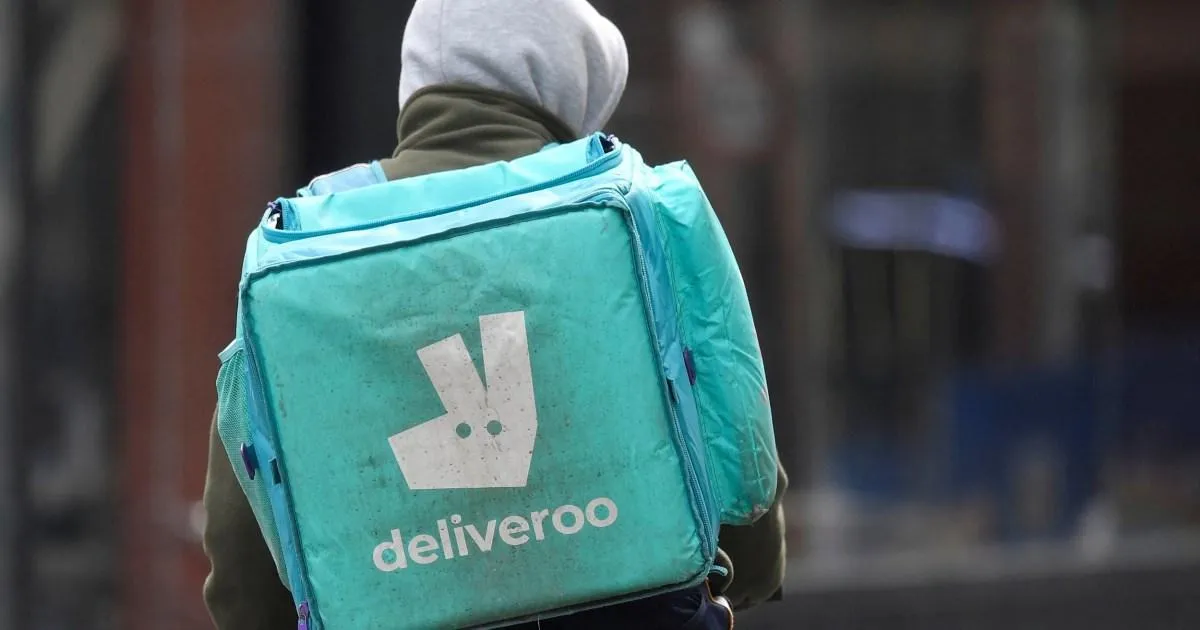
The landscape of British immigration policy has become increasingly combative, with Reform UK recently throwing a political grenade into the sector by proposing aggressive new legislation. Dubbed the “Deliveroo Law” by the party, this prospective policy aims to hold the highest echelons of corporate leadership personally and criminally responsible for the employment of illegal migrants. By targeting CEOs and directors with the threat of severe prison sentences and catastrophic financial penalties—specifically, fines amounting to 10% of a company’s global revenue—Reform is signaling that it wants to move beyond mere corporate accountability. They are demanding that the architects of these business models be held as liable for immigration breaches as they would be for high-level financial misconduct, framing the issue as a direct affront to the rights of British workers.
At the heart of this confrontation is a fundamental disagreement over whether current employment systems are being exploited by “profiteers.” Zia Yusuf, Reform UK’s home affairs spokesperson, has characterized the UK as a “soft touch,” arguing that businesses relying on illegal labor are essentially bankrolling the criminal networks that operate small boats across the English Channel. For Reform, this is a populist rallying cry intended to resonate with voters who feel that the current immigration system has lost its integrity. By drawing a direct line between the boardroom and the migrant crisis, the party is attempting to shift the burden of enforcement from the individual worker to the corporation, suggesting that if the consequences were high enough, these companies would effectively police themselves.
Deliveroo, however, has not taken this public branding sitting down. The delivery giant has pushed back hard, expressing indignation at having its name attached to such a draconian legislative proposal. The company maintains that it has been a frontrunner in the industry when it comes to tackling the sophisticated criminal elements that attempt to manipulate courier platforms. By highlighting its use of advanced fraud-detection technology, consistent “Right to Work” checks, and rigorous, daily identity verifications, Deliveroo is asserting that it is a victim of the same criminal exploitation that Reform claims it is fostering. To them, the “Deliveroo Law” is not just a misnomer; it is a fundamental misunderstanding of how their digital infrastructure operates.
The tension is further fueled by accusations of statistical manipulation. Deliveroo has explicitly challenged the data cited by Reform UK, claiming that the figures being used to justify this legislation are outdated and fail to account for the current, tightened security landscape. This creates a “he-said, she-said” dynamic that often plagues modern political discourse, where complex regulatory challenges are reduced to catchy slogans. While Reform paints a picture of systemic, profit-driven exploitation, Deliveroo frames itself as a tech-forward leader that is already working to close the loopholes that criminals seek to exploit. For the average observer, this highlights the gap between political rhetoric and the granular reality of how global companies manage their workforce in a digital age.
Beyond the delivery sector, Reform’s strategy includes a broader, grassroots approach to enforcement that could significantly alter the atmosphere of the British high street. Plans for a “Turkish Barbers tip line”—a dedicated channel for the public to report businesses they suspect of employing illegal workers—signal a shift toward a more vigilant, community-policed immigration strategy. By proposing that local police forces receive a portion of the fines generated from these investigations, Reform is attempting to create a self-sustaining incentive structure for enforcement. This move is designed to empower citizens to act as the “eyes and ears” of the state, though critics worry it could lead to widespread suspicion and the erosion of community trust in neighborhoods where small, immigrant-led businesses are staples of the local economy.
Ultimately, the clash between Reform UK and companies like Deliveroo reflects a much larger, unresolved debate about the nature of the modern British labor market. The current civil penalties—up to £60,000 per illegal worker—are already significant, yet the political appetite for “harsher than the world” punishments suggests that the status quo is increasingly seen as insufficient by a large segment of the public. Whether these proposals are purely performative politics or the beginning of a genuine legislative shift, the debate forces a necessary conversation about the balance between corporate innovation, national security, and the ethics of modern employment. As the political maneuvering continues, the challenge will remain in finding a way to address genuine security risks without resorting to policies that rely on outdated data or unfairly target businesses that are already attempting to navigate a deeply complex regulatory environment.