

Paragraph 1: The Hollow Victory in a Surreal Arena
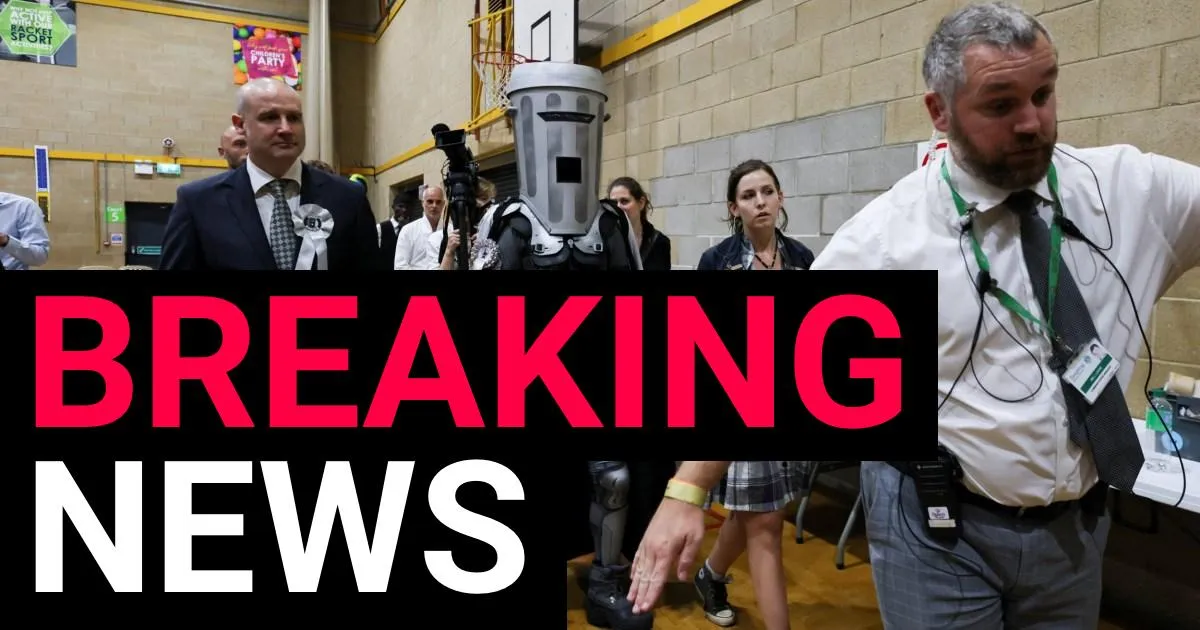
The morning after the Clacton by-election felt less like a political triumph and more like the wake for something nobody could quite name. Nigel Farage, the arch-navigator of British political turbulence, had secured his seat again, but the victory itself was wrapped in an almost theatrical absurdity. He managed to increase his vote count by just over a thousand from the previous general election, yet this was a race stripped of any serious competition. The Conservative Party, Labour, the Liberal Democrats, and the Greens all boycotted the contest, choosing to remain spectators rather than engage in what they deemed a cheap publicity stunt. Instead, Farage’s principal opponent was a man wearing a bin on his head, who captured 26.7% of the vote. For a politician who has built his entire career on the battleground of high-stakes electoral clashes, facing a novelty act was a bizarre comedown. The emotional texture of this victory carries a distinct melancholy; it is the feeling of a fighter winning a title bout in an empty arena, where the only sound is the echo of his own footsteps. Farage has always thrived on friction, on the roar of a genuine crowd, on the visceral clash of opposing ideologies. Here, he fought a ghost. The “people versus the establishment” narrative he constructed in his resignation speech imploded within hours when the “establishment” refused to show up, leaving him to rage against a straw man while the nation watched through a comedic lens. His thin margin of victory over a satirical candidate does not feel like a mandate; it feels like a grim survival, a holding pattern in a political career that operates on the edge of extinction and reinvention.
Paragraph 2: The Unwinnable Game of Cat and Mouse
Farage’s strategic gamble—resigning his seat merely to trigger a by-election and claim moral vindication—was a high-wire act that bordered on hubris. He framed his resignation as a noble sacrifice, claiming the “political establishment” had forced him into this position, positioning himself as the perpetual martyr of a system he despises. Yet, the reality of the contest exposed the hollowness of that narrative. When the major parties yanked their candidates from the ballot, they effectively neutered his entire raison d’être for the campaign. You cannot fight a revolution if the king never leaves the palace. Consequently, the election devolved into a parody of democracy, a farcical procedural exercise where the only substantial alternative crossed the ballot as an intergalactic space warrior. For the voters of Clacton, a constituency that voted overwhelmingly for Brexit and has long been a bastion of populist sentiment, the boycott left them with a strange choice: vote for their pragmatic savior Farage, or cast a ballot for pure satire as a form of cynical protest. The emotional dynamic on the ground was less about ideological fervor and more about resignation. There was a tangible sense of fatigue, a feeling that the political circus had finally arrived in their small seaside town, not to solve problems, but to perform a theatre of the absurd for national consumption. Farage’s attempts to paint Binface—whose real name is Jon Harvey—as the “establishment candidate” because the mainstream parties didn’t field candidates only cemented the bizarre logic of the entire affair. It was a masterclass in reframing defeat into a Pyrrhic victory, yet even his most loyal supporters must have felt a pang of confusion when they looked at the ballot paper, realizing their man was running against a prop.
Paragraph 3: The Absent King and the Looming Shadow
The most telling detail of the night was not the final tally, but what happened after the polls closed. Farage, conspicuously absent from the count, claimed that Essex Police had warned him of a plot to “disrupt and degrade” him. The police categorically denied issuing any such advice to any candidate, a stalwart rejection that cast the entire episode in a pitiful light. Was this paranoia, or a calculated excuse to avoid the political humiliation of facing a bin-wearing opponent in person? His planned victory speech was cancelled without explanation, leaving a void where triumphant rhetoric should have been. The emotional weight of this silence speaks volumes. It suggests a man aware that his win was not a catalyst for momentum, but a necessary defensive stopgap in a struggling broader narrative. The real threat, however, looms in the form of the Parliamentary Standards Commissioner. Daniel Greenberg’s investigation into Farage’s finances—specifically over 5 million pounds in undeclared “gifts” from crypto billionaire Christopher Harborne—resumes automatically now that he is an MP again. If the commissioner finds Farage violated parliamentary rules, he could face suspension, potentially triggering yet another by-election. Imagine the sheer exhaustion of that reality: a politician who keeps winning a seat that keeps threatening to be yanked away from him, trapped in a nightmarish cycle of legal scrutiny and electoral purgatory. The human cost is palpable—a ceaseless grind for a man who once stood atop the political world, now fighting to maintain relevance in a system that physically and legally surrounds him, waiting to pounce.
Paragraph 4: The Rise of the Societal Satirist
While Farage stumbled, Count Binface soared to his greatest political prominence. The character, a rubber-banded trash receptacle with a cartoonish face, has become an unlikely folk hero, running for office as a vehicle for social commentary. Jon Harvey, the comedian behind the bin, presents a disarming contrast to Farage’s bombastic doom-mongering. His campaign was lighthearted yet razor-sharp, skewering the absurdities of the political class with a gentle but persistent humor. The media gave him wall-to-wall coverage, from Newsnight to The Rest Is Politics, and even a profile in the New York Times. A More in Common poll released just days before the ballot showed a striking reality: 37% of Brits wanted Binface to win, compared to 32% who supported Farage. This is the most profound humanization of the political landscape imaginable—a nation so disillusioned with standard politics that they openly rooted for waste management. For those voters, casting a ballot for Binface wasn’t a vote against anything; it was a vote for sanity, for the ability to smile in the face of rancorous politics. In a constituency that once voted 70% for Brexit, the shift towards satire represents a deep psychological shift. The populist anger that Farage harnessed a decade ago has metastasized into a weary cynicism. People didn’t necessarily believe a bin could change their lives, but they understood that the political establishment—personified by Farage—could not be trusted to fix them either. They chose the joke because the joke was more honest.
Paragraph 5: The Ballot of the Absurd
The by-election produced a moment of pure bureaucratic surrealism that perfectly encapsulated the state of modern Britain: a ballot paper containing a staggering 34 candidates, a record for a parliamentary election. The returning officer took nearly six minutes just to read the full list of names, a monotonous litany of comedians, activists, and eccentric figures. Laurence Fox, the actor turned right-wing firebrand, managed to scrape together a paltry 347 votes, a sobering rebuke to his particular brand of controversy. The Official Monster Raving Loony Party fielded three separate candidates, collectively securing just 61 votes, a testament to their own internal chaos. For the residents of Clacton, the experience of voting must have felt like navigating a carnival hall of mirrors. They walked into the polling station, faced with a wall of names attached to various political circus acts, and had to decide whether to engage in the serious act of selecting a representative or simply make a gesture of absurdity. The ballot paper itself became a metaphor for the fragmentation of British political identity—a cacophony of voices, none offering a unified vision, each screaming for attention in the noise. It was democracy in its rawest, most unwieldy form, stripped of the dignity that political scientists often attach to the process. The record number of candidates didn’t signal a vibrant, pluralistic society; it signaled chaos, a fracturing of consensus where even the boundaries between serious politics and performance art have collapsed entirely.
Paragraph 6: A Pyrrhic Victory and the Looming Abyss
Looking ahead, Nigel Farage’s renewed mandate in Clacton feels less like a springboard to power and more like a cage. The investigation into his finances is not a dormant threat; it is an active sword of Damocles hanging over his entire political existence. If the Parliamentary Standards Commissioner rules against him, the cost could be catastrophic—not just financially or legally, but politically. A forced suspension could trigger yet another by-election, and this time, the main parties might not be so generous as to stay away. A real contest, with real credible opponents, could expose the fragility of his 1,000-vote margin over a comedian. The human story here is one of a man running faster and faster just to stay in the same place, trapped in a cycle of self-imposed crises. He resigned to create a spectacle, and the spectacle won, but only by default. The money he might be forced to repay, the sleep he loses over legal filings, the constant battle against internal party leaks—it all paints a picture of a leader on the defensive. The emotional truth of this result is that Farage has won a seat but lost the argument. He wanted to prove his relevance, and instead, he proved he could only win when nobody was fighting him. As the laughter of Count Binface fades and the legal papers pile up on his desk, the future looks grim. He faces a choice: pivot into a quieter, more conciliatory mode to survive the probe, or double down on the aggression and risk self-immolation. For a man who has defined himself by perpetual combat, the quiet path seems unlikely, which means the drama of Clacton—and Farage’s own political career—is far from over. The only certainty is that the bin will be watching, ready to make a fool of him again.