

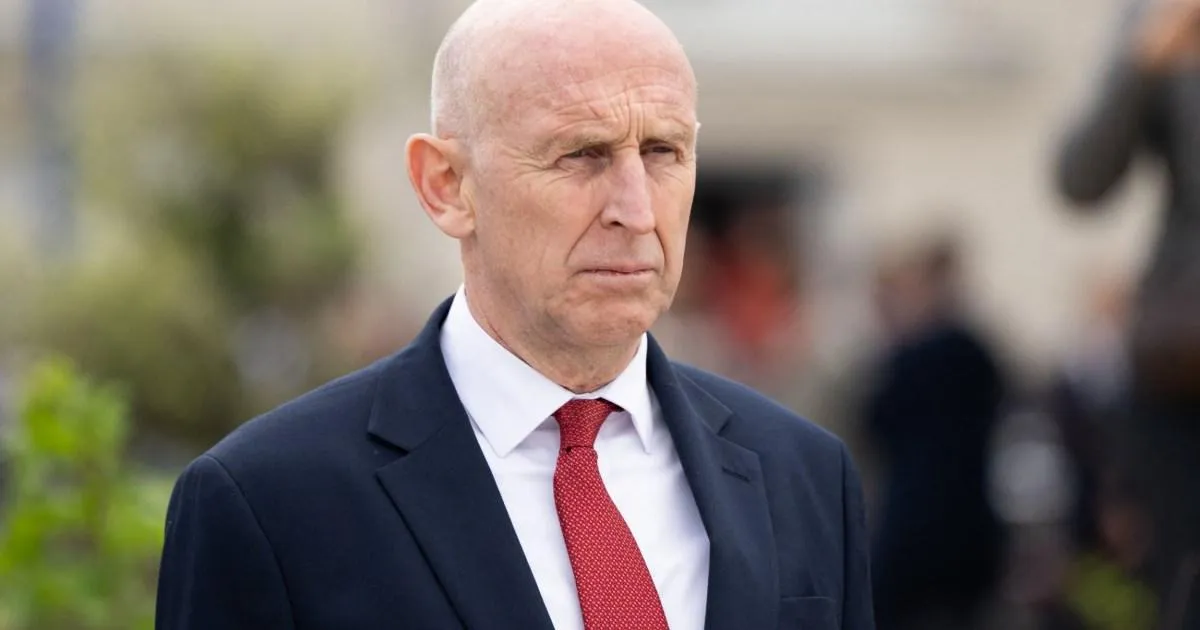
The resignation of John Healey as Defence Secretary marks a seismic shift for Sir Keir Starmer’s administration, turning a simmering policy dispute into a genuine political crisis. Widely regarded as one of the most experienced and respected figures in the Cabinet, Healey’s departure is not just a loss of personnel but a symbolic blow to the government’s stated commitment to national security. At the heart of this fallout is the Defence Investment Plan (DIP), a long-delayed roadmap for the Armed Forces that Healey ultimately rejected as “falling well short” of what the UK needs to navigate an increasingly volatile geopolitical landscape.
The friction between the Ministry of Defence and the Treasury has been public knowledge for months, but the breaking point came when the final financial figures were presented to the Defence Secretary earlier this week. In a sobering letter to the Prime Minister, Healey was blunt about the failure of the government’s leadership, noting that while the scale of the challenge had been clearly identified earlier this year, both the Prime Minister and the Treasury proved unwilling to provide the necessary resources to match those threats. By choosing to step down, Healey signaled that he refused to put his name to a funding settlement that he believes essentially disarms Britain when it should be reinforcing its defenses.
The gravity of his departure is compounded by the fact that he is not alone in his assessment of the government’s shortcomings on this front. Al Carns, the Armed Forces Minister, publicly echoed the sentiment that the DIP is currently “not fit for purpose,” creating further embarrassment for a Prime Minister already under intense scrutiny. Even members of the Defence Select Committee, including Labour’s own Tan Dhesi, have labeled this a “grave moment,” warning the government that ignoring the alarms raised by their own senior colleagues could have lasting consequences for British security. While the administration has attempted to downplay the crisis, the departure of a steady hand and a long-serving MP clearly leaves Starmer in a vulnerable position.
Critics of the government have moved quickly to frame the resignation as an act of integrity rather than political maneuvering. Shadow Defence Secretary James Cartlidge asserted that Healey was left with no choice, pointing to the absurdity of restricting military funding at a time when the world feels like it is balancing on a knife’s edge. For the Conservative opposition, this is a clear sign of weakness at the top, arguing that the Prime Minister has failed to grasp the urgency of “war on two fronts.” For his part, Starmer has tried to maintain a narrative of diligence, stating at Prime Minister’s Questions that they are simply “working through the details” to get the plan right, but that defense of his approach is looking increasingly thin in the wake of such a high-profile exit.
The timing is particularly painful, coming just after Healey touted his vision for a defense policy that would serve a dual purpose: bolstering national security while revitalizing British industry and jobs. Having been a fixture in British politics since 1997, Healey’s departure removes one of the few ministers with the institutional memory and gravitas to guide the country through complex international relations. It also raises difficult questions about the future of the AUKMIN security summit and the broader international posture the UK intends to take. As Starmer deals with internal dissent and external pressure, the focus will inevitably shift toward how he plans to fill a massive hole in his Cabinet while explaining to the public why his defense policy has been deemed inadequate by its own architect.
Ultimately, this crisis encapsulates the tension between fiscal austerity and the harsh realities of modern global conflict. While the Treasury may be focused on balancing spreadsheets, Healey’s resignation serves as a sharp reminder that national security does not come for free, and that shortchanging the Armed Forces comes with a price that cannot simply be measured in pounds and pence. As Westminster braces for what comes next, the government finds itself in a precarious position, forced to grapple with a loss of public trust and the realization that their most capable leaders are no longer willing to accommodate a vision they believe weakens the nation. For Starmer, the task ahead is no longer just about finalizing a policy; it is about proving that his government is still capable of prioritizing the fundamental safety of the country it serves.