

Imagine the small, everyday act of walking into a public toilet. For trans people in Hackney, that act has become a question of belonging, safety, and quiet political defiance. Since the Equality and Human Rights Commission released updated guidance telling service providers that single-sex spaces should be organised according to biological sex, trans residents across England have been left wondering whether the doors that once felt open have suddenly been closed. In Hackney, the answer from the borough’s Green Mayor, Zoë Garbett, is a clear and compassionate “absolutely yes.” She has told council staff not to police who uses which facilities, and she has affirmed, in the simplest possible terms, that trans women are women, trans men are men, and that everyone should be able to access services in line with the identity they live by. It is a position that flies in the face of the official equality watchdog’s code, but for Garbett it is not a legal abstraction—it is about the real people who live, work, and move through her borough every day. Trans residents and organisations have been asking her directly whether Hackney is still a safe space to use public toilets. Her answer is not a carefully hedged political statement, but a reassurance: “I consider trans women to be women and trans men to be men.” That warmth, wrapped around a controversial policy stance, has turned Hackney into a focal point in one of the most bitterly contested cultural and legal battles in modern Britain.
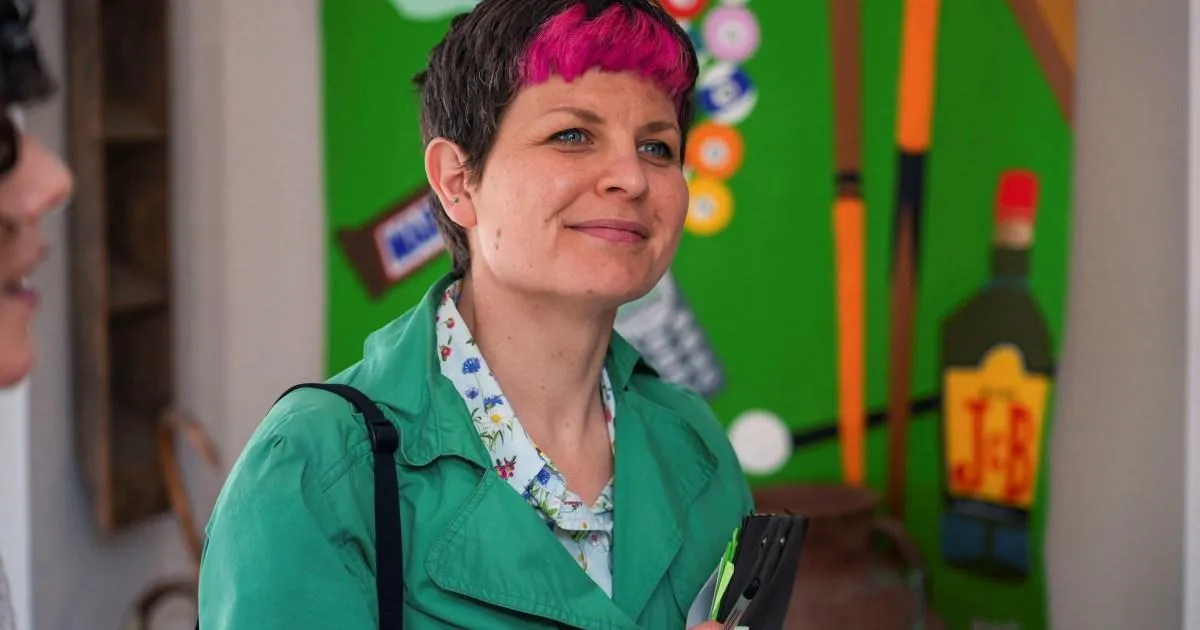
Garbett is not a distant politician hiding behind slogans. She is the Green Party’s first ever directly elected mayor, and she speaks about this issue with a mixture of sadness and resolve. “I’m deeply saddened by where we’ve got to in this country around the life and existence of our trans people,” she told Metro. To her, the EHRC guidance is not a neutral piece of legal advice; it is part of a “huge wave of action to exclude trans people from life.” Her response has been to double down on inclusion, ordering staff and commissioned services to avoid becoming gatekeepers of bathrooms. When asked directly whether a trans woman could walk into a council-run women’s bathroom, she did not hesitate. “Yes, absolutely.” This is not a decision made in ignorance of the law. Garbett says Hackney is taking extensive legal and governance advice to ensure the borough remains legally compliant while also honouring its equalities duties. But she rejects the idea that the official guidance reflects true equality. She believes it conflicts with the fundamental purpose of the Equality Act, and she argues it is effectively unworkable in a diverse, modern community. Her language is not combative for its own sake; it is driven by a real attachment to the people she represents. She wants trans people to be able to use services they identify with, to feel safe and comfortable, and to know that their local government is not looking for reasons to turn them away.
The background to this conflict is a significant legal shift. In April 2025, the Supreme Court ruled that the terms “woman,” “man,” and “sex” in the Equality Act refer to biological sex. The EHRC then issued statutory guidance, which came into force this month, based on that ruling. The regulator insists it is not creating new law, but rather offering impartial, legally accurate guidance to businesses, local authorities, leisure centres, and other service providers. Under that code, a transgender person must use either gender-neutral facilities or facilities matching their biological sex, unless specific legal exemptions apply. The guidance has been welcomed by gender-critical campaigners, who argue that single-sex spaces exist to protect the privacy, dignity, and safety of women and girls. But for Garbett, the guidance represents a profound misunderstanding of equality, and she has framed it as an attack on a vulnerable minority. She has also drawn attention to the practical absurdity of policing access to bathrooms, asking how staff in a library or swimming pool would be expected to enforce such a rule without causing humiliation or conflict. The question, she suggests, is not simply about who uses which toilet, but about what kind of society we want to be—one that makes space for everyone, or one that treats trans people as a problem to be managed.
Hackney is not standing alone. Within days of the guidance coming into force, Hackney, Haringey, Lewisham, Southwark, and Waltham Forest councils wrote to the EHRC and the government to protest the rules. These councils, led by Greens and in some cases in coalition with the Liberal Democrats, vowed to keep their services “inclusive.” Garbett, who leads the Green group on the council, said the local authorities are working together to review their policies, share legal advice, and “unite and challenge” the guidance. This is not simply a bureaucratic manoeuvre; it is a public statement of values. Garbett has spoken about wanting to reach a place in society where we can challenge “the whole construct of gender” and stop obsessing over “a minority group in our society and the way that they wish to live their lives.” That vision is deliberately big-picture, but it is rooted in a practical commitment known as “maximum trans inclusion.” For Garbett, that means ensuring trans voices are heard in public life, supporting trans organisations, and refusing to allow fear of litigation to strip away the dignity of residents. She is also aware of the wider political moment, and she has expressed solidarity with trans people living in areas where the code is being enforced more aggressively. Her message to them is simple: Hackney remains a place of refuge.
Yet the path Garbett has chosen is not without serious risks. The Times has reported that Hackney Council has already been served with a formal legal challenge over its alleged failure to provide female-only services. That challenge could force the council to defend its stance in court, with potentially significant financial and political consequences. Garbett, for her part, refuses to be drawn into confirming whether Hackney will launch its own formal legal challenge against the EHRC guidance. She acknowledges her “responsibility” as a leader not to put the council into “huge difficulty,” even as she continues to champion trans inclusion. The chair of the EHRC, Mary-Ann Stephenson, has suggested that some councils are using this issue to perform their progressive credentials, and she has warned that local authorities will eventually realise they are obliged to follow the law. In response, the EHRC has released a statement insisting that its statutory guidance is designed to safeguard everyone’s right to a fair chance in life, protecting service users from discrimination and harassment while reducing the risk of providers being sued. The commission also stressed that trans people must not be left without access to services, and that no one should be discriminated against or victimised on the basis of gender reassignment. For the commission, the law is the law, and local authorities should be updating their policies and seeking independent legal advice where necessary. For Garbett, however, the law is not a fixed or neutral thing; it is something to be interpreted with compassion, challenged when it is wrong, and shaped by the lived experience of real communities.
In the end, Garbett’s stance is less about legal technicalities than about the kind of place Hackney has always tried to be. She points to the borough’s queer history, the long tradition of LGBTQ+ people finding solace and community there, and the knowledge that people feel comfortable in its streets, libraries, parks, and public spaces. “Absolutely. People know that London and Hackney have historically been a place where queer people have always sought solace,” she said. “There is a lot of queer history in Hackney, and I know people feel comfortable here. We will continue to make sure that is the way.” There is something almost absurd about a mayor having to reassure residents that they can use a public toilet without being challenged, but that is where Britain now finds itself. For trans people, the debate over bathrooms has never really been about toilets; it is about whether they are welcome in public life, whether their identity is respected, and whether they can move through the world without fear. Garbett’s answer is not couched in the language of political compromise. She sends her solidarity to trans people living in areas enforcing the code, and she keeps Hackney’s doors open. It is a deeply personal, deeply human response to a national controversy—one that may yet end up in the courts, but which, for now, offers trans residents something precious: the knowledge that their mayor sees them, welcomes them, and refuses to turn them away.