


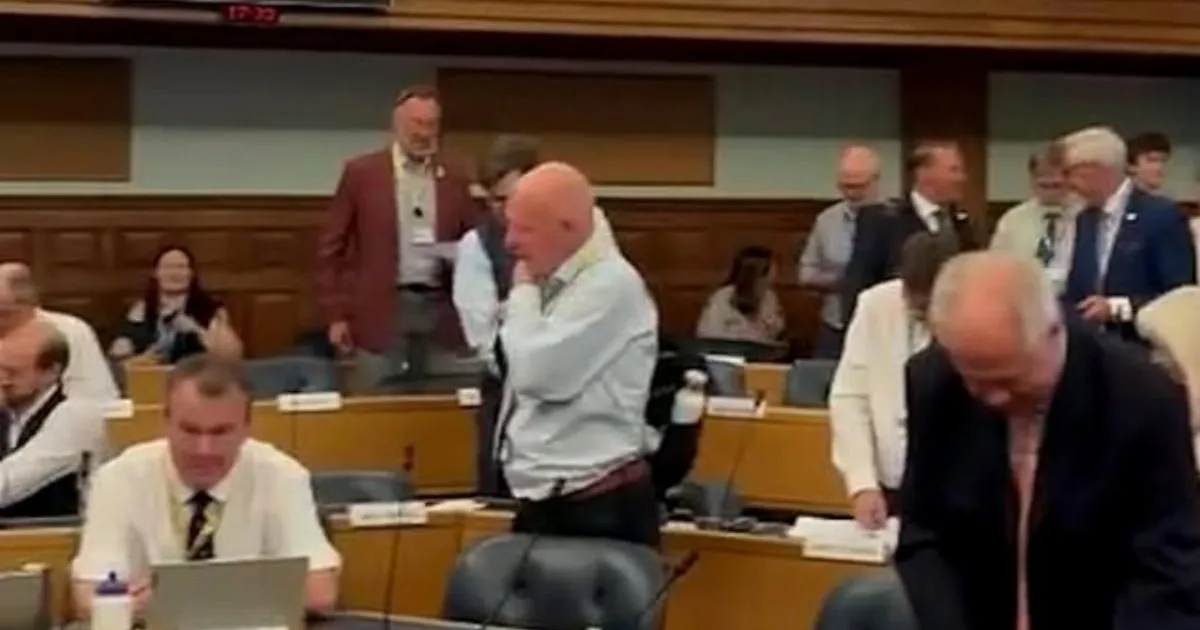
For many of us, the national anthem is one of those background constants of British life—the kind of tune that drifts over us during sports matches or royal ceremonies, usually ending before we’ve even had the chance to feel bored. It is a slow, stately, and arguably quite plodding piece of music. Most of us grow up knowing only the first verse, that familiar prayer for the King’s health and longevity. It’s a song that exists more as a ritualistic habit than a piece of poetry we stop to analyze. However, the recent decision by Green Party councillors to include the rarely heard and deeply controversial sixth verse has cast a spotlight on the anthem’s hidden history, reminding us that there is a lot more to these lyrics than the polite, patriotic melody we hear on TV.
When you sit down and read the full six verses, the anthem transforms from a simple prayer into something far more complex and, at times, startling. While we are used to the standard opening—”God save our gracious King”—the subsequent verses offer a sprawling look at the preoccupations of the 18th century, ranging from divine protection against “knavish tricks” in politics to a lofty, idealistic vision of universal brotherhood. It is a strange literary journey, moving from standard monarchist loyalty to a bizarre, hyper-specific military prayer that feels entirely out of place in modern, peace-seeking Britain. The shift in tone is so jarring that it highlights just how much our cultural values have evolved since these words were first penned.
The controversy centers on that infamous sixth verse, a remnant of the Jacobite risings that feels shockingly violent to modern ears. It explicitly calls for “Marshal Wade” to “crush” the “rebellious Scots.” Historically, this was a reflection of the intense, bloody sectarian tensions of the mid-1700s, but today, it reads like an artifact of a bygone era of internal warfare. By choosing to highlight this specific passage, the Green councillors inadvertently sparked a debate about whether we should celebrate the fullness of our history—the ugly parts included—or whether some lyrics should remain firmly consigned to the dusty archives of the past. It’s a reminder that even our most “traditional” symbols carry baggage that doesn’t always sit comfortably with our current identity as a modern, unified nation.
It is rare for anyone to sing anything beyond the first verse, and even at the most formal state occasions, the fifth verse is the absolute limit of what is typically performed. There is a practical reason for this: the anthem is long, and frankly, the later verses get increasingly archaic. Most people aren’t memorizing prayers for Marshal Wade or deep-seated theological appeals for the scattering of enemies. We treat the anthem as a shorthand for national identity, not a historical document to be recited in full. Yet, there is something humanizing about acknowledging that this song was never meant to be a static, unchanging object; it was a living, breathing, and often belligerent piece of political propaganda that has been softened by centuries of neglect.
Looking at the lyrics in their entirety invites us to reflect on how we use tradition to define ourselves. When we sing the first verse, we are engaging in a shared, relatively benign experience of collective identity. But when the full text is unearthed, it forces us to confront the reality that our history is defined by conflict, division, and at times, aggressive intolerance. The fact that the sixth verse has been effectively “lost” to the public consciousness for a century is a testament to the way we collectively choose to rewrite our own narrative. We have curated the anthem to represent a peaceful, respectful version of Britain, even if the original text was born from the messy, violent reality of a divided kingdom.
Ultimately, the debate over these lyrics shows that while traditions are meant to anchor us, they also have the power to surprise us. Whether or not one believes the full anthem should be sung, there is value in knowing that it exists. It serves as a bridge to a past that was much more volatile than the serene, ceremonial version we know today. As we move forward as a society, perhaps the best way to treat such a complex legacy is to acknowledge it honestly. We don’t have to sing the violent parts to respect the fact that they are part of our history, but we should certainly be aware of what we are standing for when we hold onto traditions that carry such heavy, hidden histories within their lines.