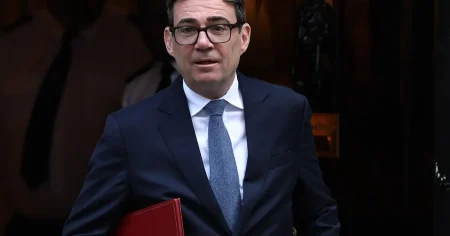



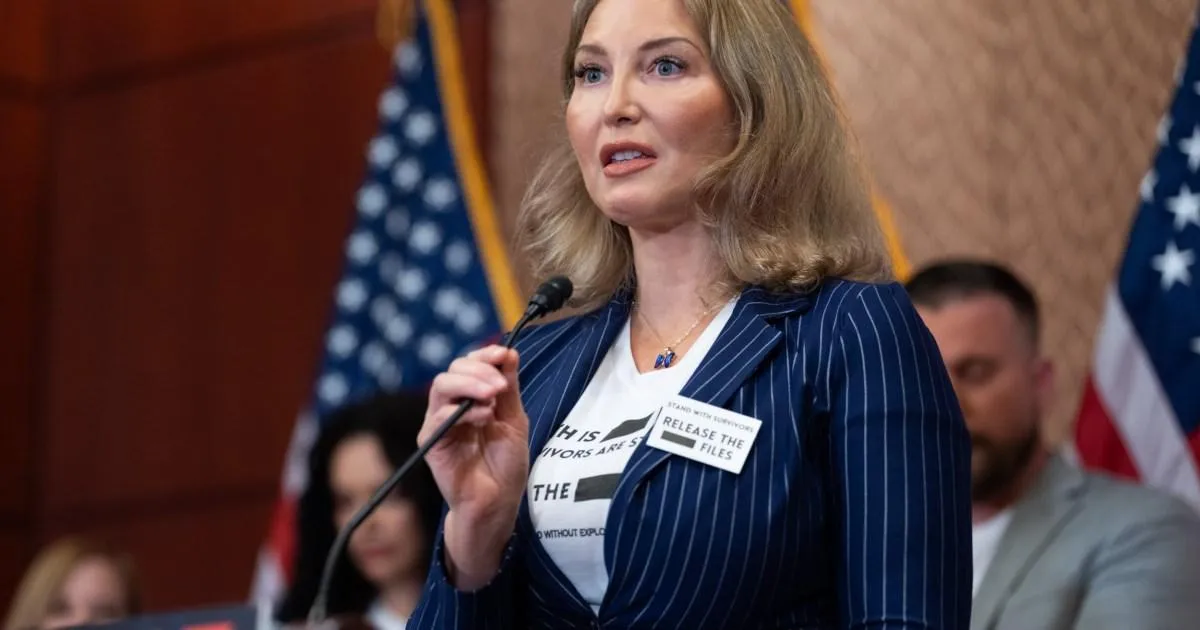
The weight of a plea from a survivor of Jeffrey Epstein’s abuse now falls squarely on the shoulders of Britain’s new Prime Minister, Andy Burnham. Lara Blume McGee, who was just 20 years old when she was allegedly groomed by Ghislaine Maxwell, has issued a desperate and unequivocal appeal: do everything in your power to ensure that the convicted sex trafficker never walks free. Her message, delivered with the raw pain of a traumatic past, is a direct challenge to the new leader, urging him to publicly confront President Donald Trump and make it abundantly clear that a pardon for Maxwell would be an unforgivable betrayal of justice. Alongside her, a prominent lawyer representing nine of Epstein’s victims has joined the chorus, arguing that Britain holds significant influence and must use it to prevent what would be a devastating blow to survivors across the globe.
The fear of a presidential pardon is not a distant, theoretical worry. It is a living, breathing anxiety for McGee and countless others who have dedicated their lives to seeing their abuser held accountable. Trump has refused to rule out clemency for the British socialite, who is currently serving a 20-year prison sentence for her role in a horrific child sex trafficking conspiracy. This uncertainty has been amplified by the recent confirmation of Todd Blanche as the new US Attorney General. Survivors remember Blanche with a particular chill, as it was he who, in a previous role as deputy attorney general, was responsible for moving Maxwell from a high-security facility to a much more comfortable, minimum-security prison shortly after meeting with her last year. This act, seen by many as a favour to a powerful figure’s associate, has only fueled the belief that a pardon is a very real possibility, a scenario that McGee describes as not just a travesty of justice but a devastating message to every survivor of abuse that their suffering can be casually discarded.
For McGee, this fight is intensely personal. Her story began in the glittering yet treacherous world of New York Fashion Week in 2000. She was a young woman with dreams, and Maxwell, who seemed to hold the keys to that world, cultivated her trust. McGee claims that Maxwell used the promise of modelling connections as a lure, systematically drawing her into Epstein’s orbit before subjecting her to horrific abuse. The trauma of that period is etched into her appeal. Her words to Prime Minister Burnham are not a political statement but a cry from the heart. “Prime Minister Burnham,” she says, “stand with us. Use your influence to ensure that the UK is a beacon of justice, not a sanctuary for those who exploit and abuse. Make it clear to President Trump and the world that pardoning Ghislaine Maxwell would be a grave injustice that Britain will not tolerate.” The call is for a moral stance, a public declaration that the UK will not stand idly by while one of its own citizens, convicted of such heinous crimes, is given a get-out-of-jail-free card by a powerful foreign leader.
The call for action extends beyond a single plea to the Prime Minister. Spencer Kuvin, the attorney who has spent nearly two decades fighting for Epstein’s victims, is demanding a more formal and comprehensive response from the British government. He is calling on Burnham to not only publicly oppose a pardon but to also initiate an independent, statutory public inquiry into Epstein’s activities within the UK. The financier’s reach was global, and his connections in London were deep, with Maxwell’s residence there serving as a site for grooming and abuse. For Kuvin, the lack of a formal inquiry represents a massive gap in accountability. “Britain absolutely has a voice,” he argues, urging the Prime Minister to communicate directly with President Trump. The message would be that clemency for Maxwell would have consequences that reverberate far beyond American politics, poisoning international relations and sending a signal that the powerful can escape justice. He stresses that survivors are “extremely concerned” by the ongoing talks of a pardon, especially Maxwell’s own cynical offer to co-operate with investigations into Epstein’s crimes only if she is granted clemency. This, Kuvin states, is an unacceptable scenario, placing victims “in the position of wondering whether the person convicted of helping facilitate their abuse might be freed because she has information that powerful people want.”
The pressure on the new Prime Minister is immense, but it is not just about a single pardon. It is about confronting a legacy of institutional failure. Kuvin points to the uncomfortable questions that British institutions still have to answer about how Epstein was able to operate for so long “in plain sight, while surrounded by some of the most powerful people in the world.” The demand for a statutory inquiry is about uncovering the truth, understanding the network of complicity, and ensuring that such crimes can never be hidden again. This is set against a backdrop of political action in the United States, where the Senate has unanimously passed a resolution declaring its opposition to any presidential pardon for Maxwell. The move, spearheaded by lawmakers like Senator Jacky Rosen, who called the very idea of entertaining clemency for a convicted sex trafficker “frankly horrifying,” shows that the outrage is bipartisan. Yet, the survivors know that political statements are not the same as legal guarantees, and the threat remains.
As the new Prime Minister navigates this political minefield, he has publicly stated his commitment to meeting with the victims. A government spokesperson reaffirmed that their thoughts are “firmly with the victims” and that it is “right that Ghislaine Maxwell has been handed out a 20-year prison sentence for her role.” However, the vague promise to “look at all options to support them” falls short of the definitive action that survivors are demanding. They are not asking for sympathy; they are asking for a fight. They want the full weight of the British government to be thrown behind the cause of keeping Maxwell in prison. The question now is whether Burnham will answer that call. He has the opportunity to not only shield victims from further trauma but to make a powerful political statement about the UK’s commitment to justice. With the spectre of a Trump pardon looming, the time for words has passed. The world is watching to see if Britain, and its new leader, will truly stand with the survivors, or if they will be left to face this final, cruel betrayal alone. The plea from Blume McGee is simple, yet it carries the weight of a lifetime of pain, and the hope of a network of survivors who refuse to be silenced.