


The reality of the war in Ukraine has shattered the fragile barrier between the battlefield and the quiet life of Russian civilians, highlighted most recently by a massive, synchronized drone strike across Russian territory. In a bold demonstration of endurance and reach, Kyiv launched a multi-front aerial assault, most notably targeting St. Petersburg, the historical crown jewel of Russia and President Vladimir Putin’s hometown. This offensive—reaching nearly 1,000 kilometers from Ukrainian borders—served as a visceral counterpoint to the political posturing occurring just hours earlier, signaling that the “special military operation” can no longer be contained within the borders of occupied lands or eastern frontlines.
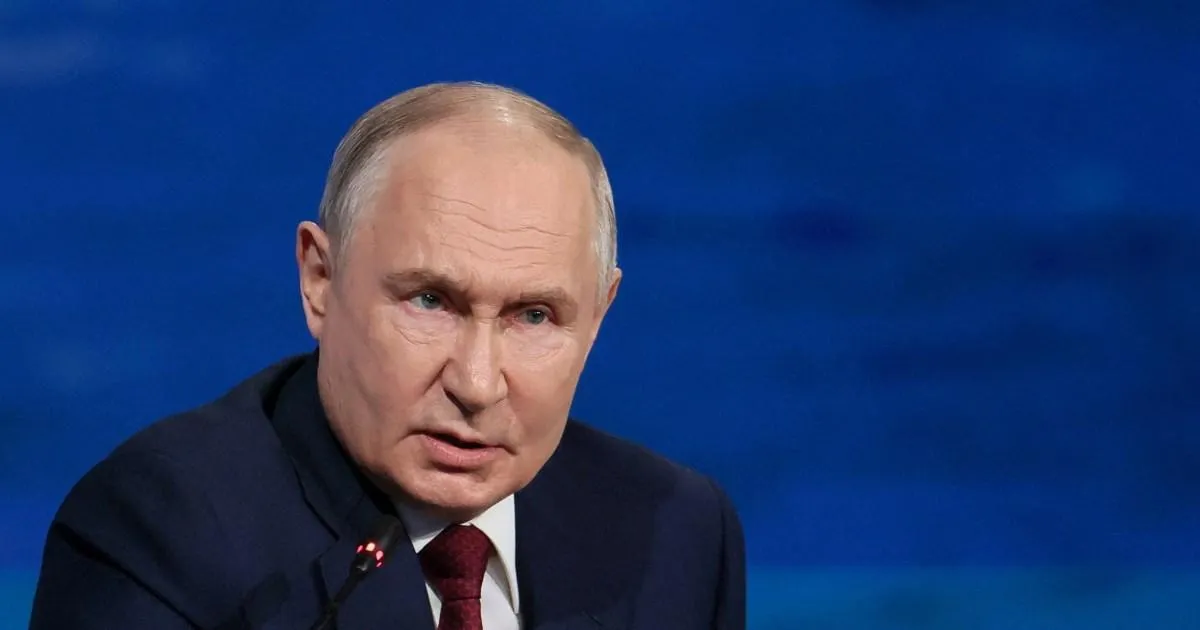
This tactical escalation followed a definitive diplomatic impasse, as both nations appear increasingly entrenched. Just one day before the skies over St. Petersburg were filled with the hum of drones, President Putin used the St. Petersburg International Economic Forum—a venue famously known as “Russia’s Davos”—to state that he saw no value in negotiating with President Volodymyr Zelensky. By publicly dismissing the possibility of peace talks, Putin signaled to his international audience that the Kremlin remains committed to a military solution, regardless of the domestic cost. In turn, Kyiv responded with a display of technical precision, targeting naval arsenals and military hubs that were once considered untouchable by Ukrainian forces.
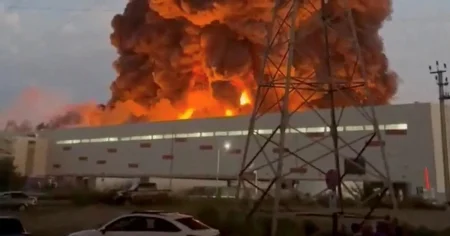
For the people of St. Petersburg, the atmospheric shift was abrupt and terrifying. St. Petersburg Governor Alexander Beglov issued a rare, urgent advisory for citizens to barricade themselves indoors as hundreds of drones swarmed over the region and beyond. The scope of the attack was unprecedented in its geographic breadth, with the Russian Ministry of Defense reporting interceptions of 376 drones across a sprawling map, including regions as far-flung as Belgorod, Kursk, and the sovereign waters of the Black and Azov Seas. While authorities worked to downplay the breach of their air defenses, the imagery of burning oil depots and the sound of anti-aircraft fire punctured the carefully curated facade of normalcy that the Kremlin has attempted to maintain for its urban centers.
This cycle of violence continues to exact a heavy, human toll on both sides of the border. On the Russian side, the fallout of the weekend strikes resulted in at least one confirmed fatality in the Tver region, a sobering reminder that there is no such thing as a truly “distant” war in this era of asymmetrical drone warfare. However, the suffering is far more acute in Ukraine, where the human cost of the renewed Russian retaliation is measured in civilian lives every single day. Recent strikes in the Zaporizhzhia and Dnipropetrovsk regions left families grieving as bodies were pulled from rubble and the wounded sought care, showcasing the relentless nature of the conflict that has now dragged on through its fourth year.
The rhetoric emanating from Kyiv reflects a deepening resolve to force a change in the status quo through “just responses” to ongoing aggression. Ukrainian Foreign Minister Andriy Sybiga has been particularly stinging in his assessment, suggesting that by refusing the peace offer, Vladimir Putin has effectively squandered his final opportunities for a graceful exit from a conflict that has left his country’s economy and international standing in a precarious position. The message from the Ukrainian leadership is clear: they have moved beyond seeking reconciliation on the Kremlin’s terms, warning instead that the longer Moscow persists, the more unfavorable the final diplomatic settlement will inevitably become for Russia.
As the conflict lingers, the world watches a grim escalation that shows few signs of slowing down. With millions displaced, cities destroyed, and hundreds of thousands of lives lost since the initial invasion in 2022, the war has transcended the typical boundaries of territorial dispute. It has become a contest of endurance, where diplomacy has been sidelined by the constant churn of the assembly line and the drone hangar. Whether through economic pressure or military strikes, both nations seem trapped in a tragic determination to settle their differences not at the negotiating table, but in a field of ruin that seems to expand with every passing day.