


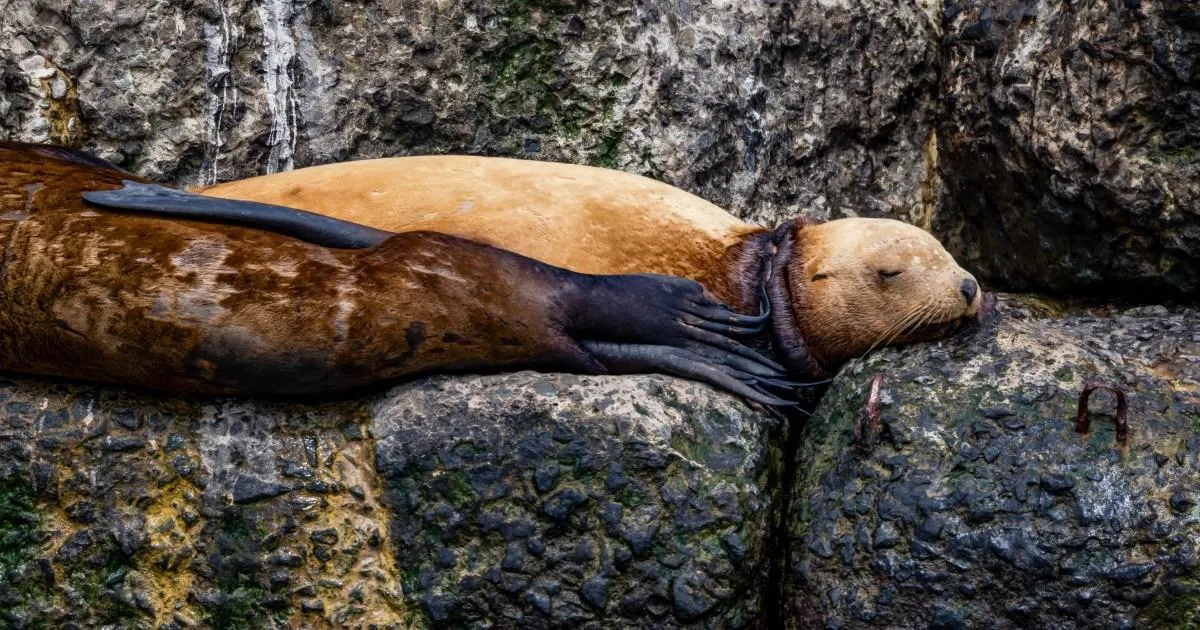
In the rugged, windswept town of Nevelsk on Russia’s Sakhalin Island, a heart-wrenching scene recently unfolded that serves as a stark reminder of the hidden dangers lurking in our oceans. Amidst a large colony of Steller’s sea lions—a majestic and protected species known for their impressive size and intelligence—one female stood out for all the wrong reasons. For days, she had been sighted struggling with a thick, unforgiving plastic ring cinched tightly around her neck. This jagged piece of synthetic debris, likely discarded long ago, had slowly carved its way into her flesh, creating a deep, festering wound that threatened not only her comfort but her very survival. As she rested on the breakwater rocks among her peers, her slow, labored movements revealed the invisible burden she was carrying in a place that has become increasingly defined by human carelessness.
The plight of this sea lion drew the attention of “Friends of the Ocean,” a dedicated group of environmentalists committed to the welfare of marine life in the Sakhalin region. Recognizing that the animal’s condition was deteriorating, the team mobilized for a daring rescue operation. This mission was significant for more than just the immediate relief of one animal; it represented a milestone in local conservation efforts. For the first time, authorities granted the rescue team permission to utilize remote anesthesia, a specialized procedure that required the use of controlled medication provided by the regional Ministry of Health. This breakthrough allowed the team to bypass traditional, more invasive methods that might have caused the sea lion to flee into the water, where a sedated animal would have been at grave risk of drowning.
On the day of the operation, the tension was palpable as