



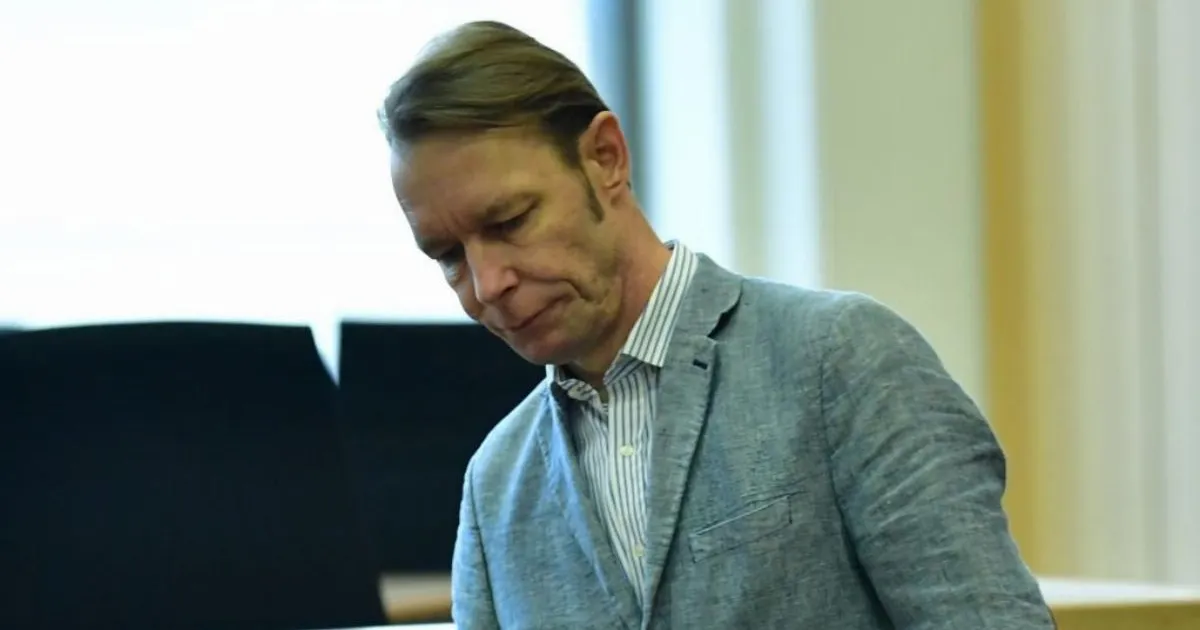
The investigation into the disappearance of Madeleine McCann, a case that has haunted the public imagination for nearly two decades, has reached a tense new chapter. Christian Brueckner, the man long identified by authorities as the primary suspect in the three-year-old’s 2007 abduction from a Portuguese resort, is now at the center of a legal controversy. For the nine months following his release from a German prison last September, Brueckner had been subjected to constant, around-the-clock police surveillance. However, a recent court ruling has effectively brought that continuous monitoring to an end, sparking deep concerns among investigators and the public alike that the man who has spent years under the microscope may finally slip through the cracks.
The decision to lift the 24-hour observation order has placed local law enforcement in a difficult position. While Brueckner is still legally required to wear an electronic ankle tag, those familiar with the case have expressed significant skepticism regarding the efficacy of this technology. Prosecutors have explicitly warned that these tracking devices have a history of malfunctioning, and there is a pervasive fear that if Brueckner were to depart Germany, the signal could be lost, effectively erasing his trail. This technical vulnerability is compounded by the suspect’s own history; throughout his life, whenever faced with scrutiny or the mounting pressure of legal suspicion, Brueckner has demonstrated an aptitude for vanishing.
From the perspective of those working to solve the McCann case, the timing of this ruling feels precarious. A source speaking to the press recently articulated what many have feared: the primary reason Brueckner hasn’t fled since his release from jail is simply because he hasn’t had the chance. Being followed by officers every waking hour is a prohibitive barrier to escape, but that barrier is now being dismantled. Should he manage to evade his observers, it may become impossible to bring the mystery of Madeleine’s disappearance to a firm conclusion in a court of law. Recognizing the gravity of this, German police in the Schleswig-Holstein state have mounted an appeal against the court’s decision, securing a temporary stay that keeps him under watch until a final verdict is reached.
The stakes are immense because, for investigators, Brueckner remains the most significant lead they have. Despite his long record of criminal activity, including child abuse and a conviction for the rape of a woman in the Algarve, he has never been officially charged in relation to Madeleine. Prosecutors point to a web of circumstantial evidence, including testimonies from three separate witnesses who allege he confessed to the crime. His history specifically places him in the Praia da Luz resort area during the precise timeframe of the disappearance; he was working locally as a maintenance man, giving him an intimate knowledge of the very ground from which the young girl vanished.
Yet, there is an uncomfortable divide between suspicion and courtroom proof. Despite years of intensive searches, forensic efforts, and multi-national investigative cooperation, authorities have yet to uncover the “smoking gun” needed to secure a conviction. The investigation into the McCann case remains ongoing, bolstered by renewed funding announced earlier this year, but it is an uphill battle. Brueckner has consistently and vehemently denied any involvement in the case, and as long as the evidence against him remains confined to circumstantial testimony and digital trails, his rights—and his freedom—remain tethered to the procedural complexities of the German legal system.
Ultimately, this development underscores the brutal difficulty of cold case investigations. As 19 years pass, the search for truth becomes a race against time and potential flight. The public, still deeply invested in the outcome of this tragedy, watches as the legal system balances the rights of an individual against the overwhelming need for justice for a family that has spent nearly two decades waiting for an answer. While the appeal in Schleswig-Holstein serves as a temporary stopgap, the vulnerability of the current monitoring system leaves little room for error. The fear remains absolute: that if the surveillance ends, the chance to finally answer what happened on that night in 2007 might disappear right along with him.