


The tragic death of 21-year-old Maria Eduarda Rodrigues de Freitas at the “Skeleton Bridge” in Limeira, Brazil, has cast a horrifying spotlight on the life-or-death consequences of professional negligence. What should have been an exhilarating milestone for a vibrant young woman ended in absolute catastrophe when she was launched from the bridge without a bungee cord attached to her harness. The sheer gravity of the situation is compounded by the fact that the individuals responsible—Luis Felipe Feliciano Egoroff, Maicon Fernandes Cintra, and Vitor de Freitas Goncalves—have offered an excuse that offers little comfort to a grieving family: they simply “can’t remember” whose job it was to secure the safety line. Following the incident, the three men attempted to flee the area but were eventually detained and now face charges of homicide.
The human cost of this lapse in judgment is heart-wrenching. Maria had been looking forward to her jump with genuine excitement, even posting a photo of the company’s banner on social media with a playful, lighthearted caption about her upcoming adventure. Instead of the thrill she anticipated, her family was left to organize a funeral. At the service, her mother’s words echoed the agony of a parent losing a child to a preventable tragedy, crying out against the “damned rope” that had failed her daughter. The loss has left a void of “pain and longing” that words can barely capture, turning what was once a joyful anticipation of a life well-lived into a permanent, devastating silence for those who loved her most.
Disturbing footage that has emerged in the wake of the tragedy has only deepened public outrage and concern. Social media posts from the bungee operator, Entre Cordas, show the main instructor, Egoroff, performing various stunts, including backflips and “superman” style launches. While these videos were likely intended to showcase the excitement of the business, they now serve as shocking evidence of a culture that prioritized spectacle over fundamental safety protocols. The sight of these men operating with such casual confidence, only to allegedly bypass the most basic life-saving procedures when it mattered most, reveals a chilling disconnect between the image they projected and the reality of their performance.
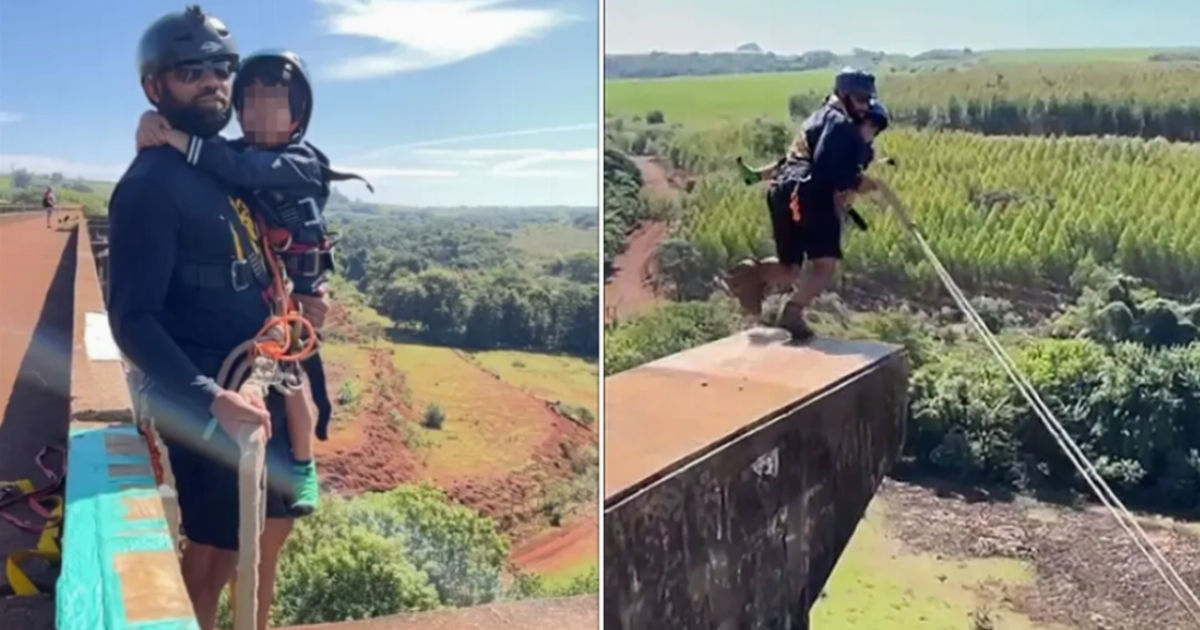
Perhaps most unsettling are the videos surfacing from 2023 that show Egoroff performing bungee jumps while holding a child. In these clips, the child is seen wearing a helmet and harness, clinging tightly to the instructor as they leap from the bridge’s edge together. Seeing these images in the shadow of Maria’s death evokes a visceral reaction; the prospect that these same individuals were responsible for the safety of children, given their failure to perform a single, mandatory check for an adult client, is deeply alarming. It raises urgent questions about the lack of oversight and training within the industry, as well as the reckless nature of stunts that place the most vulnerable patrons in circumstances where a single mistake results in an irreversible tragedy.
The legal fallout for Egoroff, Cintra, and Goncalves is only just beginning, as investigators look into exactly how a professional operation could allow such a catastrophic failure to occur. The defense that they cannot remember who was responsible for the cord suggests either a chaotic lack of standard operating procedure or a desperate attempt to evade personal accountability. For the public, the “I don’t know” defense is an insult to the memory of the deceased; in the world of extreme sports, where safety is the entire foundation of the service provided, memory lapses are not just unprofessional—they are lethal. As the legal process moves forward, the focus remains on ensuring that justice is served for Maria and that her family finds some semblance of closure amidst such a senseless loss.
Ultimately, this tragedy serves as a brutal reminder that behind every “extreme” leisure activity lies a requirement for rigorous discipline and professional integrity. Maria Eduarda Rodrigues de Freitas was a young woman with a future ahead of her, defined by her zest for life and her willingness to seize the day. Her death was not an accident; it was the failure of human systems and the heartbreaking result of carelessness in a field that requires absolute precision. As her community mourns and the legal system begins to parse the evidence, the story of the Skeleton Bridge stands as a stark, permanent warning about the dangers of placing one’s life in the hands of those who might treat safety as an afterthought.