


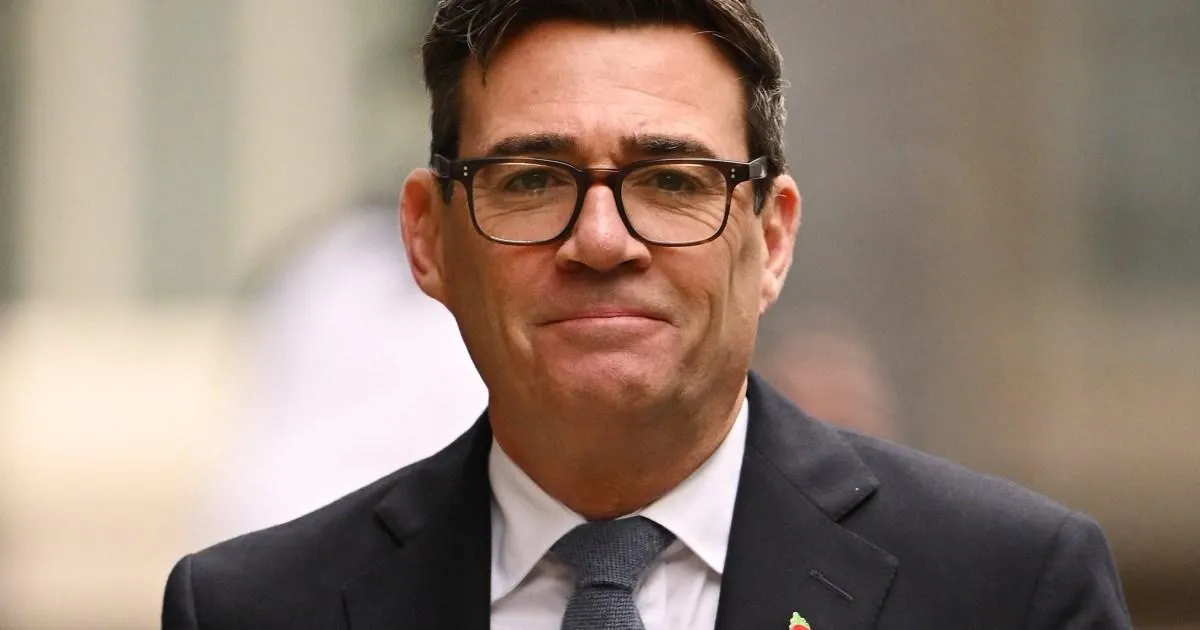
Something is shifting in the way Britain talks about its imperial past. It may not be a revolution, but it is a noticeable crack in the old silence. The article begins with Andy Burnham, the Mayor of Greater Manchester, saying he is open to apologising for the UK’s role in the transatlantic slave trade. Then, more significantly, it turns to the Prime Minister, Keir Starmer, who is preparing to fly to the Caribbean next week. In a piece for The Guardian, Starmer has said he wants to offer a “structured dialogue” to those affected by the slave trade. He has not promised money. He has not committed to a full state apology. But he has left the door open, and in the often cautious language of politics, that is a meaningful step. “Having these difficult conversations to safeguard the Commonwealth for the future is the right thing to do,” he wrote. “It is also the patriotic thing to do.” The phrase is striking. For years, conversations about slavery and empire have been framed as national guilt trips, as something to be defensive about. Starmer is trying to flip that script: facing the past, he argues, is not weakness but strength. It is what a confident, decent, brave Britain would do. He even points to the abolition of slavery as proof that Britain can lead the world again. That argument will not convince everyone. Critics will say that abolition does not erase centuries of brutality, and that celebrating it can become a way of avoiding responsibility. But the fact that a British Prime Minister is willing to say these words at all, in a national newspaper, on the eve of a Caribbean trip, is a sign that the conversation has changed.
What exactly does “structured dialogue” mean? It is not a phrase you hear every day, and it may sound like diplomatic jargon. But it suggests something more organised than a few polite conversations at a summit. It implies a process: meetings, listening sessions, perhaps official acknowledgements, maybe a formal apology at some point. The Prime Minister seems to be trying to create a space where the painful history of the slave trade can be discussed without the conversation collapsing into arguments about money. That is a difficult balance. For many Caribbean nations, the slave trade is not a distant abstraction. It is the reason their ancestors were taken from Africa, sold, and forced to build wealth for Britain. The scars are still visible in poverty, inequality, and social division. To say “sorry” without offering anything else can feel hollow. To offer money, on the other hand, can feel like trying to put a price on something that cannot be priced. Starmer’s answer is to talk first. He says Britain led the world in abolishing slavery, and can show leadership again today. That is a carefully chosen narrative. It acknowledges the wrong, but also points to a redemptive arc. It is the kind of story a country tells itself when it wants to move forward without being crushed by the past. Whether it is enough is another matter. The people who hear it may want more than words. But words, when they are spoken honestly, can be the beginning of something. The Prime Minister’s openness to apologising is not an apology yet. It is an admission that an apology may be necessary. In the strange, slow world of international politics, that is progress. And it matters that he is saying this before he gets on the plane, not after. It means the Caribbean will be watching him, waiting to see whether the dialogue is real or just another round of polite avoidance.
Then there is the question of reparations. The Prime Minister has been clear: he rejects financial reparations. He says British people today should not be ordered to pay for what happened in the past when they “played no personal part”. This is a popular position in Britain, and he knows it. The idea of writing a huge cheque to Caribbean nations is politically toxic. But the leaders of those nations have a different way of thinking about it. Philip Davis, the Prime Minister of the Bahamas, told Sky News that reparations are “about acknowledgement”. He said: “For me, repair and reparation is not absolutely money, simply, money. Some people think, I think, acknowledgement … which has been the first step, which we have now recognised. Acknowledgement, education, training, things of that nature.” That is a crucial nuance. The demand from the Caribbean is not just for cash. It is for truth. It is for the history books to be rewritten honestly. It is for scholarships, health programmes, and investment in communities that still feel the effects of slavery. It is for the British government to stop treating the slave trade as a footnote and start treating it as a foundational crime. When Davis says “acknowledgement”, he is talking about something deeper than a statement. He is talking about a change in national consciousness. The British Prime Minister’s “structured dialogue” could be a way of getting there. But it could also be a way of avoiding the hard question of money. The two things are not entirely separate. Acknowledgement without resources can feel empty. Resources without acknowledgement can feel like hush money. The challenge is to find a path that honours both. Starmer’s insistence that today’s Britons should not be personally blamed is understandable. No one chooses their ancestors. But societies are not just collections of individuals. They are ongoing stories. Britain’s wealth, its institutions, its global position, were all shaped by the slave trade. To say “I had no part in it” is true on a personal level, but it misses the larger truth that we are all inheritors of a history that is not over.
While the Prime Minister prepares for his trip, King Charles is already in the Caribbean. He has begun a nine-day tour that will take him to the Commonwealth heads of government meeting, where he will preside. The monarch has been careful, deliberate, and visibly moved. At a youth rally in the Bahamas, he acknowledged the “great suffering of the past”. He has also visited a parade ground where enslaved people were publicly executed. That image is difficult to sit with. A parade ground is a place of ceremony and celebration, but this one is soaked in a different memory. The King stood on ground where human beings were killed to send a message to other human beings. Whatever one thinks of the monarchy, that is a powerful act of witness. It is the kind of gesture that can mean more than a speech. President Irfaan Ali of Guyana said the King’s apology will be “the next step”. That is a significant statement. It suggests that the royal visit is being watched closely, and that the Caribbean is waiting for something more than sympathy. The King has not apologised yet. He has acknowledged suffering, but not yet said the word “sorry”. For many, that word matters. It is not just a formality. It is a recognition that the British Crown was not a bystander to slavery but a participant. The monarchy benefited from the slave trade. The Royal African Company, chartered by Charles II, transported tens of thousands of enslaved Africans. So when King Charles speaks about the past, he is not speaking as a neutral observer. He is speaking as the inheritor of an institution that was deeply involved. His visit to the execution site was a way of confronting that inheritance. Whether he will go further and apologise remains to be seen. But the pressure is mounting, and the fact that he is there at all is a sign that the royal family understands the moment.
The political implications are enormous. The Bahamas’ Prime Minister, Philip Davis, has even hinted that he would be open to removing the King as his country’s head of state. “That’s a question for my people,” he said. Then he added: “I’m open to it, yes.” That is a quiet but profound warning. The Commonwealth is not what it once was. Many of its member states are republics, and the ones that still have the King as head of state are starting to ask whether that arrangement makes sense. The Caribbean is not the only region having this conversation. But it is where the history of slavery and colonialism is most raw. For a Bahamian Prime Minister to say he is open to dropping the King is not just a constitutional detail. It is a signal that the old loyalties are fraying. The British government’s “structured dialogue” is, in part, an attempt to keep the Commonwealth together. Starmer said the difficult conversations are necessary to “safeguard the Commonwealth for the future”. He sees dialogue as a way of repairing trust before it breaks completely. But dialogue is a fragile tool. If it is seen as a delaying tactic, it will fail. If it is seen as a genuine opening, it could transform the relationship. The King’s presence in the Caribbean is also part of this effort. He is the living symbol of the Commonwealth, and his willingness to acknowledge pain may help keep the institution relevant. But the monarchy itself is on the line. Davis’s openness to republicanism is a reminder that the Commonwealth cannot be held together by sentiment alone. It needs justice. It needs honesty. It needs a shared understanding of the past that does not flinch. The next few weeks, with the Prime Minister’s visit and the Commonwealth meeting, will be a test of whether Britain is ready for that.
In the end, this is not just a story about money or apologies. It is a story about memory and identity. Britain is being asked to look at itself in the mirror and see the whole picture: the empire, the slave trade, the abolition, the wealth, the violence, the pride, the shame. That is not an easy thing to do. But it is necessary. The Prime Minister’s willingness to be “open” to apologising is a small crack in the wall of defensiveness. The King’s presence in the Caribbean is another. The voices of Caribbean leaders like Philip Davis and Irfaan Ali are asking for something that cannot be measured in pounds or dollars: they are asking to be heard. They want acknowledgement, education, training, and a relationship based on equality. They want the British people to understand that the slave trade was not a mistake that happened long ago, but a crime that built the modern world. And they want that understanding to shape the future. Whether an apology comes next week or next year, whether it comes from the Prime Minister or the King, the important thing is that the conversation is no longer avoidable. The old silence has been broken. What happens next will depend on whether words are followed by actions. A structured dialogue can be a beginning. It can also be an ending, if it is used to avoid real change. The hope is that Britain chooses the better path. The hope is that the country that once led the world in abolition can now lead the world in honesty. That would be a different kind of leadership, but perhaps the most meaningful kind. The past cannot be changed. But it can be acknowledged. And in that acknowledgement, there is the possibility of repair.