

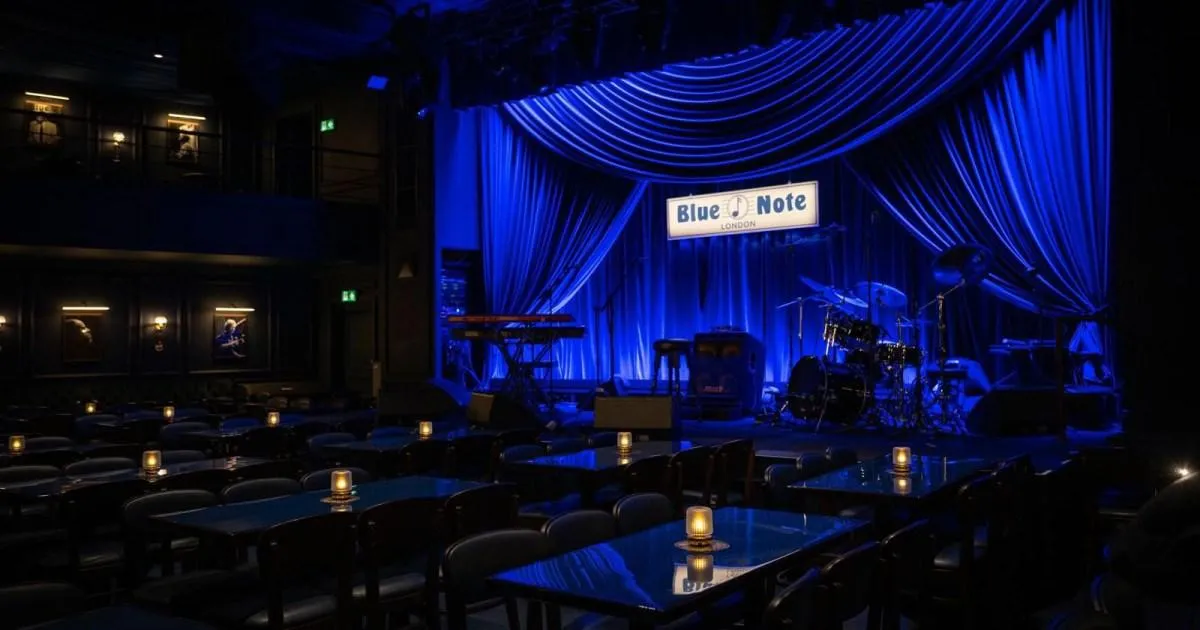
On a quiet corner of St Martin’s Lane in Covent Garden, the Blue Note Jazz Club now hums with life most nights. Inside, the air is thick with anticipation as audiences settle in for an evening of improvisation, warmth and soul. But the smooth, welcoming glow of this celebrated venue hides a bruising journey. For the people behind the famous Blue Note name, opening in London was, by their own admission, one of the hardest things they have ever done. This is no small statement from a team that has planted the Blue Note flag in ten cities across the world, including Milan, Los Angeles and Tokyo. Their founding club in New York is legendary, a place where the greatest names in jazz have performed for decades. Yet London—global capital of music, culture and nightlife—proved to be the most difficult audience of all. The club finally opened in September, but not before enduring a licensing process so fraught that it left even seasoned operators questioning whether they were welcome. Nick Lewis, the club’s director of music, captured that mood in a quiet confession: “Reading through all those complaints was hard. There was one point where we all thought ‘it really feels like we are not wanted here.’” It is a remarkable thing to hear from someone whose brand is adored on three continents, and it speaks volumes about the obstacles facing live music venues in a city that sometimes seems to fear its own nocturnal energy. The story of how Blue Note made it to London is not merely a business saga; it is a human one, full of frustration, resilience and a stubborn belief that jazz belongs in the heart of the capital. After years of dreaming, planning and pouring millions into the project, the owners discovered that bringing a world-class cultural institution to a world-class city was going to require more than ambition. It would require patience, endurance and a willingness to fight for every hour of music they were allowed to share.
That fight was fundamentally about time. When Blue Note first applied for its licence, the authorities offered an 11pm closing time. For most ordinary bars or restaurants, that might have been acceptable. But for a jazz club of this pedigree, it was practically a curfew. As Nick Lewis explained, “Initially, they gave us an 11pm closing time, which is too early as the nature of jazz is always geared toward late performances.” Jazz is not background music; it is a living, breathing art form that often finds its truest voice in the small hours of the night. The musicians feed off the intimacy of a late crowd; the audience softens, the improvisation deepens, and the music becomes something transcendent. An 11pm deadline would have chopped the soul out of that experience and made it impossible to sustain the club financially. Lewis went on: “Through a long appeal process, we eventually managed to secure a 1am closing time. With this we can run two shows a night and balance the books. But ideally we would be going until 3am.” That last sentence is telling. Even after winning their appeal, the club had to accept a compromise that fell well short of what they believed was necessary for the art form and the business. The difference between 1am and 3am is not just a matter of hours; it is the difference between a venue that survives and one that truly thrives. Running two shows a night allows the club to keep its doors open, but the creative energy of jazz has always stretched deep into the night, when other distractions fade and only the music remains. The licensing system, with its cautious assumptions and risk-averse logic, simply could not accommodate that cultural truth without a fight.
The resistance, however, went far beyond the question of closing times. During the application process, Blue Note’s owners found themselves facing objections that were, in many cases, difficult to take seriously. One local resident worried that jazz lovers might become “disoriented” by leaving the venue when it was cold at night. Another suggested the club “could be a magnet for phone thieves.” The Metropolitan Police also opposed the original application, arguing that a 1am closing time was far too late and could “expose more people to crime and disorder.” For the club’s directors, reading through these objections was a soul-testing experience. They had invested millions of pounds in a beautiful, carefully designed venue. They had brought one of the world’s most respected jazz brands to London. And yet they were being treated almost as a public nuisance. Nick Lewis remembered the feeling clearly: “Reading through all those complaints was hard. There was one point where we all thought ‘it really feels like we are not wanted here.’” One can imagine the strange absurdity of it all: a team that had successfully opened venues in Milan, Los Angeles and Tokyo, each time navigating local regulations and winning over communities, now being told by a handful of critics that London was better off without them. The complaints about phone thieves and winter disorientation were not just bureaucratic noise; they were symptoms of a deeper anxiety about urban nightlife. In an era when high streets are struggling and city centres are often seen as risky places after dark, venues like Blue Note are sometimes viewed with suspicion rather than celebrated as assets. But this club was not asking for anything radical. It was asking for the chance to keep live music alive in a city where so many iconic venues have already disappeared.
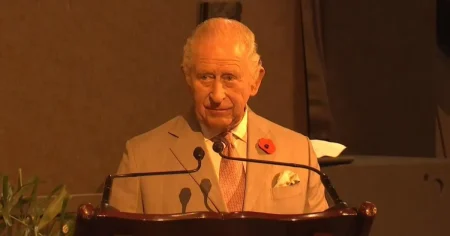
The issue soon reached the highest levels of city government. At a round-table discussion held at the Blue Note Jazz Club itself, the Mayor of London, Sadiq Khan, officially received new powers that would give him the deciding say on whether venues can open in the capital. It was a symbolic moment, made all the more powerful by the venue’s recent ordeal. Khan described the owners’ experience as “shocking” and called it “a case study in how things shouldn’t be.” Standing inside the club, he did not mince words: “We are in a world class venue. I think it’s one of the best venues in Europe, maybe across the world. The problems and challenges that these people have had is just not right. They invested literally millions of pounds in this venue, and suddenly it got too difficult for them.” His remarks were a rare moment of political empathy, acknowledging that the people behind cultural institutions are not faceless investors but passionate individuals who risk everything to bring art to the public. Joining him was the Secretary of State for Communities and Local Government, Angela Rayner, who offered an even broader diagnosis. She said it can “feel like London is closed,” and she spoke passionately about the value of nightlife beyond the obvious pleasures of a night out. “The musicians on stage, the staff behind the bar, the small businesses that depend on them—that’s jobs, that’s growth, and a big part of what makes London the world-famous city it is.” Her words were a reminder that a jazz club is not just a place to hear music; it is an economic engine, a cultural anchor, and a community gathering point. By handing the Mayor new powers over licensing decisions that have the biggest impact on the capital, she said, “It’s about backing the venues and events that keep London buzzing.” For anyone who has ever sat in a dark room while a trumpet player bends notes into something heartbreaking, the sentiment felt long overdue.
Steven Bensusan, President of the Blue Note Entertainment Group, was understandably relieved but also cautious about the future. He acknowledged the arduous path his team had travelled, and he expressed gratitude to those who had helped them finally open their doors. “Bringing Blue Note to London meant working through a complex licensing process, and we’re grateful to the Mayor’s office and Westminster for working with us to make it happen,” he said. But he also made clear that the struggle was not unique to Blue Note. “Since opening in September, London has given us a remarkable welcome, and we’re excited to keep growing our programming here, including opening our stages to the city’s grassroots and emerging artists. A clear, consistent licensing system is exactly what venues like ours need to invest in London and keep live music thriving.” That final sentence carries the weight of the entire saga. Blue Note did not come to London to be a museum piece. It came to build something, to grow, to offer opportunities to young musicians and to become part of the city’s living culture. The fact that a company with global experience and significant financial resources nearly gave up is a warning to everyone who cares about the future of live music. If Blue Note found the process so difficult, what hope is there for a small, independent venue run by first-time owners with much less money and legal firepower? The answer, perhaps, lies in the very resilience that Bensusan described. Since opening, London audiences have embraced the club with real enthusiasm, and the programming has already begun to reflect a commitment to both established stars and the next generation of talent. The nightlife economy is not merely about nightclubs and bars; it is about creative expression, shared experience and the joy of being surrounded by strangers united by sound.
In the end, the story of Blue Note’s London debut is about more than one venue. It is about the delicate balance between a city’s need for order and its need for soul. Every large city must manage noise, congestion and public safety, and residents who object to loud music are not always wrong. But when the balance tips so far that a world-renowned jazz club feels unwelcome, something has gone profoundly wrong with the system. The new powers granted to the Mayor of London are an attempt to correct that imbalance, to make sure that cultural venues are not strangled by a patchwork of objections and restrictive conditions. But the real lesson is human. The people who bring jazz clubs, theatres and live music halls to life are not just business owners. They are believers. They believe in the power of a melody to stop time, in the magic of a late-night improvisation, in the sacred space between the stage and the audience. They have to fight, not because they are reckless, but because they care. And if London—or any city—wants to remain a cultural capital, it must learn to embrace that passion instead of making it feel unwanted. As the lights dim at Blue Note and the first notes fill the room, the struggle fades into memory, at least for a few hours. But the memory has not disappeared; it lives on in the cautious optimism of the people who made it happen, and in the hope that London’s next great venue will not have to fight quite so hard for its place in the city’s beating heart.