


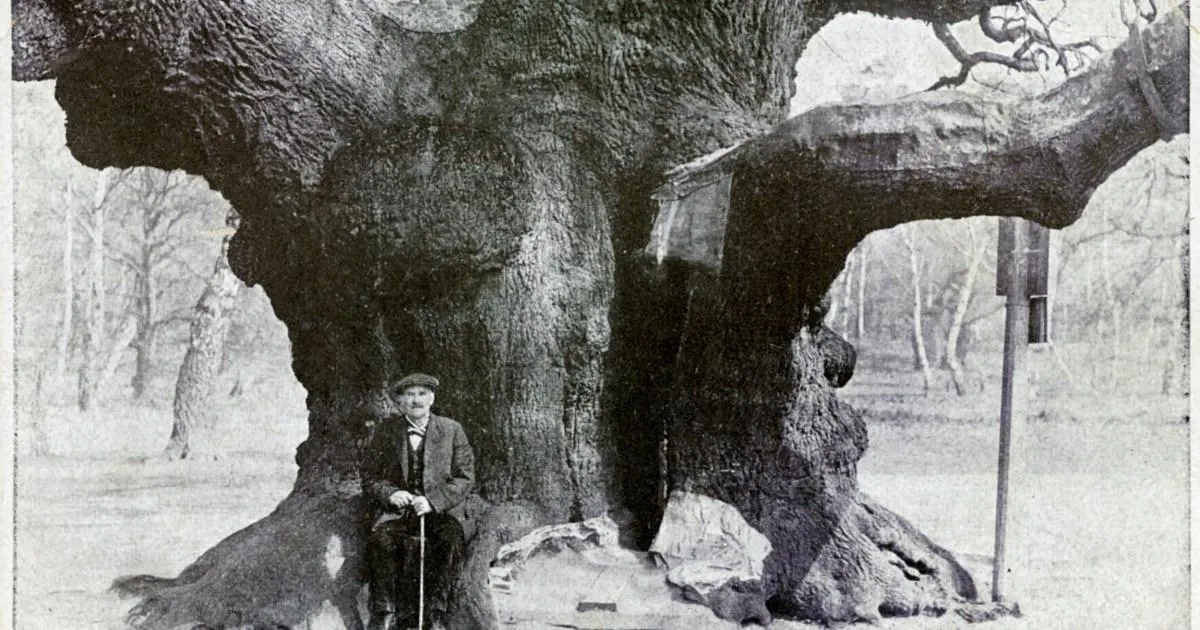
The Major Oak, a legendary giant standing at the heart of Sherwood Forest, has reportedly reached the end of its extraordinary 1,200-year journey. For centuries, this tree has been more than just timber and leaves; it has been a living connection to the folklore of Robin Hood, a silent witness to British history, and a destination for millions of pilgrims. However, this spring, the branches remained bare, signaling that the ancient guardian has finally succumbed to the weight of time and the cumulative stress of its own fame. Its passing marks the end of an era for a tree that stood tall long before the Norman Conquest and endured through the rise and fall of empires.
The decline of such a monumental organism is rarely the result of a single event, but rather an accumulation of pressures. Experts from the RSPB, which manages the woodland, point to a “perfect storm” of challenges. Over the decades, efforts to prop up the tree—well-intentioned structural interventions—and the sheer volume of human footfall significantly damaged its root systems. The soil surrounding the oak had become so heavily compacted by generations of awe-struck visitors that it reached the density of concrete, effectively choking the roots and preventing essential water and nutrients from reaching the canopy. When modern climate-driven heatwaves and extended droughts were added to this already fragile state, even such a resilient colossus struggled to survive.
For those dedicated to the tree’s protection, this loss feels deeply personal. Hollie Drake, the RSPB’s senior site manager, described the failure of the leaves to sprout as “heartbreaking.” Yet, there is a profound sense of acceptance in her tone; she recognizes that while the life has ebbed from the trunk, the legacy of the Major Oak remains vibrant. It exists not only in the stories told by firesides about outlaw heroes but in the very consciousness of the public. The tree will remain standing within the forest, transitioning from a living icon to a majestic monument, serving as a sanctuary for local wildlife and a stark, beautiful reminder of the importance of ancient ecosystems.
The tragedy of the Major Oak serves as a cautionary tale according to conservationists like Ed Pyne of the Woodland Trust. He notes that the damage to the tree’s foundation is a legacy of Victorian-era tourism, a time when visitors were encouraged to crawl inside the hollow trunk, causing irreversible stress. This decline is a sobering message for modern society: the way we interact with nature today directly dictates whether the giants of the future will thrive or wither. As we move forward, the lesson learned from this ancient oak is that true preservation requires restraint and a deep, humble respect for the environments that have sustained life for millennia.
Despite the sorrow of its passing, the Major Oak’s influence is far from extinguished. Its biological lineage has been carefully preserved; acorns and cuttings taken over the years have been nurtured and planted globally, ensuring that “offspring” of this legendary tree continue to grow and cast their shadows in forests worldwide. These saplings, carefully monitored by those who cared for their progenitor, carry the genetic memory of the original oak. The intention is clear: to ensure that the story, the spirit, and the beauty of the Major Oak continue to generate their own legends for generations yet unborn, far beyond the borders of Nottinghamshire.
Ultimately, the death of the Major Oak is an invitation to reflect on our relationship with the natural world. It has survived the construction of cathedrals, the furnace of the Industrial Revolution, and the fleeting interests of centuries of travelers. Its transition to a standing monument allows us to maintain our connection to it without the demands of life-sustaining growth. By studying how it weathered the centuries and why it finally faltered, experts hope to secure a safer, more sustainable future for other veteran trees. In this way, even in its final state, the Major Oak continues to teach us, protect us, and inspire us to be better stewards of the living world.