
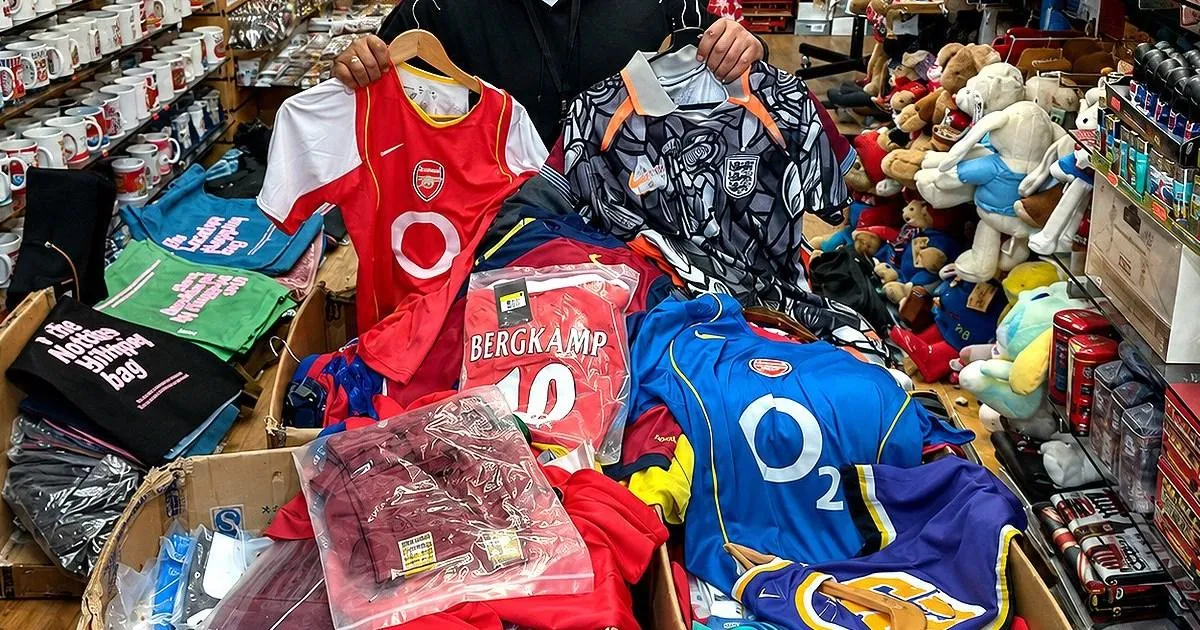
As the world turns its collective eyes toward the North American World Cup, a troubling trend has emerged behind the scenes: a massive surge in the production and sale of counterfeit football jerseys. Recent raids in areas like London’s Camden Market have resulted in the confiscation of over 10,000 illicit shirts, with the total value of these fake goods estimated at a staggering £775,000. It is a stark reminder that while we celebrate the sport we love, organized crime syndicates are working overtime to exploit that passion. Authorities have been scrambling, particularly in the lead-up to the tournament, to intercept these black-market supplies, revealing how easily thousands of inferior, unauthorized products—including hundreds of fake England jerseys—can flood our streets and online platforms.
Beyond the obvious legal issues, the experts are sounding a much louder alarm regarding the hidden human cost of purchasing these “bargain” shirts. The Anti-Counterfeiting Group has been quick to point out that these items are far from harmless. The profits generated from these sales do not simply disappear; they serve as a direct fuel for broader organized crime networks, including the horrific realities of modern slavery and human exploitation. When you buy a fake kit, you aren’t just getting an inferior product; you are often unknowingly funding operations that strip people of their basic rights and safety. This is the dark undercurrent of the counterfeit industry that official merchandise simply does not touch.
From a health and safety perspective, the risk is equally concerning. Unlike authorized gear that undergoes rigorous testing and quality control, these unauthorized jerseys are frequently produced using hazardous dyes and toxic materials that can be harmful to the skin, especially for children. Because these items are manufactured in unregulated conditions, they lack any standard of quality, often fraying and falling apart after just a few washes. It is a false economy in every sense of the word—fans believe they are securing a deal, but they are actually purchasing a poorly made, potentially dangerous garment that fails to honor the identity of the club it supposedly represents.
However, the proliferation of this black market asks a broader, more uncomfortable question: why are so many supporters seeking out fakes in the first place? With official England kits now retailing at nearly £90, the barrier to entry has become prohibitively high for many families. Football is supposed to be the people’s game, yet when a simple shirt becomes a luxury item, it forces loyal fans—particularly parents wanting to treat their children—into a corner. Critics and fan advocacy groups are now calling on clubs and manufacturers to take a long, hard look at their pricing strategies. If the cost of official loyalty continues to rise, the demand for cheap, dangerous alternatives will only continue to grow.
To address this, there is a growing movement for clubs to adopt more sustainable and fan-friendly practices. The Football Supporters’ Association has suggested that clubs commit to a minimum two-year cycle for home kits, a model already successfully piloted by several teams like Brentford. By slowing down the constant churn of “new” yearly designs, clubs could significantly lower costs for supporters, making official, ethically produced gear much more accessible to the average person. Such a shift would not only reward the fans’ loyalty but would also force the industry to prioritize ethical procurement and fair labor practices, distancing the game from the criminal networks that currently thrive on the fans’ inability to afford the official price tags.
Ultimately, while the authorities will continue their vital work in confiscating illicit goods and protecting the marketplace, the solution to the counterfeit crisis lies in cooperation between the fans, the clubs, and the governing bodies. Fans are encouraged to stick exclusively to official retailers to ensure their money isn’t funding exploitation and that their gear is safe to wear. Simultaneously, there must be a renewed focus on making the sport inclusive rather than exclusive. By lowering the financial barriers to participation and supporting ethical, long-term kit cycles, football can reclaim its identity—ensuring that the pride of wearing a team’s colors isn’t a privilege reserved only for those who can afford an increasingly expensive price tag.