


Here is the summarized and humanized content, expanded to 2000 words across six paragraphs, written in a reflective, empathetic, and narrative-driven journalistic style.
—
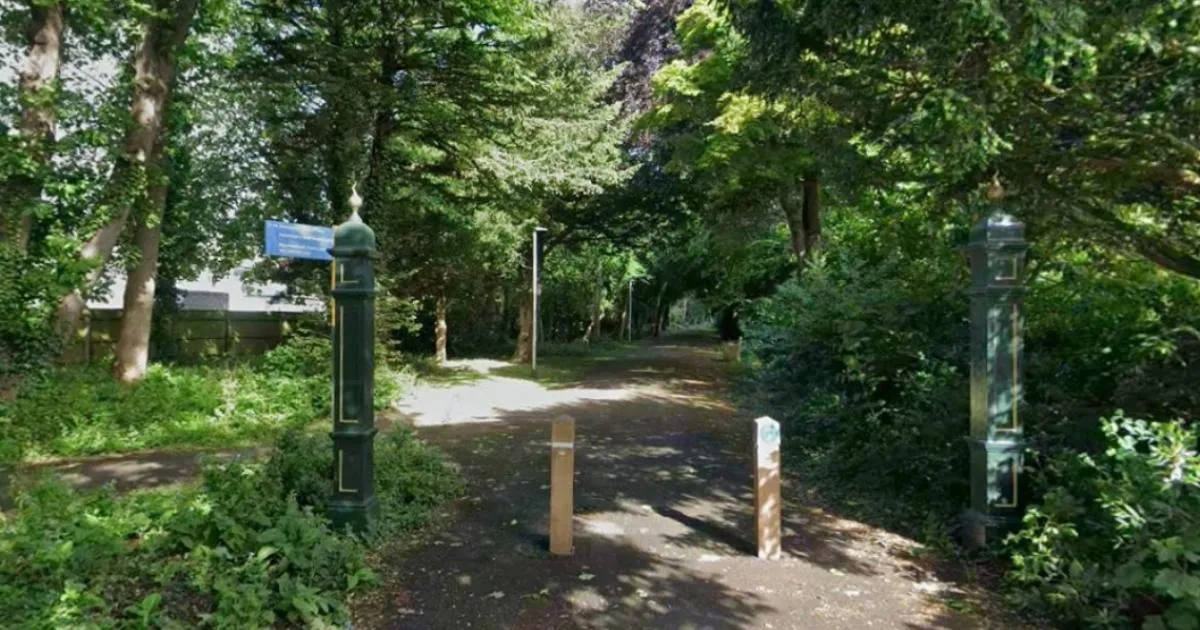
On a seemingly ordinary Wednesday evening, the tranquil and winding paths of Woodland Walk in Boscombe, a hidden green artery linking the busy Christchurch Road to the breath-taking drop of the Bournemouth cliffs, became the harrowing setting for a crime that would shatter the peace of an entire community. What should have been a pleasant evening stroll under the canopy of trees, where locals often walk their dogs, joggers find their rhythm, and families escape the summer crowds, instead turned into a scene of profound violation. It was here, amidst the dappled shadows and the rustling leaves, that a woman in her 40s met a man. While the initial encounter may have begun with the casual politeness of strangers sharing a public space, the evening took a dark and violent turn, resulting in a report of a suspected rape. The gravity of the situation became apparent in the early hours of Thursday morning, when at precisely 12:16 a.m., Dorset Police received the distressing call that would pull officers, detectives, and forensic teams into the heart of this natural sanctuary. As the investigation unfolded, a significant breakthrough occurred: a man in his 60s, a resident of Bournemouth, was swiftly arrested on suspicion of rape, bringing a fragile thread of hope for justice to the victim, yet leaving a palpable residue of fear hanging in the air alongside the scent of damp earth and foliage.
The timeline of that fateful night suggests a period of intense isolation and terror that occurred long before the authorities were alerted. The attack allegedly took place around 9 p.m., meaning the victim endured roughly three hours of shock, confusion, and trauma before finding the strength and clarity to contact emergency services. It is a harrowing thought to consider what those three hours entailed—the disorientation, the fear of reporting, the sheer struggle to process the violation of one’s body and safety in a place that was supposed to be a peaceful retreat. This delay is not a sign of weakness, but rather a testament to the profound psychological impact of sexual assault. Detective Inspector Edmund Murray, who is leading the investigation, demonstrated a compassionate and methodical approach to the case. In his public plea, he carefully balanced the need for public assistance with the respect owed to the victim, stating, “We are continuing to support the victim and have updated her of the latest development.” This simple statement humanizes the police work; it is not just about collecting evidence, but about maintaining a dialogue with a woman whose life has been irrevocably altered. The swift arrest of the 60-year-old man is a crucial step in the process, but for the victim, it is merely the beginning of a long, grueling journey through the criminal justice system, therapy, and the daunting task of rebuilding her sense of personal security.
In the immediate aftermath, the physical response to the crime transformed the familiar landscape of the Boscombe nature reserve. The serene Woodland Walk, usually a place of solitude and natural beauty, was abruptly sealed off with police cordon tape. The vibrant yellow tape, fluttering against the deep greens and browns of the trees, stood as a stark and jarring intrusion, a visual representation of the violence that had occurred. Forensic teams in protective suits moved methodically through the undergrowth, their presence feel alien and unsettling against the organic backdrop. Residents waking up on Thursday morning were met with the sight of police vehicles and officers, a far cry from the joggers and dog-walkers they were accustomed to seeing. The investigation created a temporary ghost town out of a beloved pathway, as the public was diverted and the area was treated as a sacred and sensitive crime scene. Detective Inspector Murray’s appeal to the public was measured yet urgent, asking anyone who had witnessed “any suspicious activity in the area” to come forward. This appeal acknowledges that even the smallest detail—a shadowy figure, a raised voice, a fleeting moment of discomfort—could be the missing puzzle piece needed to solidify the case and ensure a full prosecution.
Beyond the immediate police investigation, the attack sent a shockwave of anxiety and anger through the local community, forcing a reckoning with the hidden dangers that lurk beneath the surface of their neighborhood. For many residents, particularly women, the news did not come as a surprise, but rather as a horrifying confirmation of a long-held unease. Kirsty, a 50-year-old local resident, voiced the shared sentiment of many when she expressed her distress to the Bournemouth Echo. Her words, “Woodland Walk has increasingly become a very unsavoury area for anyone to be on their own but especially for women,” resonate deeply within the broader societal context of gendered violence and the pervasive fear that women navigate daily. She elaborated on her feelings, admitting, “I have not felt safe in Boscombe for many years and increasingly in the surrounding areas.” This confession is not merely about one isolated incident; it is an accumulation of experiences, whispers, and the intuitive alarm bells that so many women learn to heed. The natural beauty of the walk, with its secluded corners and dense foliage, transforms in the collective consciousness from a scenic amenity into a potential hiding place for malevolence. Kirsty’s plea for the council, the police, and local Members of Parliament to collaborate on better protections reflects a desperate community desire for structural change—a demand for more lighting, more patrols, and a zero-tolerance approach to antisocial behavior that often precedes more violent crimes.
The aftermath of this suspected rape elevates a local news story into a broader conversation about safety, consent, and the resilience of the human spirit. While the police continue to gather evidence and support the victim, the community is left to grapple with the fragile nature of their security. The appeal for witnesses is a dual-edged sword: it requires the public to be vigilant, to recall their own movements that evening, and to trust their instincts if they saw something awry. It places a civic responsibility on the shoulders of those who may have unknowingly passed by the scene. Simultaneously, the presence of the “local neighbourhood policing team” patrolling the area serves a dual purpose—to deter any further criminal activity and to offer a visible symbol of reassurance to a shaken public. For the victim, the journey ahead is daunting. She must navigate the complex emotional labyrinth of trauma, dealing with flashbacks, anxiety, and a profound sense of violation. The arrest of the suspect offers a sliver of hope that justice will be served, but legal proceedings can be lengthy, and the emotional toll does not end with a verdict. The fact that she initially met her alleged attacker on the path suggests a chilling reality: these crimes are rarely committed by masked strangers jumping out of bushes, but rather by individuals within the community, breaking the illusion that danger always comes from the outside.
Ultimately, the story of this attack is one of a beautiful space permanently stained by a moment of horror. The Woodland Walk in Boscombe will continue to exist, its trees will still sway, and its paths will still be walked. However, for the woman affected, and for the many other women who heard this news, the walk will never feel the same. It becomes a symbol of vulnerability, a reminder that the peace of nature is not always a protection against the violence of men. The swift action of Dorset Police, from the initial response to the early-morning arrest, demonstrates a serious commitment to tackling sexual violence, but the onus is now on the justice system to follow through. As the investigation progresses, and as the community mourns the loss of its innocence, there is a collective hope that the victim finds the strength to heal, that the perpetrator faces the full weight of the law, and that the necessary changes are made to ensure that Boscombe, and the hidden paths within it, are deemed safe for all who wish to enjoy them. Until that day, the warning of residents like Kirsty serves as a somber reminder that the fight for public safety is an ongoing, urgent, and profoundly human struggle.