



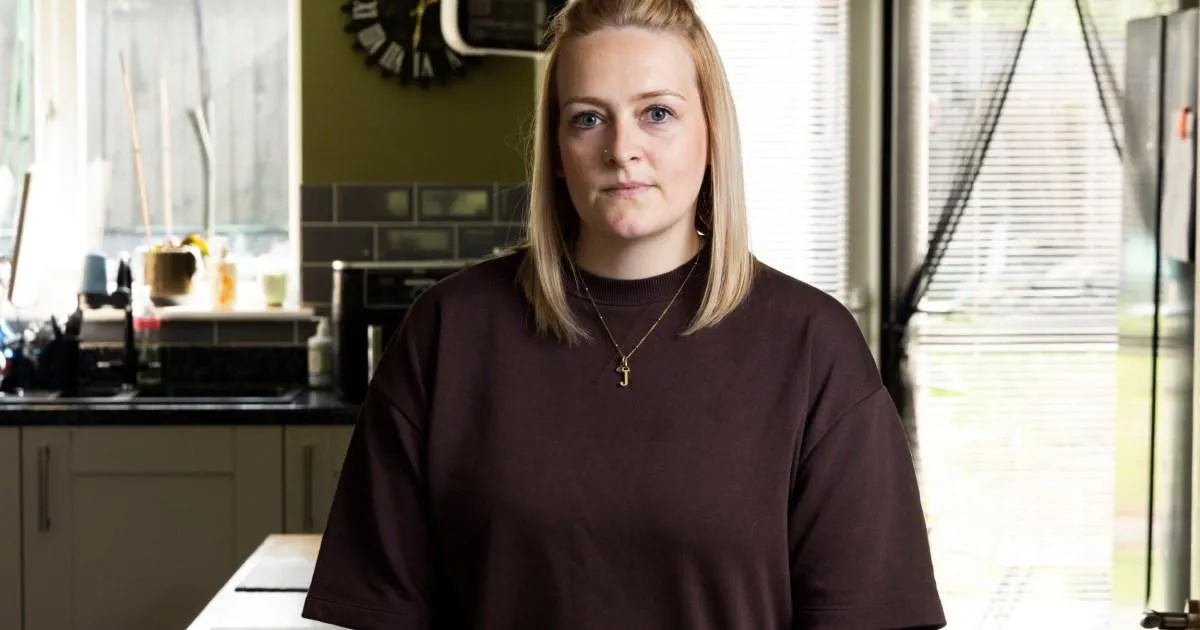
Some childhood memories are not just memories; they are wounds that keep bleeding into the present. For Jessica Jones, the injury was inflicted when she was nine years old, an age when the world should still feel safe and adults should be protectors. Raymond Longstaffe, a family friend and neighbour, had offered to babysit and persuaded Jessica’s mother to let Jessica and her brother stay the night at his house. It was meant to be a simple kindness, a sleepover at a trusted adult’s home, the kind of ordinary thing children look forward to. Instead, in the middle of the night, Longstaffe came into the room where the children were sleeping. Jessica remembered him prodding her and pulling the duvet off her, and then taking her hand and dragging her into his bedroom. He stripped off her clothes and attempted to rape her. To keep her silent, he threatened to kill her mother’s partner with a sledgehammer if she ever told anyone. Jessica, already the victim of an earlier sexual assault at age six, was terrified in a way that no child should ever know. She went back to her bedroom and did not sleep, lying awake with fear pounding in her chest until morning, too frightened even to close her eyes. The next day, she found the courage to tell her mother, and the police were called. But that night marked the beginning of a long journey through confusion, shame and silence. For more than two decades, Jessica carried the weight of what had happened, unable to speak about it without her throat tightening and closing. Now, at 32, the mother of three from Powys, Wales, has decided to break her silence publicly and waive her anonymity. She wants to tell her story not for herself, but for the countless other survivors who are still suffering alone.
Longstaffe’s abuse was not an isolated trauma in Jessica’s young life. When she was just six, an older boy grabbed her and pinned her to the ground at a holiday park playground, and began taking off her clothes. No further action was taken against him, leaving Jessica with an early, confusing understanding that adults would not always protect her and that the world was not the safe place it should be. By the time Longstaffe assaulted her, she was already “more aware,” as she later said, and that awareness made the fear even sharper. She knew something terrible was happening, and she knew the threat of a sledgehammer was meant to silence her. The aftermath of the assault involved a medical examination at hospital, interviews with Dyfed-Powys Police, and attending court proceedings. For a child, these processes can feel like a second violation: being asked to relive the worst moment of your life in front of strangers, having your body examined, waiting to be believed. Longstaffe was eventually sentenced to eight months in prison at Merthyr Tydfil Crown Court in 2003 and was placed on the sex offenders register for ten years. For a crime that would scar Jessica for decades, eight months was a shockingly short punishment. It also meant that he would soon be back in the community, free to live opposite her family again. The conviction may have satisfied the legal system, but it did nothing to repair the damage inside Jessica. She was still a child trying to make sense of why someone she trusted had hurt her, and why the world seemed to expect her to simply move on. Instead, the trauma settled into her bones, shaping her behaviour, her relationships, and her sense of self-worth for years to come.
The worst part of the nightmare was that it did not end with Longstaffe’s prison sentence. After his release, he moved back into the house opposite Jessica’s family home, turning her neighbourhood into a place of constant fear. He was visible in the window a lot of the time, and if he saw Jessica’s mother, he would pull a funny face and stick his tongue out. This was not harmless mockery; it was a deliberate act of intimidation, a way of saying that he was still there, still watching, still in control. Jessica and her family lived with the terror of his presence, knowing that the man who had tried to rape her was just across the street. Every time she looked out of the window, she was reminded of what he had done and what he had threatened to do to her family. Eventually, they made the difficult decision to move house. Jessica changed schools as well, leaving behind her friends and everything familiar in an attempt to escape the shadow of her abuser. She said she did feel a bit safer after the move because he no longer knew where she had gone. But safety came at the cost of uprooting her entire young life. A child should never have to learn that home is not a safe place, that the people who are supposed to protect you cannot stop the man at the window from taunting you, and that you have to flee your own street to feel safe. The psychological impact of that constant fear cannot be overstated. Even after they moved, Jessica carried the belief that he might find her, that he might harm her or her family. The world had become a place of danger, and she was always looking over her shoulder.
The long-term consequences of abuse are often invisible to the outside world, but they were written all over Jessica’s life. She struggled throughout her teenage years, finding it hard to concentrate and connect at school. By Year 10, she had been expelled. Her mental health deteriorated, and she began a period of self-destructive behaviour, which she described as “a patch of not really caring about myself. I just went with very different partners.” This is a heartbreakingly common response to childhood sexual abuse. Survivors often blame themselves, feel dirty or damaged, and seek out relationships that mirror the abuse because they have never learned what love and safety truly feel like. Jessica’s self-worth was shattered by what had been done to her. She found it almost impossible to talk about the abuse; when she tried, her throat would tighten and shut, as if her body was physically preventing her from speaking the words. That sensation is a vivid illustration of how trauma lives in the body, long after the event itself is over. For more than twenty years, she kept the secret locked inside, and it poisoned her relationships and her view of herself. The abuse did not happen once and then end; it continued to happen every time she looked in the mirror and saw someone unworthy, every time she made a choice that hurt herself, every time she struggled to believe that she deserved better. It was a heavy burden to carry, and it took years of healing before she could begin to set it down.
But Jessica’s story is not solely a story of suffering. It is also a story of survival, and of the slow, brave work of rebuilding a life. At some point, she met Tom Jones while working at a pharmaceutical company, and the two fell in love. They married and had three sons, born in 2017, 2020 and 2022. Becoming a mother did not erase the past, but it gave Jessica a new perspective and a powerful reason to confront what had happened to her. She wanted to be strong for her children, and she wanted to ensure that the cycle of silence and shame ended with her. She is now raising money for Rape Crisis, the charity that supports survivors of sexual violence, and she hopes that by telling her story, she will encourage other survivors to seek help. Her decision to waive her anonymity is an act of extraordinary courage. For more than two decades, she had hidden this part of herself, silenced by fear and the belief that speaking would only bring more pain. Now she is speaking out because she knows there are so many other people who have been through similar horrors. “When I was really struggling talking about it, I felt my throat would tighten and shut,” she said. “I feel like I am now able to physically speak, and I just know there are so many other people this has happened to. I just want them to know that it’s ok to speak.” These words are simple, but they carry the weight of years of silence. They are a gift to anyone who is still trapped in that silence, a reminder that the shame belongs to the abuser, not to the survivor.
Jessica’s decision to share her story publicly is a powerful reminder of the devastating impact of sexual violence, and of the urgent need for support systems for survivors. Her case also highlights the failings of a justice system that handed an abuser an eight-month sentence for a crime that would affect his victim for a lifetime, and then allowed him to return to the very street where she lived. But the most important message of her story is one of hope. Rape Crisis and other organisations provide helplines, counselling and advocacy for survivors, and as Jessica herself emphasises, it is never too late to speak. There is no time limit on reporting abuse, and support is available whether the assault happened recently or many years ago. For anyone who has been through something similar, Jessica’s story says: you are not alone, and you deserve to heal. The road to recovery is rarely linear, and it can be long and painful, but speaking about the trauma, in whatever way feels safe, is often the first step toward reclaiming your life. Jessica has taken that step. By telling her story, she has transformed her deepest wound into a source of strength and solidarity for others. She wants survivors to know that what happened to them was not their fault, that the shame does not belong to them, and that it is okay to speak. In doing so, she offers a glimmer of hope to all those who are still finding their voice, and she proves that even the darkest past can be survived.