


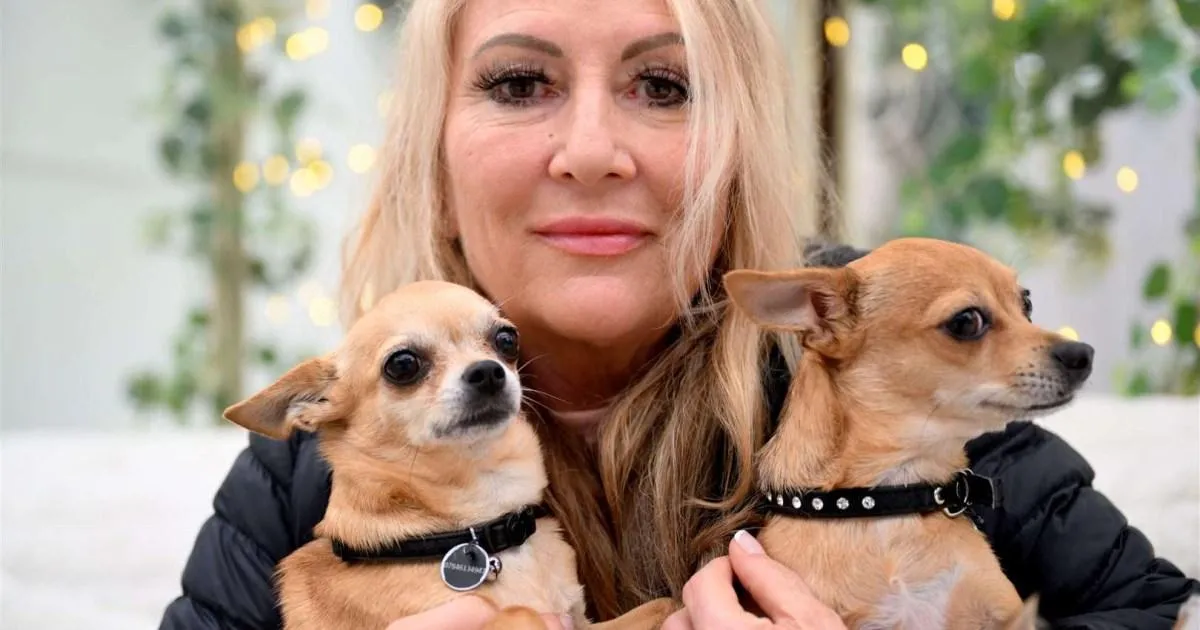
For 59-year-old Laura Hansen, the sanctuary of her home in Newington, Kent, has become a place of profound anxiety. For 17 years, she has enjoyed the quiet proximity to nature, but that peace was shattered recently when she made a series of grim discoveries in her back garden. Within the span of a single week, she found the lifeless bodies of a rat and a pigeon, both appearing to have succumbed to something unnatural. As an animal lover deeply devoted to her two Chihuahuas, Hunni and Moose, and her cats, Big Ted and Lucky, the experience has left her in a state of constant dread regarding the safety of her beloved companions.
The root of Laura’s fear lies in the ongoing construction of the Newington Green housing development directly behind her property. Worried that the disturbance of local habitats might have triggered the use of rodenticides, she has taken the drastic step of putting her household on “lockdown.” For a woman who believes that pets—particularly cats—have a fundamental right to roam freely and explore the outdoors, this transition has been heartbreaking. She describes the daily frustration of trying to manage frustrated cats now confined to the indoors, forced to use litter trays and denied the freedom they have known their entire lives, all while she lives in fear of a single, tragic accident.
The gravity of Laura’s concern centers on the biological reality of secondary poisoning. When a rodent consumes poison, it does not die instantly; instead, it becomes lethargic and vulnerable, turning into an “easy meal” for larger animals like foxes, cats, or inquisitive dogs. Laura is acutely aware that if her pets were to come into contact with such a creature, the consequences could be fatal and devastatingly swift. This anxiety is shared by neighbors like Robert Lee, a 42-year-old local father who worries that if these poisoned animals were to turn up on his property, they would pose a direct health risk to his young children playing on their trampolines.
Beyond the immediate danger to her pets, Laura has expressed frustration at the lack of support from local authorities. When she reached out to both the Swale council and Kent County Council regarding the dead animals, she was simply advised to double-bag the carcasses and place them in the general waste. For her, this felt like an inadequate and dismissive response to a potential public health issue. She kept the animals momentarily, feeling a sense of responsibility to ensure they were handled correctly, but she eventually felt forced to dispose of them as instructed, all while wondering if there isn’t a more conscientious, transparent way to track potential poisoning in the community.
In response to the growing unease in the village, the developers, Dandara, have issued a strong statement maintaining that their activities are not to blame. They emphasize that any site clearance is conducted under the strict supervision of qualified ecologists and that they do not employ chemical pest control methods. Furthermore, they assert that they have implemented a variety of biodiversity-friendly initiatives, such as hedgehog highways, bird boxes, and swift bricks, specifically designed to protect and enhance the natural environment. The company has explicitly reassured residents that there is no risk to local wildlife or household pets resulting from their construction progress.
As the development continues, the tension between the push for new housing and the established rhythm of village life remains palpable. While Dandara stands by its pledge to act responsibly and adhere to rigorous environmental regulations, residents like Laura remain stuck in a limbo of uncertainty. For now, she continues to watch the garden from her window, keeping her doors shut and her pets close by. She remains unconvinced and deeply unsettled, holding onto the hope that the truth of these animal deaths will eventually come to light, and that the safety of the sentient creatures she loves will no longer be left in question.