


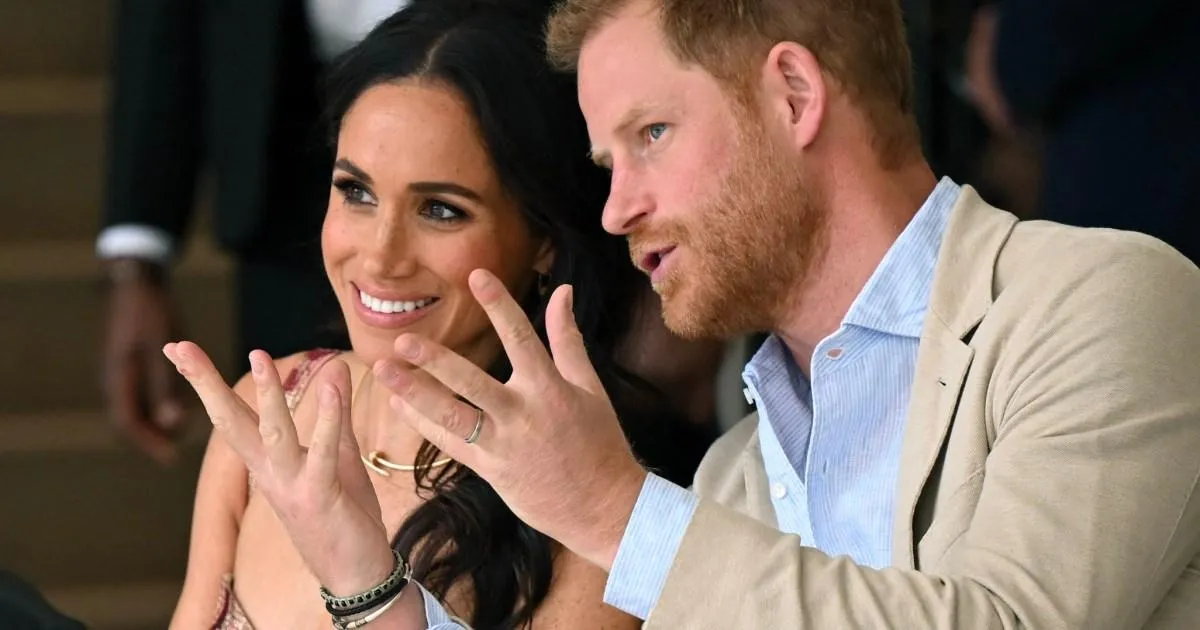
The Duke and Duchess of Sussex: A New Chapter Rooted in Family, Memory, and Home
There’s something deeply human about the pull of home—the quiet ache for familiar places, the comfort of old memories, and the desire to give your children the kind of childhood you once knew. For Prince Harry and Meghan, the Duchess of Sussex, that pull has apparently become impossible to resist. After years of distance, both literal and emotional, the couple is preparing to return to the United Kingdom for what insiders describe as “longer than an extended period.” This is not a fleeting visit or a carefully choreographed royal engagement—it’s a homecoming. The couple has already secured a new residence in Britain, and in a move that speaks volumes about their intentions, their two young children, seven-year-old Archie and five-year-old Lilibet, have been enrolled in British schools. The news has sent ripples through royal circles, but it’s also touched something more universal: the understanding that no matter how far you roam, there’s no place quite like the one you call home.
The details of their return have been kept deliberately vague, and for good reason. The family will not be taking up residence in any royal household, nor will they be resuming any official duties—they remain, as they have insisted for years, private individuals building their own path. The exact location of their new home, nestled somewhere outside the sprawl of London, has been kept under tight wraps for security reasons, but speculation is already running wild. One possibility that has captured the imagination is the picturesque countryside stretching between the Cotswolds and Northamptonshire, an area rich with rolling hills, honey-colored stone cottages, and, perhaps most poignantly, the Spencer family estate at Althorp. It’s there that Harry’s mother, Diana, Princess of Wales, spent her final years, and it’s there that Harry has reportedly found a sense of peace and connection that has been missing from his life for far too long.
The bond between Harry and his mother’s side of the family has remained a constant thread throughout his life, even as his relationship with the rest of the royal family has fractured. This summer, during a visit that appears to have been pivotal, the Sussexes spent time at Althorp, and the images that emerged from that trip tell a story of their own. In one photograph, little Lilibet can be seen walking through the formal gardens, her small figure dwarfed by the grandeur of her surroundings, her brother and father in the distance. In another, Harry is captured mid-laugh, playfully tossing his daughter into the air while his son clings to the edge of the pool. These are not the carefully staged portraits of official royal life; these are the candid, unvarnished moments of a family simply being together. Royal commentator Jennie Bond, who has covered the royals for decades, noted that Harry has remained close to the Spencer side of the family throughout the ongoing reconciliation—or lack thereof—with his father and brother. “He’s remained close,” she said. “His two aunts, Diana’s sisters, and his uncle, her brother, and perhaps he talked it through with them.” It’s not hard to imagine those conversations—times of quiet reflection, old photographs, and memories of Diana that might have swayed him toward his next move.
But perhaps the most touching detail to emerge from this summer’s visit is the report that Harry took his children to visit his mother’s grave, which rests on a tiny island in a lake on the Althorp estate. There’s something profoundly moving about that image—a son returning with his own children to introduce them, in a way, to the grandmother they never got to meet. These are the moments that transcend royalty and celebrity, that speak to something deeply, achingly human. Ailsa Anderson, who served as Queen Elizabeth II’s press secretary, suggested that this trip was “significant” in the family’s decision to relocate. She told the BBC that the logistics of the move—school enrollments, the practicalities of daily life—suggest a longer commitment. Anderson also hinted at the emotional journey Harry has been on, noting that his previous insistence he wouldn’t return until his family’s security was guaranteed has softened into something more conciliatory. “He wants to come back to his motherland,” she said. “And I wonder, because of the trip he made earlier and going back to his late mother’s ancestral home in Northamptonshire, whether that’s made a shift in his views, and he really wants to come back, because he’s missed his life here for the last six years.”
Of course, no return to Britain would be without its complications, and the response from the rest of the royal family has been characteristically muted—at least in public. The Duke and Duchess of Cambridge learned the news just days before it was made public, and there has been no official comment from Kensington Palace. The estrangement between the two brothers has been one of the most painful subplots of the family’s modern drama, and the prospect of them being in the same country—perhaps even the same city—raises more questions than it answers. Former BBC royal correspondent Peter Hunt has suggested the return is likely to have left Prince William “apoplectic,” a word that conjures images of raised voices and slammed doors. Hunt points to the long-term implications, the “two rival courts” of William and Harry operating in the same orbit once more. The logistics are still being worked out, including the thorny question of who pays for the family’s security—a matter of public record that has already sparked debate about the cost to taxpayers.
As the Sussexes prepare to write this next chapter, they do so with a foot in two worlds. Their grand home in Montecito, California, remains theirs, as does a residence in Portugal, and Meghan will continue to run her lifestyle brand, As Ever, from their new base. It’s a balancing act, to be sure—between two countries, two families, two very different ways of life. But for now, at least, the focus is on something simpler: being together, close to the people and places that shaped them, and giving their children a taste of the peace that Harry himself has been searching for since he was a boy walking those same gardens with his mother. In the end, perhaps that’s all any of us really wants—a place to come home to, and the people who make it feel like one. For the Duke and Duchess of Sussex, that journey has brought them full circle. And for the rest of us, watching from afar, it’s a reminder that some things are stronger than feuds, more powerful than duty, and infinitely more important than a crown: family, memory, and the enduring call of home.