



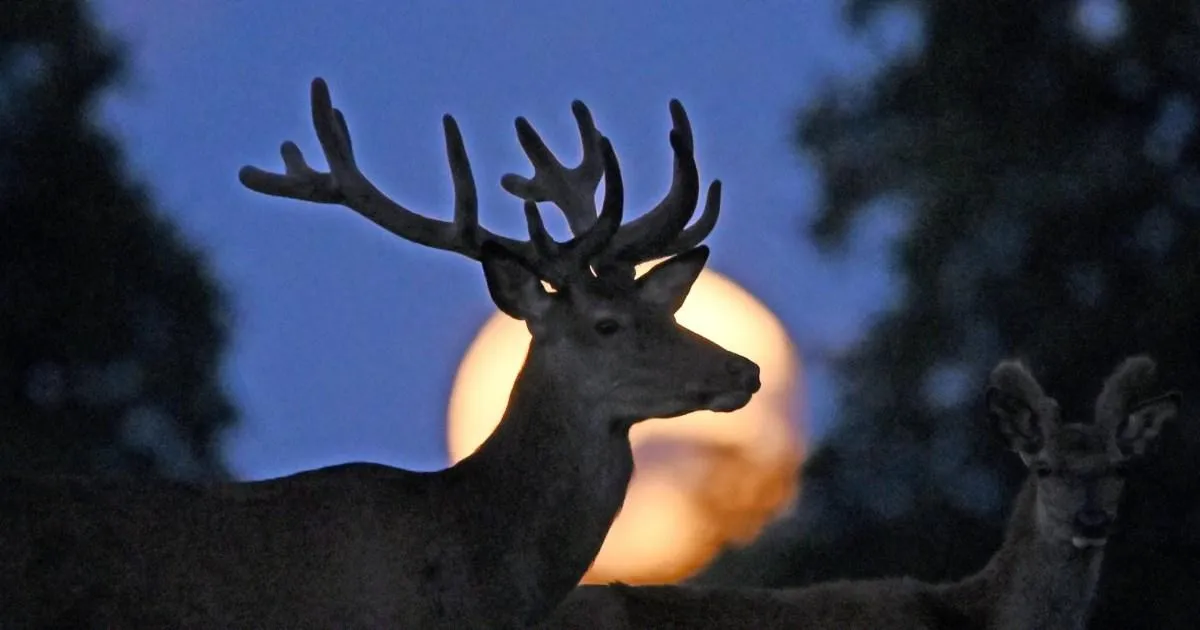
Tonight, the night sky offers us a gentle reminder of the natural rhythms that have guided humanity for centuries as the “Buck Moon” makes its appearance. This celestial event marks the eighth full moon of 2026. While July’s full moon is typically the seventh of the calendar year, a rare “Blue Moon” back in May shifted our lunar schedule, making this occurrence particularly special for those who keep a close watch on the heavens. Whether you are an avid stargazer or simply someone who enjoys a moment of quiet reflection under the glow of the night, the Buck Moon provides a perfect excuse to step outside and reconnect with the quiet beauty of the universe.
The moniker “Buck Moon” carries with it a deep sense of connection to the wild, rooted in traditions that honor the cycles of the earth. Named by Indigenous peoples who used the moon as a natural calendar to track the changing seasons, the title refers to the male deer. During this time of year, stags are busy shedding their old antlers and beginning the process of regrowing them, a powerful symbol of renewal and growth. Beyond this, the July moon is also affectionately known as the “Thunder Moon,” thanks to the frequent summer storms that often rumble across the landscape at this time, or the “Hay Moon,” acknowledging the peak of the mid-summer harvest.
For those of us in the UK, the moon is set to reach its official peak of illumination at 3:36 p.m. this afternoon. While this timing means the moon will technically be below the horizon during its most “perfect” phase, there is no need to be discouraged. The beauty of a full moon isn’t confined to a single, fleeting minute of geometric precision. With clear skies forecasted across much of England, the moon will be a stunning sight as it arches over the horizon throughout the evening. Even if it isn’t at its absolute statistical peak, the visual splendor of a rising moon against the twilight sky is a sight that never loses its wonder.
If the pressures of the day or cloudy weather keep you from catching the Buck Moon tonight, take comfort in the fact that the celestial calendar is full of upcoming treats. The rhythm of the cosmos is constant, and there are many more opportunities to look up before the year concludes. We have the Sturgeon Moon in late August, the golden tones of the Harvest Moon in September, and the Hunter’s Moon in October, all leading us toward the quiet, crisp nights of the Beaver Moon and the final Cold Moon of December. Each of these carries its own unique history and seasonal meaning, serving as a reminder that we are part of an ongoing, rhythmic journey through the stars.
Beyond the full moons, the sky is offering us a spectacular series of cosmic fireworks this season. The Perseid meteor shower, often cited as one of the most breathtaking displays of the year, is currently underway and will climb toward its peak activity in mid-August. Furthermore, the middle of next month brings a particularly rare event: a partial solar eclipse that will shroud much of the UK, Ireland, and Europe in a unique, dimming light as the moon passes between us and the sun. These events serve to remind us that while our daily lives move at high speed, the vast, silent theater of space continues its majestic performance regardless of what happens on the ground.
Ultimately, engaging with these celestial markers is a wonderful way to pause, breathe, and put our daily concerns into a broader perspective. Whether you are consulting your horoscope to see how the energy of the Aquarius moon might nudge you toward self-growth, or you are simply standing on your back porch watching the horizon, these moments are for you. The Buck Moon is more than just a satellite reflecting sunlight; it is a cultural artifact, a seasonal timer, and a shared experience that links us to generations who stood under the same sky long before us. So, take a moment tonight, find a clear view, and enjoy the quiet majesty of a world that is far larger than it often feels.