
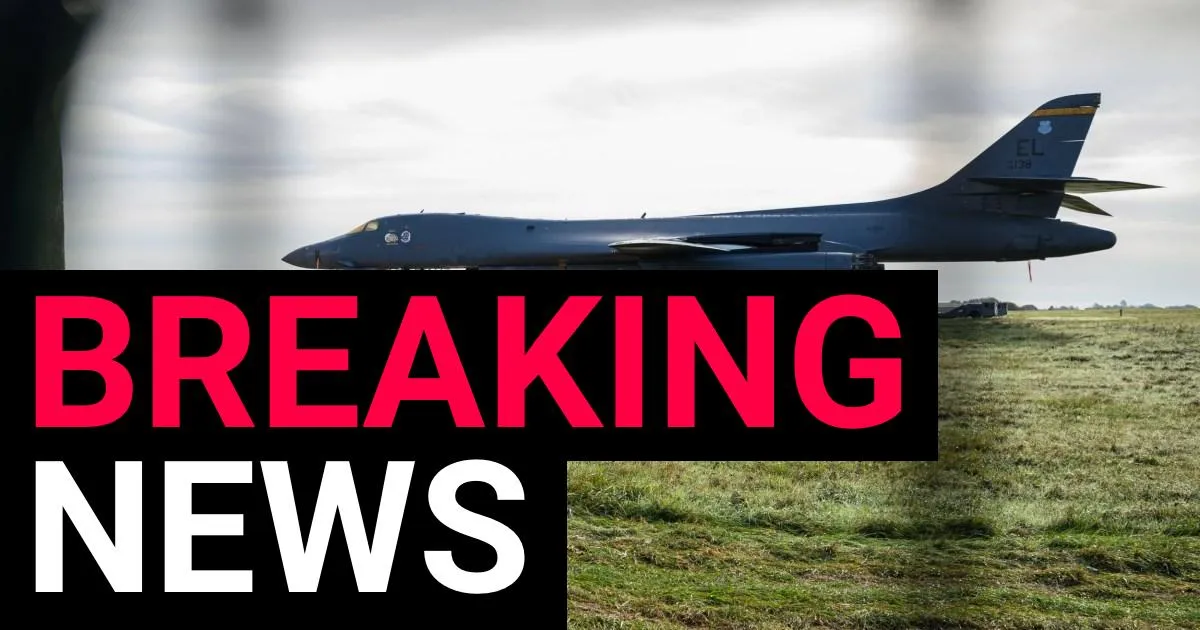
In a quiet corner of the Gloucestershire countryside, the silence this week feels heavier than usual. For decades, RAF Fairford has been more than just an airfield; it has been a place where the rumble of American heavy bombers became part of the local landscape, a familiar sound to the villagers of Kempsford and the surrounding towns. But in late September, that familiar rhythm was violently interrupted. Reports emerged of masked men appearing near the base perimeter, an incident that immediately triggered alarm bells across the UK military establishment. Security was tightened, armed officers took up positions near the safety fences, and an already guarded military installation became something closer to a fortress. Local people were told little; they watched and waited, as one does when the machinery of national security rolls into your neighborhood and offers no explanations. Then, more than a week later, came an even more dramatic development: the bombers began to leave. B-1 Lancers and B-2 Spirits, the kind of aircraft that can carry enough firepower to change the course of a war, were seen taking off and heading west, away from the Cotswold base. The Pentagon later confirmed what many had already suspected: all US bombers deployed to RAF Fairford had been pulled out and sent back to their home stations in the United States. It was not a routine rotation. It was a retreat, a recalibration, a response to a threat that had come uncomfortably close to home.
The official statement from the Pentagon was measured, careful, and laced with the kind of language designed to reassure without revealing too much. Yes, they said, US Air Force bombers routinely operate around the world to support global force readiness and operational requirements. Yes, operational security prevented them from confirming movements in real time. But now they could acknowledge that all the bombers that had been deployed to RAF Fairford were back home. The airmen who operate America’s bomber force—including the crews of B-1s, B-2s, and B-52s—remain ready to deliver precision global strike capabilities anywhere, anytime. It is the kind of statement that sounds confident on the surface but leaves a chill underneath. Because the message is not just that the bombers are safe. It is that they can still strike from the continental United States, that they do not need a forward base in England to project power across the world. And also, perhaps, that Fairford was no longer considered safe enough to host them. For the people who work at the base, and for the American families who had made a temporary home in the English countryside, the departure was undoubtedly emotional. These are not just machines; they are the lifeblood of a community. Pilots, maintenance crews, logistics specialists, cooks, medics—all of them had settled into the slow rhythm of British life between missions. Now they were packing up, saying goodbye, and leaving behind a place that had suddenly become a target. The human cost of that is easy to overlook in the grand game of geopolitics, but it is real. There are children who changed schools, spouses who left jobs, and friendships that will be maintained across an ocean or quietly fade away.
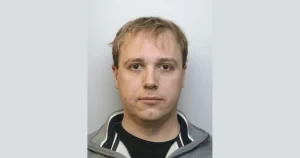
Meanwhile, the investigation into the incident continued to unfold in ways that are as confusing as they are concerning. On Saturday, counter-terrorism detectives confirmed that a sixth man had been arrested in connection with the events at RAF Fairford. He was a 25-year-old dual UK-Iranian national, detained on suspicion of the preparation of terrorist acts. He was released on bail. He joined five other men, all in their mid-twenties, who had been arrested previously on suspicion of explosives offences and terrorism-related activities. All of them have been bailed, which is a decision that in itself has sparked controversy. When asked about it, former US President Donald Trump weighed in with the kind of bluntness that has become his signature, suggesting that the UK authorities “should not have done that.” It is a strange and unsettling situation: young men, apparently ordinary members of society, suddenly accused of being part of a plot to harm a military base, then released back into the community while the investigation continues. For the public, this feels deeply unsatisfying. We want clarity, we want certainty, we want to know that the threat is gone. But the legal system does not work in such black-and-white terms. Bail is not the same as innocence; it means that, for now, the evidence does not justify holding someone in custody, or that conditions can be imposed to manage the risk. The men have families, too. They have mothers and fathers, maybe partners and children, who are now living under the shadow of suspicion and fear. Whatever the truth may be, their lives will never be the same. And for the wider community, the knowledge that people accused of terrorist plots are walking the streets is profoundly unsettling.
In the absence of hard facts, speculation has filled the void. Andy Burnham, the mayor of Greater Manchester, made headlines by saying there were “strong indications” that Iran was involved in the alleged plot. It was a startling statement, not least because the Iranian government had previously denied any involvement in or knowledge of the matter. Iran’s foreign minister, Abbas Araghchi, fired back quickly, accusing the UK of “barking up the wrong tree.” The exchange did little to calm nerves. It merely deepened the mystery and sharpened the geopolitical tensions that already hang over so much of modern life. The timing, of course, is significant. US bombers had used RAF Fairford to launch operations across the Middle East, including missions related to the conflict with Iran. If the incident at the base was indeed an attempted retaliation, it would fit a larger pattern of asymmetric threats and proxy battles that have become the hallmark of 21st-century conflict. But theories are not facts, and accusations are not proof. The danger is that in the fog of speculation, real leads may be obscured, and real people may be unfairly judged. The most responsible response, as the police and security services keep reminding us, is patience. But patience is hard to maintain when you are frightened, and when the place you call home has suddenly become a potential battleground. The people of Gloucester and the villages around Fairford are not asking for classified intelligence. They just want to know that their families are safe, that the unusual men with the masked faces are off the streets, and that the quiet beauty of their countryside will not be permanently scarred by the ugly realities of international conflict.
All of this raises deeper questions about the role of RAF Fairford and what its future might look like. This is not just any airbase. It has a long and storied history, from the Cold War to the Gulf Wars, and it has served as a launching pad for some of the most consequential military operations of the last few decades. Its location in the heart of the English countryside, with its runways hidden among fields and hedgerows, gives it a certain strategic mystique. But that mystique also makes it a target. The idea that someone might have been plotting an attack on a base so deep in the British countryside is a reminder that no place is truly remote anymore. Even the most peaceful-looking lane can lead to a security perimeter, and even the most bucolic cricket match can be interrupted by fear. In fact, just hours before the alleged terror plot was made public, a cricket match near RAF Fairford was stopped over a “live incident.” That detail is almost surreal in its Britishness—a village game halted by the reality of international terrorism—but it speaks to the way fear can infiltrate everyday life. Officials have warned that the plot may not be over, that follow-up attacks could still be planned, and that vigilance must remain high. That is a heavy burden to place on a community that never asked to be on the front lines. Yet the people of Fairford and Kempsford have responded with resilience. They have accepted the road closures, the police patrols, the media attention. They have gone about their lives, because what else can they do? They have learned to live with the giants in their midst, and now they are learning to live with the silence after the giants have gone.
In the end, what happened at RAF Fairford is more than just a military story. It is a story about the fragility of peace and the strange ways in which global events reach through the television screen and touch our actual lives. It is about young men whose lives are now caught up in accusations of terrorism, and about families who must reconcile their love for them with the terrifying things they might have done. It is about politicians and diplomats who hurl accusations across international borders, and about the ordinary people who are left to pick up the pieces. The bombers have gone, but the fear remains. The investigation continues, but the answers are still unclear. Perhaps in the coming weeks or months, more will be revealed. Perhaps the threat will fade, and life will return to normal. But normal, after something like this, is never quite the same. The skies over Gloucestershire are quieter now, but that quiet feels less like peace and more like waiting. What we all want, in our hearts, is the same thing: to feel safe in our homes, to believe that tomorrow will be like today, and to trust that the people in charge are doing everything they can to protect us. The departure of the bombers from RAF Fairford may be a tactical decision, but it is also a reminder of how quickly the world can change. And in that change, we see both our vulnerability and our strength. We see that even the mightiest military power can be made to blink by an anonymous threat. But we also see that humans endure, that communities hold together, and that the search for truth continues even when the truth is hard to find. The story is not over. It may only just be beginning. But no matter what happens next, one thing is certain: the people who lived through this will never forget the day the sky fell quiet, and the world came a little too close to home.