


On the quiet Sunday morning of 4 October 2026, in the village of Dersingham, a place situated just a mile from the royal calm of Sandringham House, the kind of stillness that usually defined the area was broken in the most brutal way imaginable. Just after 2:20 a.m., the ambulance service contacted police and asked them to attend a detached house on Fern Hill, an elegant property valued at £800,000 and set within the leafy edges of the Sandringham Estate. When officers arrived, they discovered the body of a woman, a doctor in her forties, and pronounced her dead at the scene. The house, it quickly emerged, had been hosting a children’s sleepover. It is a detail that makes the tragedy almost impossible to absorb: a home filled with the noise of young voices, duvets, and half-eaten snacks transformed into a sealed forensic scene within hours. The children who had been staying there—not only the woman’s own three children but also their friends—were gathered up by police and returned to their families. No child should ever experience that. A sleepover is supposed to be a memory of whispered secrets, sleepy morning breakfasts, and the warmth of friendship. Instead, those children will carry the image of a house waking to sirens and uniforms, a mother and neighbour gone, and a world turned upside down. The road was cordoned off. Detectives began to move through the property methodically. And a village known for its quiet, gentle proximity to royalty found itself at the centre of a murder investigation, staring at the same yellow tape that separates ordinary life from tragedy, unable to believe what had happened just behind it.
To the patients who trusted her with their health, the woman was known as Dr Hannah Terry, a name printed on surgery signs and appointment cards. She had been a qualified doctor for fifteen years and worked at Grimston Medical Centre, a practice that served families across the rural communities near King’s Lynn. To her neighbours and friends in Dersingham, however, she was Hannah Cain: a mother of three, described by one neighbour as having two boys and a younger girl. She was also the driving force behind Norfolk Sky Aesthetics, a small business dedicated to beauty procedures, where she combined medicine with the gentler art of helping people feel more like themselves. In her profile she wrote, “I am proud to be a caring and professional doctor with a keen interest in aesthetics.” Those words capture someone who understood care in a broad and generous sense—someone who wanted to heal not just illness, but also self-doubt; someone who saw medicine as a way of listening, not merely prescribing. Her colleagues felt her loss immediately. Grimston Medical Centre, including its dispensary, was closed on Monday, and the practice posted a message that was barely able to contain its grief: “We are sorry to let patients know that Grimston Medical Centre, including the dispensary, is temporarily closed due to extremely difficult circumstances affecting our practice team. We apologise for the disruption and appreciate your patience and understanding at what is a very difficult time for our colleagues.” The phrase “extremely difficult circumstances” is deliberately careful, but underneath it lies the raw shock of losing a valued colleague and friend. For patients who woke on Monday expecting their usual appointments, there was no familiar voice on the phone, no doctor with a stethoscope at the ready, only a notice that spoke of heartbreak. The surgery will eventually reopen, but the gap left by Dr Terry will not close easily.
What happened inside the house in the hours before the ambulance was called remains a matter for police investigation, and the public has been left with fragments of a life that refuse to fit together into anything coherent. Local people have said that Dr Terry had young children and their friends staying over that night. The fact that she was hosting a sleepover says a great deal about her: sleepovers require patience, energy, food, and a home that is open to chaos. It is not something a busy working mother takes on lightly. It is an act of generosity, a willingness to make space for joy. That such a scene of ordinary childhood happiness should become the setting for an unspeakable event is a cruelty that no one can rationalise. The other children who were in the house were taken by officers to their families, and one can only imagine the questions they are asking, the nightmares they may carry, or the silence that may fall over them in the coming weeks. An elderly neighbour in his nineties, who lives next door, told reporters that he knew nothing until the police came. “I very rarely saw them,” he said, speaking of the family. “The children were lovely, two boys and a younger girl. They used to kick their football into my garden and I’d throw it back to them, or they’d come and ask me if they could come in and look for it.” It is a small, precious memory: a football sailing over a hedge, an old man tossing it back, children asking politely before stepping through a neighbour’s gate. That same garden now shares a boundary with a crime scene. The football will not bounce over there for a long time. The children will not be knocking on his door. What remains is the terrible quiet of a street that has lost its innocence, and a house that once held laughter and friendship is now being examined room by room by forensic teams in white suits.
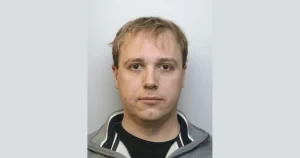
The legal process, meanwhile, has moved with the procedural gravity that such cases demand. A man in his forties was arrested on suspicion of murder and taken to King’s Lynn Police Investigation Centre, where he was held for questioning. Officers later applied to Great Yarmouth Magistrates’ Court for a warrant of further detention, and that warrant granted them an additional thirty-two hours to interrogate the suspect. He remained in custody, and the investigation was still in its early stages. A cordon continued to surround the large Fern Hill property, while detectives and forensic specialists worked to piece together the last hours of the doctor’s life. The arrested man has not been named in the reports that have so far emerged, and the legal process is understandably careful; it exists to protect the possibility of justice, both for the victim and for the accused. But it is easy to forget that behind every procedural detail—the warrant, the hours of further detention, the sealed evidence bags—there is a family suspended in a state of inconsolable loss. Her children, the three gorgeous children her neighbours remembered, have lost the anchor of their childhood. Their friends, who came to her house for a night of fun, have been touched by something they will never fully understand. And the police, committed to the disciplined work of evidence-gathering, are also moving through the debris of a woman’s life: the photographs on the walls, the children’s drawings, the toothbrushes beside the sink. They are looking for clues, but they are also handling the remnants of a household that will never be whole again. The legal system will eventually answer some of the questions being asked in Dersingham, but it cannot undo what has happened, and it cannot give the children their mother back.
In moments like this, words fail. A neighbour captured the communal bewilderment with a painful honesty: “She was just a lovely human being with three gorgeous young children. Something’s obviously gone very badly wrong. I’m just out of words, we all are.” That phrase—“out of words”—is exactly right. It is the language of someone who has been hit by something too large for the mind to hold. The same neighbour who described the football and the children’s polite manners echoed that sense of disbelief. The tributes that have been paid to Dr Terry all return to the word “lovely.” That might seem like a modest word for a woman who was also a doctor, a business owner, and a pillar of her community. But lovely is not a weak word. It describes someone who makes the world feel comfortable, who brightens a room without effort, who leaves people feeling better simply for having been around them. It is a word of warmth, of everyday kindness, and it is not difficult to imagine why so many people would use it about her. The village of Dersingham, unaccustomed to the glare of national attention, has now been invaded by journalists, cameras, and police vehicles. The street where children used to play football and where neighbours waved to each other from their front gardens has become a place of tape and tents. The privacy that allowed Hannah Cain to live simply, raise her children, and do her job with care has been torn away. What remains is a community holding its breath, a group of neighbours standing outside their homes trying to find words, and the terrible knowledge that a mother has been taken from her children in a way that defies any possible explanation. “Something’s obviously gone very badly wrong,” the neighbour said. It is an understatement, but it is also the most honest thing that can be said.
As the investigation continues, the Grimston Medical Centre remains a visible marker of the tragedy. Its doors are closed, its dispensary is quiet, and its staff are trying to process the loss of a colleague. Patients who relied on Dr Hannah Terry for comfort, prescriptions, and reassurance must now confront a world in which she is suddenly absent. They will remember the way she listened, the way she made them feel seen, the way her care extended beyond the mechanics of medicine into the simple dignity of human attention. Some of them will have known her for years, perhaps through difficult diagnoses or ongoing treatments. They will be mourning more than a doctor; they will be mourning a presence in their lives. The children she leaves behind, two boys and a younger girl according to the neighbour, have been robbed of a mother described as lovely, generous, and devoted enough to host a children’s sleepover and open her home to others. Their friends, too, have been changed forever by the events of that Sunday morning. The house on Fern Hill, with its striking exterior and its proximity to the Sandringham Estate, will never again be just a house. It will be a scene marked by memory, a place that people will drive past slowly and quietly, a location that will carry the weight of what happened there for years to come. But the wider community will begin, slowly, to heal. Flowers will be laid at the police cordon. Neighbours will talk to one another in voices softened by grief. The surgery will eventually reopen, and the staff will find a way to carry on because that is what people do even after the worst losses. There will be legal proceedings, and there will be a trial, and everyone will hope for answers to the question that keeps echoing through Dersingham: how could a woman so full of care, a doctor, a mother, a friend, be found dead in her own home in the middle of a children’s sleepover? Some answers may emerge in court. Others will never come. For now, the best response is the one already offered by the neighbour who said she was out of words: to admit the limits of language, to feel the unbearable weight of the loss, and to hold the children, the family, and the entire community in a silent, steady compassion. Hannah Cain, known to many as Dr Hannah Terry, was loved. That is the truth that will outlast the forensic reports, the headlines, and the police tape. That is the memory her children will carry, and the light that remains in the midst of so much darkness.