


1. The Unlikely Landlord
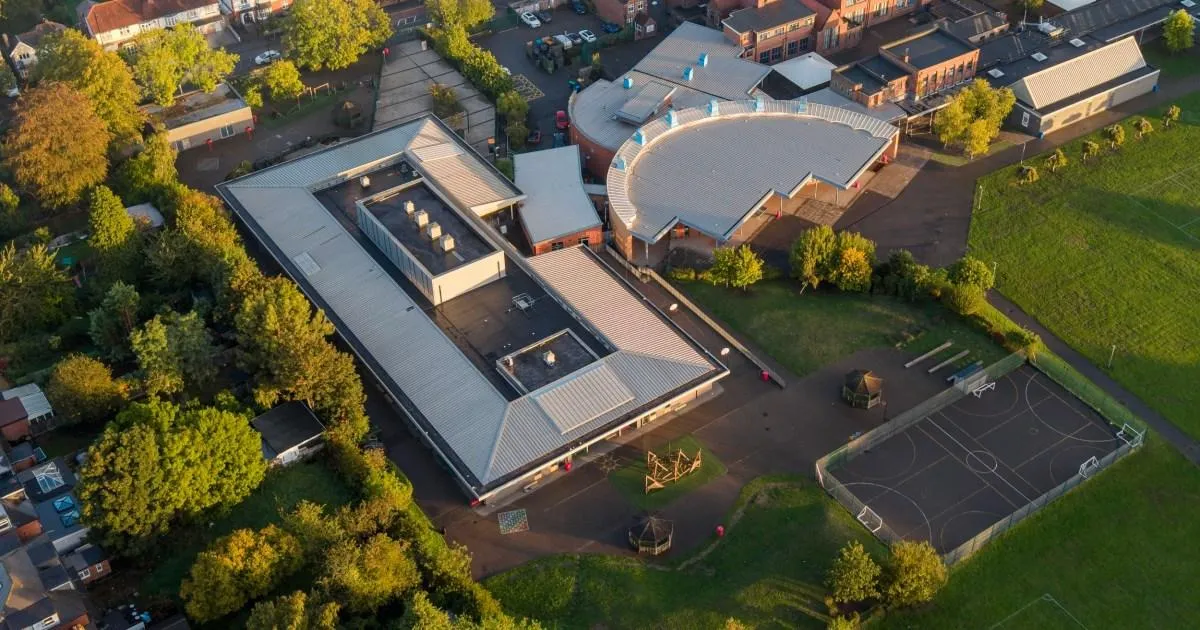
Imagine for a moment that you are a busy businessperson, going about your life, running a care home company, and deciding one day to make a modest property investment. You attend an auction, bid on a three-bedroom house in Birmingham, and pay £395,000 to the city council. You think you are buying a house. You sign the papers, pay your money, and hang on to a set of keys that should unlock a front door. There is no reason to suspect that anything strange is happening. The transaction seems ordinary, especially for someone who has built a career in care provision and knows a little about the value of property. Then, eleven years later, you are suddenly told that you haven’t just owned the house for all that time—you have also owned a primary school. That is exactly what happened to Sukhjit Bains, a fifty-year-old businessman from the Midlands. In a bizarre administrative twist that sounds more like a television comedy sketch than real life, Mr. Bains found out that he had been the proud owner of George Dixon Primary School without ever knowing it. It was a two-for-one deal nobody expected, and certainly nobody requested. He wanted a residential property; the paperwork gave him an educational establishment. This story, now playing out in the High Court, is a reminder that the paperwork that governs our homes and lives is only as reliable as the people who fill it in, and sometimes, as we shall see, those people make profoundly human mistakes.
2. The Paperwork Monster
How does a man accidentally become the owner of a school? It sounds absurd, but the explanation lies in the dry, dusty world of land registration forms, legal titles, and bureaucratic conventions. The property Mr. Bains purchased was a former caretaker’s cottage, a modest dwelling that backed directly onto the school grounds. At some point in its history, the cottage and the school were bundled together under the same land registry number. That was not necessarily a problem in itself, for land titles can include multiple buildings, pieces of land, and parcels. The trouble began when the transfer documents were prepared. In Britain, when land or property is transferred, there are specific forms to use depending on the situation. A TR1 form is a standard transfer of registered title, which effectively transfers all of the land and buildings covered by a title number. A TP1 form, on the other hand, is a transfer of part, which is used when only a specific section of a larger parcel of land is being sold, and the seller intends to keep the rest. Because the cottage and the school were under the same title number, the solicitor acting for Mr. Bains should have used a TP1 form, carefully carving out the small residential property from the much larger school site. Instead, by mistake, the wrong paperwork was sent to the council’s conveyancer. And the council, in another astonishing lapse, simply rubber-stamped the forms, unaware of what they were actually signing away. In the blink of an eye, the legal ownership of George Dixon Primary School, along with its playing fields and buildings, passed from the city council to the businessman who had only ever wanted a house. Neither he, nor the council, nor the 324 pupils, nor their parents had the faintest idea what had been done.
3. An Astonishing Discovery
For over a decade, the arrangement remained frozen in time, hidden inside files and records. Mr. Bains continued to run his care business with his fellow directors. The council continued to maintain and operate the school, paying staff, enrolling pupils, and going about the everyday business of education. The school was thriving, or at least trying to, under the impression that it was an ordinary state school like any other. The true ownership of the land was a fact that sat quietly in the registry, waiting for someone to notice. And then, in April 2024, the school began exploring a move to become an academy. This was a routine process for many schools, involving governance, funding, and land. But when officials began investigating the school’s assets, they discovered something jaw-dropping: the school did not own its own building. More than that, neither did the council. The building was legally owned by an entirely separate company, NH Care Ltd, and by Mr. Bains, who had been blissfully unaware of his educational estate for eleven years. The discovery sent shockwaves through the council’s legal department. For Mr. Bains, the revelation was probably just as confusing. Last year, the council contacted him and asked for the school back. At first, according to the council, he seemed willing enough. There was an apparent agreement to return the property. But then the conversations went cold. He stopped replying. He did not sign the paperwork. Letters went unanswered, phone calls were not returned, and repeated visits to his office turned up no sign of him. He became a ghost, at least in the eyes of the council. Yet when Daily Mail reporters knocked on his door, he answered—and then declined to say a single word about the situation.
4. A Legal Battle Begins
This is where the story turns from absurd to serious. Birmingham City Council, eager to restore its ownership of the school, took the matter to the High Court in London. They launched proceedings not only against Mr. Bains but also against his company, NH Care Ltd, and Lloyds Bank, which likely had an interest in the property as a lender. The legal claim is rooted in an important principle: a local authority cannot simply give away or accidentally transfer school land without the appropriate approvals. Under the law, the school and its playing fields were protected. They could not be sold without the consent of the Secretary of State. The council argues that because the necessary consent was never obtained, the transfer was unlawful and therefore void. In other words, even though the paperwork was signed, sealed, and delivered, it should never have happened in the first place, and the council wants the court to declare that the school still belongs to them. For his part, Mr. Bains’s solicitor has pointed out that the property transfer in 2013 was made to NH Care, not to him personally, which may add another layer of legal complexity. The council, however, is also pursuing his company. The parents of the school’s 324 children have been left with uncertainty hanging over their heads. Teachers are presumably wondering about their futures. And the poor house that started it all? It has remained empty since Mr. Bains bought it, boarded up and silent, a forgotten witness to the extraordinary legal battle being waged over brick and mortar, playgrounds and classrooms.
5. The Human Side of an Absurd Mistake
It is easy to look at this story and shake our heads in disbelief. How could a council, with all its lawyers and procedures, accidentally hand over a school? How could a solicitor send the wrong form? How could a man own a school for eleven years and never notice? The answer is that bureaucracy is made of people, and people make mistakes, sometimes on a spectacular scale. But behind the legal jargon and courtroom strategies, there is a very human story about what happens when ordinary life collides with extraordinary chaos. Mr. Bains, who runs a care home company, is not some villain in a movie plotting to seize a school and sell it for millions. He is a businessman who invested in a house and, through no fault of his own, found himself in a nightmare of legal limbo. In theory, he could have tried to evict teachers, throw out pupils, knock down the school building, and put the land on the market for a fortune. But the law is unlikely to allow that. The council insists that the land could not be sold without the Secretary of State’s consent, and that consent was never given. Still, the fact that he reportedly agreed to give the school back and then went silent tells us something about the human reaction to overwhelming situations. Perhaps he felt confused. Perhaps he was scared. Perhaps he simply did not know what to do, so he did nothing. We do not know his heart, but we can imagine the stress of being summoned to the High Court over a problem he never asked for and never saw coming. This is not a story about greed, necessarily; it is a story about a mistake that spiralled out of control, leaving a trail of form-filling confusion, legal bills, and sleepless nights in its wake.
6. Waiting for the Verdict
So where does that leave everyone now? Birmingham City Council has said publicly that it is pursuing the appropriate legal process to rectify the situation, and that it would be inappropriate to comment further while the case is ongoing. That is the careful, rehearsed language of a local authority trying to clean up a mess without making it worse. Mr. Bains has given no public statement, and we can only guess what he is thinking. Lloyds Bank, as a lender, will be watching closely because if the ownership of the property is overturned, there may be serious financial consequences. For the school community, the emotional toll is impossible to measure. Children go to school to learn their times tables and play in the playground, not to become pawns in a property dispute. Their parents send them off each morning assuming that everything is okay, unaware that behind the scenes, a council and a business are locked in a courtroom battle over the very ground beneath their feet. The school’s future may ultimately rest on a judge’s decision, but the memory of this extraordinary blunder will last much longer. It will remind all of us to check the small print, to read the form twice, to make sure that when we buy a house, we are not accidentally buying a school along with it. Maybe one day this story will be told as a quirky footnote, a strange tale of a caretaker’s cottage and a shared land title. But for now, for everyone involved, it is all too real. Some people buy houses and get more than they bargained for; they might find a leaky roof or a problem with the wiring. Sukhjit Bains got a primary school. And the only way out of this astonishing mess is the slow, careful, and thoroughly human process of the law.