

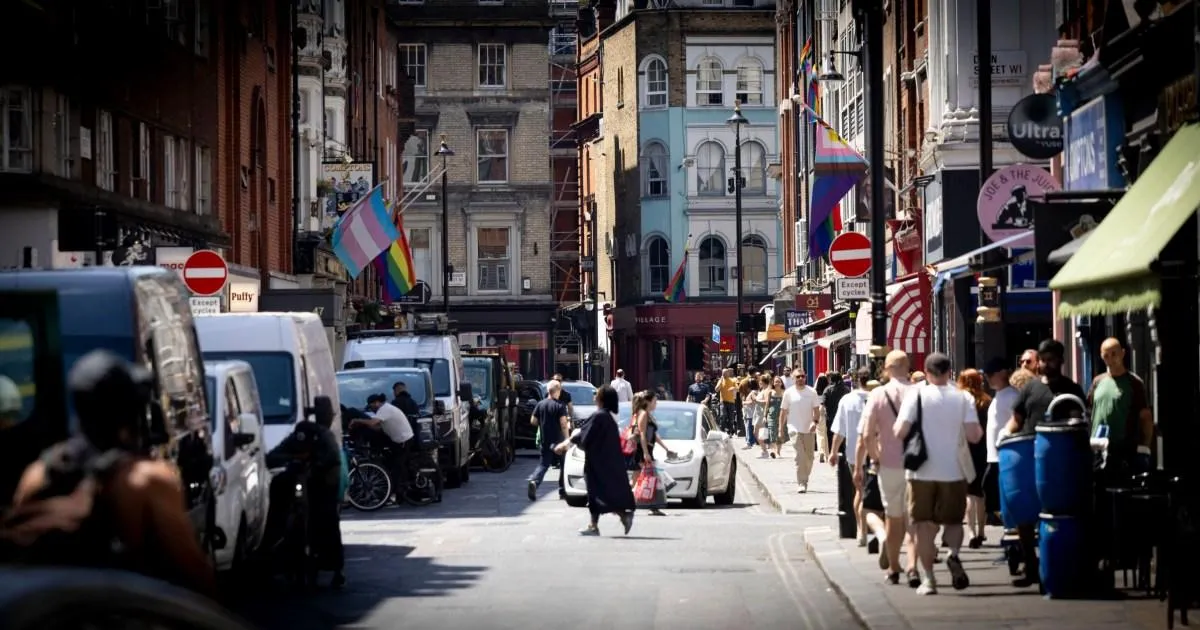
Old Compton Street in London’s Soho has long stood as the beating heart of the UK’s LGBTQ+ scene, a place where, for generations, people could find community, safety, and unapologetic celebration. For years, Pride weekend in this historic corner was a spectacle that rivaled New Year’s Eve, drawing massive crowds and generating vital revenue for the local businesses that defined the area’s identity. However, this year’s festivities told a starkly different story. Business owners, long-time patrons, and staff have spoken out, describing the celebration as the most stifled, quiet, and economically diminished in recent memory, marking a sorrowful shift for what was once hailed as the “gayest street in Britain.”
The erosion of Soho’s nightlife is not a sudden accident, but rather the result of a slow, suffocating tightening of regulations and the persistent pressure from local residents’ groups. Business owners like Eran Tibi, who owns the restaurant Kapara, describe the reality of trying to foster the old-school Soho spirit today as a battle against bureaucracy. Despite booking DJs and investing in stages to capture the magic of Pride, owners are frequently met with aggressive licensing mandates, demands to unplug speakers, and exorbitant security costs. For Tibi, who moved to London two decades ago and was once mesmerized by the neighborhood’s vibrant energy, the constant hurdles make the goal of hosting authentic celebrations feel increasingly impossible.
The disillusionment is widespread, reaching even the most iconic venues. The closure of the legendary G-A-Y Bar was a major turning point, with owner Jeremy Joseph highlighting a painful truth: the area has lost its soul. Joseph noted that he no longer feels safe holding his partner’s hand on the street—a chilling sentiment for a neighborhood that was once a sanctuary. This cultural retreat is mirrored in the absence of Pride flags in storefront windows, a quiet protest against the increasingly sanitized and corporate atmosphere. When the identity that made a neighborhood world-famous is chipped away by over-regulation, the street itself begins to fade behind a veneer of restrictive planning.
Indeed, the logistical hurdles are turning what should be a liberated, flowing street party into a regimented, indoor-only experience. Younger generations, who traditionally set the pulse for queer culture, are now voting with their feet, migrating toward boroughs like Camden and Hackney. These areas are perceived as more authentic, offering longer opening hours and a sense of freedom that Soho has sacrificed at the altar of excessive control. Waiter Calum Lees notes that the vibe in Soho has become “highly commercialized,” causing friends to seek out spaces where they can still find that raw, unfiltered energy that once defined the Soho experience.
There is, however, a sense of frustration rooted in the fact that this decline is entirely reversible. Managers and staff emphasize that simple, common-sense changes—such as pedestrianizing more streets to allow for al fresco dining and spontaneous mingling—would drastically improve the atmosphere. The current model demands that people remain seated inside under strict supervision, which kills the organic joy of Pride. By prioritizing vehicle-centric planning over the needs of the vibrant crowds who flock to the area, the city is effectively strangling the very culture that gives Soho its value, forcing the community to look elsewhere for a sense of belonging.
While the local council insists that they are supportive and point to the millions of people who attended Pride across London, there is a clear disconnect between the city’s official narrative and the ground-level experience of those fighting to keep Soho alive. Council officials cite the number of temporary licenses granted as evidence of their commitment, but for the local business owners, these temporary measures are insufficient bandages on a deeper, structural wound. Without a fundamental shift in how the neighborhood is managed—one that values the queer, creative, and spontaneous spirit of the area over rigid bureaucracy—Soho risks losing its status as a landmark of history, becoming nothing more than a sanitized shadow of its former, glorious self.