


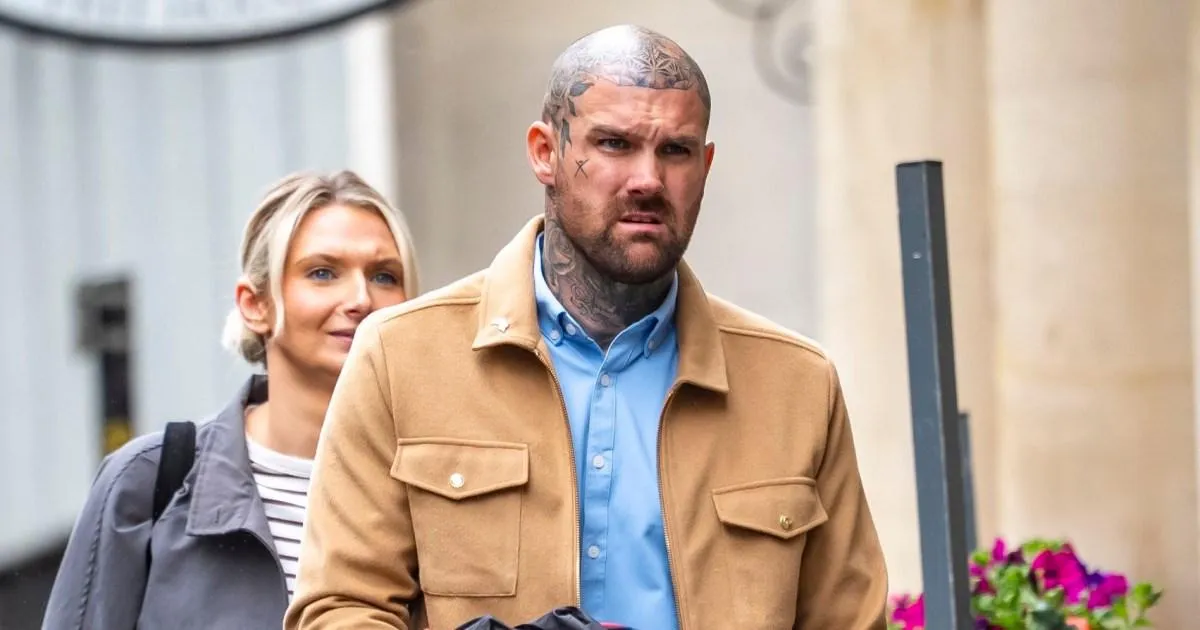
The tragic death of four-week-old Atticus Bartlett remains a harrowing example of how a fleeting moment of drunken rage can shatter a family and end a life before it has truly begun. On the night of July 16, 2022, in their home in Chard, Somerset, Tony Bartlett and his partner, Evelyn Ballentyne, returned from their first night out since becoming parents. The evening, which should have been a brief respite for the new couple, concluded in a nightmare. While Evelyn briefly went upstairs, entrusting her infant son to his father, the situation spiraled into an unthinkable act of violence. In those few unsupervised moments, Bartlett, having consumed nearly ten pints of beer, assaulted his newborn son with such brutality that he caused irreparable damage to the infant’s brain and spinal cord, while also breaking the baby’s ribs.
The scene that unfolded upon Evelyn’s return is one of unimaginable trauma. Descending the stairs, she discovered her son grey and unresponsive, a sight that prompted a frantic, desperate scream for help from a mother who realized instantly that something was terribly wrong. Despite the swift arrival of neighbors, paramedics, and the subsequent effort to save him at the hospital, Atticus never regained consciousness. He lingered for a week before passing away on July 23, his life extinguished by the very person tasked with his protection. The investigative team and the prosecution would later argue that this was no accident; it was a deliberate, violent outburst born of frustration, amplified by the alcohol that loosened Bartlett’s restraint and unleashed a fatal temper.
Throughout the subsequent trial at Bristol Crown Court, the court was forced to examine the stark contrast between the prosecution’s account and the defense’s desperate attempt to deflect blame. Bartlett maintained his innocence throughout the proceedings, stoically pointing the finger at Evelyn. His defense team suggested that her frantic attempts to revive the baby or a choking incident were the true causes of the injuries, an argument that sought to characterize the mother as the perpetrator of the shaking. However, the evidence presented—the horrific internal injuries and the sheer force required to inflict such trauma on a four-week-old infant—rendered these claims hollow. Evelyn herself took the stand, visibly distraught, and firmly refuted the defense’s accusations, affirming that it was indeed her partner who had harmed their child.
The weight of the evidence proved insurmountable for the defense, as the jury listened to the grim details of a father who, driven by impatience over a crying, difficult-to-feed baby, decided to use force instead of compassion. The prosecution laid out a clear picture: a man who could not manage the stress and frustration of parenthood and chose to respond with lethal violence. The fact that Bartlett had been drinking heavily that evening provided no mitigation, serving only as the catalyst for the loss of control that resulted in the child’s life being cruelly cut short. For the jurors, the conclusion was inescapable, and after careful deliberation, they reached a unanimous verdict of murder.
When the verdict was read, the courtroom reaction was visceral. Family members of the infant collapsed into weeping and gasps, while Bartlett broke down in tears over a video link, a display of distress that the court and public struggled to reconcile with his prior actions. Justice Cavanagh, after delivering the verdict, emphasized that the law allows for only one sentence in such cases: life imprisonment. The judge lauded the jury for their dignity and the meticulous attention they gave to the devastating evidence, noting that their commitment to justice served as a vital, if somber, conclusion to such a horrific episode of violence against one of society’s most vulnerable members.
Ultimately, the trial of Tony Bartlett serves as a grim reflection on the fragility of life and the devastating consequences of unchecked malice. While legal proceedings have reached an end, the emotional scars left on the family and the local community remain raw. The loss of baby Atticus is a reminder that the responsibilities of parenthood, though overwhelming at times, require a baseline of humanity that was tragically absent on that summer night in Somerset. As Bartlett awaits the final determination of his minimum term behind bars, he leaves behind a legacy of absolute heartbreak, a story defined not merely by the evidence of a crime, but by the quiet, permanent hole left in the lives of those who loved a baby who never stood a chance.